


Understanding Melasma: Causes and Treatments
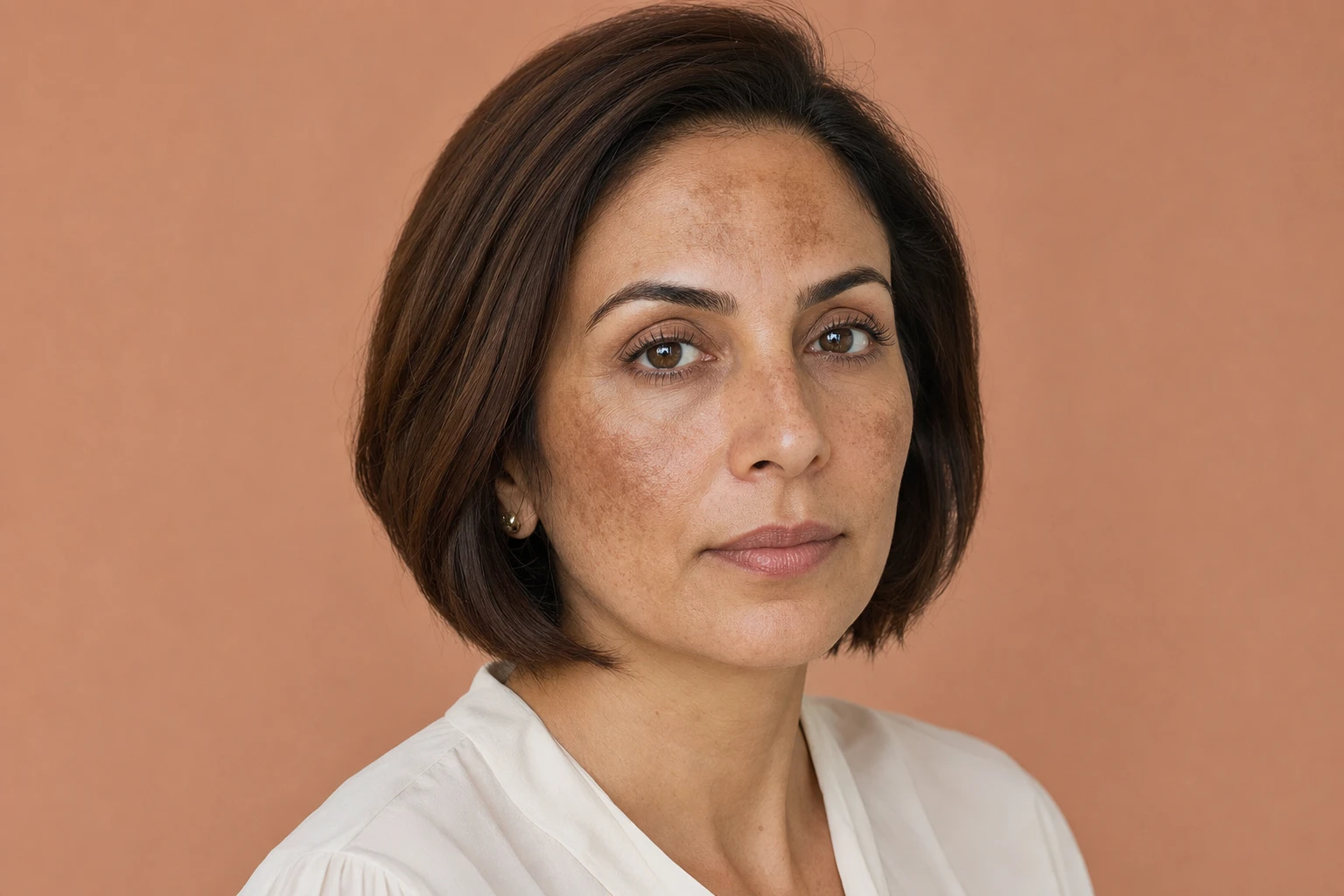
Brown, sometimes greyish patches have appeared on both sides of your face: on the cheeks, the forehead, sometimes above the upper lip. They are often symmetrical and can come back after fading. This is the typical appearance of melasma, also called the mask of pregnancy.
Melasma treatment begins with sun protection. Treatments applied to the skin and sometimes procedures can be added, depending on your skin and the risks. You can discuss this with CARE MD in Sainte-Thérèse during a Global Aesthetic consultation.
In Brief
Five things to know before deciding- What it is: brown or greyish patches on both sides of the face, caused by excess melanin, the pigment that gives skin its colour. The diagnosis is made through an examination.
- What triggers it: the sun and visible light, hormones (pregnancy, hormonal contraception) and heredity. You can have melasma without having been pregnant; men can have it too.
- Sun protection: it is at the core of any treatment plan: shade, a hat, broad-spectrum sunscreen with SPF 30 or higher, tinted with iron oxides for visible light.
- Options and limitations: treatments prescribed during a consultation, peels, laser treatment and microneedling are general options to discuss with the doctor. No treatment cures melasma, which often comes back. Pulsed light should be avoided.
- Depending on your situation: pregnancy, breastfeeding and dark skin call for precautions; a spot that changes or does not look like the others must be examined before any treatment.
Is It Melasma? What the Skin Shows and What the Doctor Determines on Examination
Melasma is a common skin condition in adults. It forms brown, greyish-brown or bluish-grey patches, sometimes with small spots that look like freckles. They are seen mainly on the cheeks and forehead, but also on the chin and above the upper lip. They are flat to the touch and are usually found on both sides of the face.
Skin cells produce too much melanin, the pigment that gives skin its colour. What triggers this excess production is not fully understood.
The diagnosis is made through an examination: a close look at the face and neck is often enough. When another skin condition looks like melasma, a small skin sample may be needed to tell them apart. So not all dark spots on the face are melasma. Post-inflammatory hyperpigmentation, for example, develops after skin inflammation; the doctor can tell the difference on examination.
What Triggers Melasma, Even Without Pregnancy
Ultraviolet rays from the sun, as well as those from tanning beds and phototherapy, can trigger or worsen melasma. Visible light, especially blue light from the sun, can also contribute. Blue light from screens, on the other hand, has not been shown to affect the skin.
Hormones play a role. The rise in estrogen and progesterone during pregnancy can promote melasma, hence the name mask of pregnancy. But you can have it without ever having been pregnant: hormonal contraceptives and hormone replacement therapy can also contribute. If you are taking one of these treatments, do not stop taking it without the advice of the person who prescribed it.
Heredity matters: melasma is more common in people whose family members have it, although it is not passed on like a hereditary disease. It is also more common in medium to dark skin than in lighter skin. It mainly affects women, but men get it too.
Several of these can play a role in the same person: the factors that keep melasma going differ from person to person.
Melasma Treatments
There is no single best melasma treatment for everyone. The choice takes into account your skin colour, the depth of the pigment and what triggered your patches. Treatments can fade the spots, but none cures melasma. Sun protection remains the foundation, along with treatments applied to the skin. A procedure can sometimes complement this care, depending on the risks for your skin.
Peels, laser treatment and microneedling are general options: after an examination, the doctor determines whether one of them is appropriate for your melasma. With a depigmenting mask, you also need to check its ingredients and how well your skin tolerates it.
Which Product Should You Choose?
A product sold in a pharmacy is not automatically the right one for your melasma. Over-the-counter cosmetic skin care products and treatments prescribed during a consultation are not interchangeable. After an examination, a doctor may prescribe a treatment to apply at home to reduce the excess pigment.
For daily care, choose gentle, fragrance-free products. A product that stings or causes a burning sensation irritates your skin, and this irritation can darken the spots.
Peel or Laser: How They Differ
A peel removes the most superficial layer of the skin, the one that contains the pigment. A laser uses light energy. Some lasers remove the superficial layer of the skin; others target the cells that produce pigment. A peel can improve melasma, whereas the results of laser treatment vary.
Both can worsen pigmentation or leave areas lighter than the rest of the face. To choose a treatment, the doctor examines your skin and assesses the depth of the pigment and the factors that triggered the patches: the technique alone is not enough to determine the choice.
Fractional CO2 Laser
A fractional CO2 laser can fade melasma patches, but its advantage over other options and how long the result lasts have not been established for all skin types. Adding it to a treatment applied to the skin does not necessarily provide additional improvement. Its safety during pregnancy and breastfeeding has not been demonstrated.
Like other lasers, it can cause redness, pain and swelling. Darker or lighter areas can also appear after laser treatment.
Microneedling
In microneedling, the skin is pricked repeatedly with fine needles, with the aim of helping a product applied to the skin penetrate more deeply. The procedure can cause pain, swelling, infection and scarring, including keloid scars: thick scars that extend beyond the area of the wound.
On dark skin, darkening or lightening of the skin is also possible; some devices have not been studied on these skin types. Before considering this procedure for melasma, ask the doctor whether it is indicated for your skin, how many sessions would be needed and what to expect afterwards.
Peels and Skin Care
A chemical peel sometimes improves melasma by removing the surface cells that contain the pigment. Have it done by an experienced professional: it can worsen pigmentation, lighten the skin too much or leave scars. With superficial facial treatments too, how well your skin tolerates them matters: irritated skin can darken.
Depigmenting Mask
A depigmenting mask is intended to reduce the appearance of spots. The choice depends on what it contains and how well your skin tolerates it. Its ingredients vary from one product to another; a product that stings or causes a burning sensation can darken the spots. Before choosing one, ask the doctor to check its ingredients and whether it is useful for your melasma.
Which Techniques Can Make Melasma Worse?
A technique designed for another type of spot can worsen melasma. After laser or light-based treatment, pigmentation can rebound: the spots may darken or come back. Intense pulsed light is one of the techniques to avoid if you have melasma. Irritation caused by a product, a peel or laser treatment can also darken the spots.
After laser treatment, darker or lighter areas appear more often in people with dark skin. With microneedling, a change in pigmentation is also possible, and some devices have not been studied on these skin types. Melasma on Black skin therefore calls for particular care in choosing a treatment. No technique is safe for all skin types: the doctor evaluates the risks that are relevant to you.
Why It Comes Back, and the Role of Sun Protection
Even when treated, melasma often comes back when treatment stops. The patches can fade, then persist or reappear. Both the result and how long it lasts vary from person to person. Whether to continue or stop a prescribed treatment is decided with the person who prescribed it.

Sun exposure can make the patches come back when you spend time outdoors without protecting your skin. Sun protection is therefore at the core of any treatment plan. Seek shade, wear a wide-brimmed hat and use a broad-spectrum sunscreen, SPF 30 or higher, with high UVA protection. A tinted sunscreen containing iron oxides also protects against visible light, which can worsen melasma, especially on darker skin.
Apply sunscreen 15 minutes before going outside. Reapply it at least every two hours, and right after swimming and towel-drying, even if it is water-resistant. No sunscreen provides 100% protection: it complements clothing and shade, but it does not replace them. This protection helps limit sun-related worsening, but it does not prevent every relapse.
Pregnancy, Breastfeeding and After Childbirth
During pregnancy, the general advice is to wait until the baby is born to treat melasma, while continuing sun protection. A product sold without a prescription is not necessarily safe during pregnancy; certain prescribed treatments must also be avoided. Have the product checked before using it.
After childbirth, the mask of pregnancy can disappear within a few months, and treatment is then not always necessary. It can also persist or come back during another pregnancy. No timeline is guaranteed.
During breastfeeding, precautions depend on the product: for some treatments applied to the skin, data are lacking. Precautions can also differ between a product applied to the skin and a product taken by mouth. Mention whether you are pregnant, planning a pregnancy or breastfeeding before using any product or having any procedure: the doctor checks each option for your situation.
When Should a Spot Be Examined Rather Than Treated?
Diagnosed melasma is not skin cancer. Its patches are flat and usually present on both sides of the face. A brown spot that does not match this description must not be assumed to be harmless.
Seek care right away
A spot that is new, different from the others, changing, itchy or bleeding must be examined by a doctor before taking any steps towards aesthetic treatment. An irregular or poorly defined border is another sign to point out.
Preparing for Your Global Aesthetic Consultation
Before the consultation, note how long the patches have been there and how they are changing. Think about your sun exposure, the products you use and the treatments you have already tried. Mention your medical history, whether you are pregnant, planning a pregnancy or breastfeeding, and any hormonal contraception or other medication. Also explain what you would like to improve.
Ask what improvement is realistic for your skin, which risks of darker or lighter spots are relevant to you, what to expect afterwards and how to maintain the result. If a procedure is being considered, ask about the number of sessions. You can request this Global Aesthetic consultation at CARE MD in Sainte-Thérèse.
Ask Us About Melasma
FAQ
What is melasma and what triggers it?
Melasma forms brown or greyish patches, usually on both sides of the face: cheeks, forehead, chin, sometimes above the upper lip. They come from excess melanin, the pigment that gives skin its colour. The sun and visible light, hormones (pregnancy, hormonal contraception, hormone treatments) and heredity contribute to it. The diagnosis is made through an examination, because other spots can look similar.
Sources4 references
How do you treat melasma?
Sun protection is the foundation: shade, a hat and broad-spectrum sunscreen with SPF 30 or higher, tinted with iron oxides for visible light. After an examination, the doctor may prescribe a treatment to apply to the skin to reduce the excess pigment. Peels, laser treatment and microneedling are general options to discuss based on the risks for your skin, not procedures to choose straight away. No treatment cures melasma, and the patches can come back. You can request a Global Aesthetic consultation at CARE MD to discuss these choices; whether each procedure is indicated is decided after an examination.
Sources3 references
Is there a best product for melasma?
No. The choice depends on your skin colour, the depth of the pigment and what triggered the patches. A product sold in a pharmacy is not automatically appropriate for your melasma. Cosmetic skin care and treatments prescribed during a consultation are not interchangeable. For daily care, choose gentle, fragrance-free products: a product that stings or causes a burning sensation irritates the skin and can darken the spots.
Sources2 references
Peel or laser: which should you choose for melasma?
A peel removes the superficial layer that contains the pigment. A laser uses light energy: some lasers remove this layer, while others target the cells that produce pigment. A peel can improve melasma; the results of laser treatment vary. Both can worsen pigmentation or leave lighter areas. The doctor chooses based on your skin, the depth of the pigment and the triggering factors, not on the technique alone.
Sources2 references
How can you prevent melasma, and can it come back?
Sun protection helps limit sun-related worsening: shade, a wide-brimmed hat, broad-spectrum sunscreen with SPF 30 or higher, tinted with iron oxides for visible light. Apply sunscreen 15 minutes before going outside and reapply it at least every two hours, as well as after swimming and towel-drying. No sunscreen provides 100% protection. Even with these measures, melasma can come back, especially when treatment stops; no treatment cures it.
Sources3 references
Does the mask of pregnancy go away after childbirth?
It can fade and disappear within a few months, and treatment is then not always necessary. It can also persist or come back during another pregnancy; no timeline is guaranteed. Sun protection remains useful. While breastfeeding, have each product checked before using it: for some treatments applied to the skin, data are lacking.
Sources2 references
Can men get melasma?
Yes. Melasma is more common in women, but men get it too. Brown spots on a man’s face do not confirm this diagnosis: an examination is needed to distinguish them from other causes of pigmentation.
Sources2 references
What are the risks of melasma treatments?
A peel can worsen pigmentation, lighten the skin too much or leave scars. A laser can cause redness, pain, swelling and darker or lighter areas; these pigment changes after laser treatment are more common on dark skin. Microneedling can cause pain, swelling, infection and scarring. Darkening or lightening is also possible on dark skin, and some devices have not been studied on these skin types. Pulsed light should be avoided, because it can darken melasma.
Sources3 references
Sources11 references+
- Melasma — British Association of Dermatologists (opens in a new tab)
- Melasma: Overview — American Academy of Dermatology (opens in a new tab)
- Melasma: Diagnosis and treatment — American Academy of Dermatology (opens in a new tab)
- Melasma: Causes — American Academy of Dermatology (opens in a new tab)
- Melasma: Self-care — American Academy of Dermatology (opens in a new tab)
- Low-Power Fractional CO2 Laser Versus Low-Fluence Q-Switch 1,064 nm Nd:YAG Laser for Treatment of Melasma: A Randomized, Controlled, Split-Face Study — American Journal of Clinical Dermatology (opens in a new tab)
- Microneedling Devices — U.S. Food and Drug Administration (opens in a new tab)
- Treatment of Melasma and the Use of Intense Pulsed Light: A Review — Journal of Drugs in Dermatology (opens in a new tab)
- Drugs and Lactation Database (LactMed), topical treatment — National Library of Medicine (opens in a new tab)
- Drugs and Lactation Database (LactMed), oral and topical use — National Library of Medicine (opens in a new tab)
- What to look for: ABCDEs of melanoma — American Academy of Dermatology (opens in a new tab)
Depending on Your Situation
The diagnosis comes before the choice of treatment: a brown spot is not always melasma. During the consultation, the doctor examines your skin and determines what suits you.
Limitations and precautions
Pregnancy, planning a pregnancy or breastfeeding: mention it before using any product or having any procedure. During pregnancy, treatment is generally postponed until the baby is born, while sun protection continues.
Hormonal contraception or other medications: some can contribute to melasma, but do not stop taking them without the advice of the person who prescribed them.
Dark skin: the doctor tailors the choice to your skin; no technique is safe for all skin types.
A product that stings or causes a burning sensation irritates the skin and can darken the spots.
A spot that is new, different from the others, changing, itchy or bleeding, or that has an irregular border, must be examined by a doctor before any aesthetic treatment.
No treatment cures melasma: the spots can fade, then come back when treatment stops.
A peel can worsen pigmentation, lighten the skin too much or leave scars. After laser treatment, darker or lighter areas are possible and appear more often on dark skin.
Microneedling can cause scarring and changes in pigmentation. On dark skin, darkening or lightening is possible; some devices have not been studied on these skin types.
Pulsed light should be avoided if you have melasma.
No sunscreen provides 100% protection: it complements shade and clothing.
