


Key Points
If you are looking to reduce the appearance of melasma on Black skin, pigmentation risks deserve as much attention as the desired result. Some treatments can irritate the skin and darken the patches.
Irritation can leave darker patches, known as post-inflammatory hyperpigmentation. This risk explains why tolerability matters when choosing treatments for darker skin tones.
Fractional CO2 has been studied for melasma, with different results depending on the treatment used for comparison. These studies do not establish a protocol suitable for all darker skin tones.
Results from laser treatments vary. Darker or lighter patches can appear after a session; these pigmentation changes are more common in darker skin tones.
A peel may require skin preparation. This depends on the treatment being considered and cannot be reduced to a single concentration or schedule for everyone.
Microneedling uses small needles to help products penetrate the skin. It can cause pain, swelling, infection or scarring.
Products applied to the skin are often part of treatment. Their selection depends on factors such as skin tone, the depth of pigmentation and what triggers the melasma.
To protect your skin without making a white cast more noticeable, a tinted sunscreen that matches your skin tone may be an option. Iron oxides provide additional protection against visible light.
A reaction to treatment should be reported. After a peel, a burning sensation, itching or swelling warrants contacting the professional providing follow-up care.
Melasma can persist or return after improving. Sun protection therefore remains part of care, even when the patches fade.
introduction
On Black skin, melasma can be harder to fade, and some irritating treatments can darken the patches. If this affects you, treatment selection should take your skin and its tolerance into account.
Treatment does not guarantee that melasma will disappear permanently. Management generally begins with sun protection and products applied to the skin; procedures are not suitable in every situation.
Understanding Melasma on Black Skin
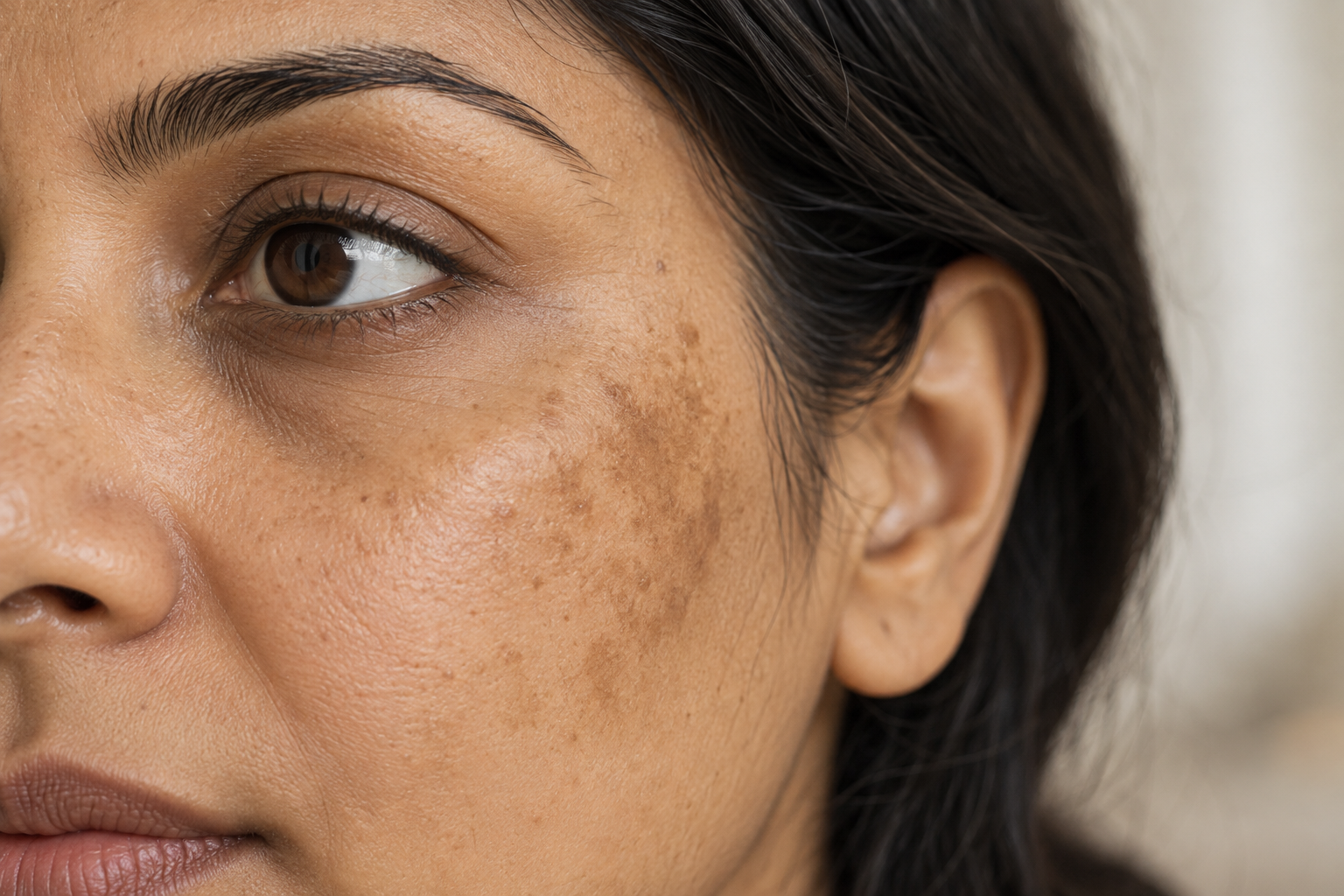
Melasma causes brown or greyish patches, particularly on the cheeks, forehead and above the upper lip. It is common in medium to darker skin tones. During pregnancy, it is also called the “mask of pregnancy.” On Black skin, as on other skin tones, not every facial patch is melasma.
Why Does Melasma Affect Black Skin Differently?
After irritation or injury, the skin may produce more pigment. The resulting patches are known as post-inflammatory hyperpigmentation. This reaction can occur after using an irritating product and should not be confused with melasma itself.
Treatment Approaches
Management takes skin tone, pigment depth and triggers into account. A dermatological assessment helps distinguish melasma from other causes of patches and provides an opportunity to discuss the options.
Topical Treatments
Sun protection generally accompanies treatments applied to the skin. These treatments differ in their ingredients and precautions for use:
- Some depigmenting products reduce pigment production. They can also irritate the skin or change its colour; their use requires medical supervision.
- Other creams may fade patches but cause irritation. Skin that does not tolerate a product well can develop new dark marks.
- Some preparations combine several ingredients. They require medical monitoring to limit adverse effects, particularly with prolonged use.
- The choice between products also depends on skin sensitivity. A product that burns or stings can irritate the skin and make patches more pronounced.
- Product selection takes skin tone, triggers and pigment depth into account.
Some skin-lightening products can cause abnormal skin discolouration, called ochronosis, which can be permanent. Rashes and facial swelling have also been reported. These risks warrant professional advice about the product being used.
Physical Procedures
Procedures can sometimes complement products applied to the skin. Their potential benefits and risks should be considered separately:
- Lasers: one trial found greater improvement with fractional CO2 than with another laser, with two months of follow-up. Another trial found no significant difference between a treatment applied to the skin alone and the same treatment combined with CO2. These findings do not establish a lasting advantage for all darker skin tones.
- Chemical peels: preparation may be necessary depending on the peel. The skin also needs care after the procedure. Pigmentation changes and scarring remain possible.
- Microneedling: small needles create channels in the skin to help products penetrate. Risks of this procedure include pain, infection and scarring.
The choice of procedure should be discussed with an experienced professional. For peels, experience with darker skin tones is particularly relevant to preventing pigmentation complications.
Effectiveness, Limitations and Side Effects
Effectiveness and Limitations
Pigment depth is one of the factors considered when selecting treatment. The response varies and may take longer in darker skin tones; an individual's timeline cannot be determined from skin colour alone.
Melasma can return after treatment stops. Fading patches therefore do not mean a permanent cure, and sun protection remains important.
Side Effects
Risks differ depending on the procedure. Possible complications include:
- Darker or lighter patches: pigmentation can increase or decrease in certain areas. Pigmentation changes after laser treatment are more common in darker skin tones.
- Redness and swelling: these reactions can occur after laser treatment or a peel. Their duration depends on the procedure and the skin's response.
- Scarring: this is a possible complication of a peel or microneedling. Appropriate supervision does not eliminate these risks.
- Irritation and sensitivity: after a peel, appropriate care is necessary while the skin heals. Burning, itching or swelling should be reported to the professional.
Care after the procedure is part of treatment. After a peel, scratching the skin or picking off scabs increases the risk of infection and scarring.
Sun Protection Advice
The sun can make patches more pronounced and contribute to their return. Sun protection accompanies melasma treatment, including for darker skin tones:
- Daily sunscreen: broad-spectrum protection with SPF 30 or higher is recommended even on cloudy days. A tinted sunscreen containing iron oxides also protects against visible light.
- Protective clothing: a wide-brimmed hat and clothing that covers the skin complement sunscreen on exposed areas.
- Shade: limiting exposure when the sun is strongest is part of the precautions. Sunscreen does not replace protective clothing or seeking shade.
- Reapplication: sunscreen should be reapplied at least every two hours outdoors, as well as after swimming or heavy sweating.
You can keep these protective measures in your routine even when the patches become less visible. Melasma can return, particularly after unprotected sun exposure.
Treatment selection is based on an in-person assessment. The virtual consultation offered here is an initial conversation; it does not replace that assessment.
Conclusion
Fading melasma on Black skin requires consideration of possible pigmentation reactions. Sun protection and well-tolerated skin care remain central. Patches may persist or return despite treatment. Expected results, risks and the care needed after a procedure are among the points to discuss before choosing it.
Ask us your questions about this treatment
Sources9 references+
- Melasma: Diagnosis and treatment — diagnosis, basic care and procedure risks (opens in a new tab)
- Melasma — course, recurrence and limitations of melasma options (opens in a new tab)
- Melasma: Overview — usual appearance and distribution of melasma (opens in a new tab)
- Melasma: Self-care — tolerated skin care and protection against sunlight and visible light (opens in a new tab)
- How to fade dark spots in darker skin tones — causes of dark spots, fading times and precautions (opens in a new tab)
- Chemical peels: FAQs — preparation, aftercare and risks of chemical peels (opens in a new tab)
- Low-Power Fractional CO2 Laser Versus Low-Fluence Q-Switch 1,064 nm Nd:YAG Laser for Treatment of Melasma: A Randomized, Controlled, Split-Face Study — comparison of two lasers with limited follow-up (opens in a new tab)
- FDA works to protect consumers from potentially harmful OTC skin lightening products — reported adverse effects of certain skin-lightening products (opens in a new tab)
- Combination of Hydroquinone and Fractional CO2 Laser versus Hydroquinone Monotherapy in Melasma Treatment: A Randomized, Single-blinded, Split-face Clinical Trial — trial of CO2 plus topical treatment, without a demonstrated advantage in this comparison (opens in a new tab)
Medical information
Irritation can make patches more pronounced in darker skin tones. After a peel, a burning sensation, itching or swelling warrants advice from the professional providing follow-up care. During pregnancy, some depigmenting products should be avoided. Diagnosis must distinguish melasma from other causes of pigmentation.
