


Skin Growths: How to Recognize Them and Have Them Assessed
You have noticed a small skin growth while getting dressed, or because a piece of jewellery, a collar or a belt rubs against it. It is new, or you have only recently noticed it. You are wondering what it is, whether it is serious and whether it needs to be removed. A small flap of skin may be a skin tag. A waxy or wart-like growth may be a seborrheic keratosis; a small red growth may be a cherry angioma, which is made up of blood vessels. Once these three types of skin growth have been identified, they are known to be benign, but their appearance is not enough to identify yours. It takes a medical examination to find out what it is.
- Diagnosis first
- Physician or nurse under supervision
- Targeted Lesions consultation
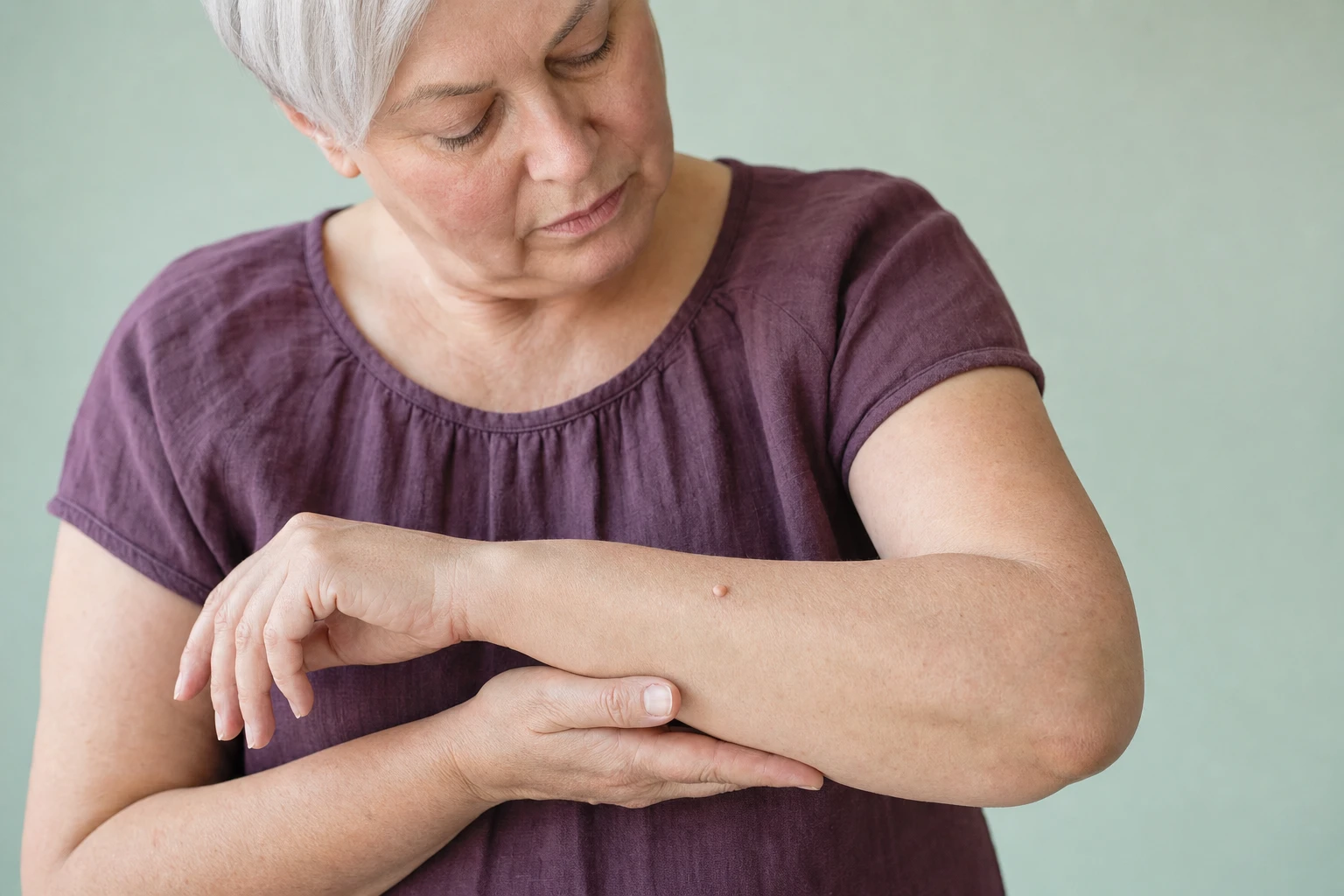
At a glance
Five things to know before deciding- What it is: a descriptive term, not a diagnosis. Benign skin growths include skin tags, seborrheic keratoses and cherry angiomas.
- Have it examined right away: a lesion that changes, gets bigger, bleeds or itches, or whose appearance worries you.
- Before any removal: a diagnosis made by a doctor. No diagnosis is made online, and no cosmetic treatment comes before the examination.
- What CARE MD offers: a Targeted Lesions consultation to assess these growths and consider their removal after diagnosis.
- Whether or not to remove it: a lesion identified as benign can stay in place; removal addresses discomfort or a preference about how it looks, after diagnosis.
What the Word Describes, and What You Cannot Conclude From It
The term "skin growth" is often used to describe a small, visible growth on the skin, especially when it is raised. A flat spot, on the other hand, changes the colour of the skin without being raised. This difference helps describe what you notice, but it is not a test: appearance alone cannot tell you what kind of lesion it is.
Its raised appearance, colour and texture are clues, not a diagnosis. A wart or a skin cancer can be mistaken for a skin tag, and a seborrheic keratosis can look like cancer. Comparing your skin with photos is therefore no substitute for an examination.
- What you see
-
A small visible growth on the skin, often raised
- What only the doctor can tell on examination
-
- Skin tag
- Seborrheic keratosis
- Cherry angioma
- Wart
- Sometimes, skin cancer
Three Common Benign Skin Growths and What They Look Like
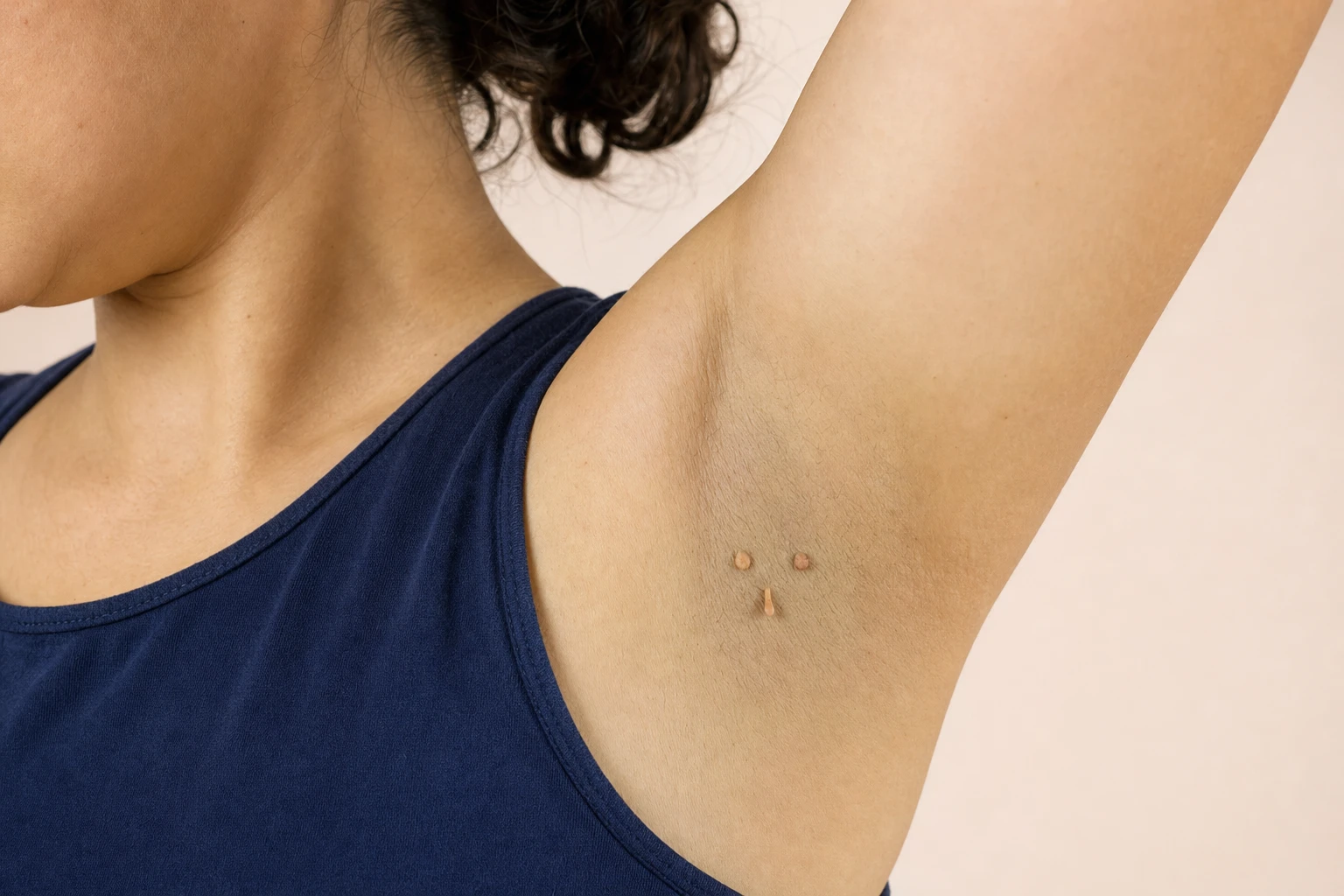
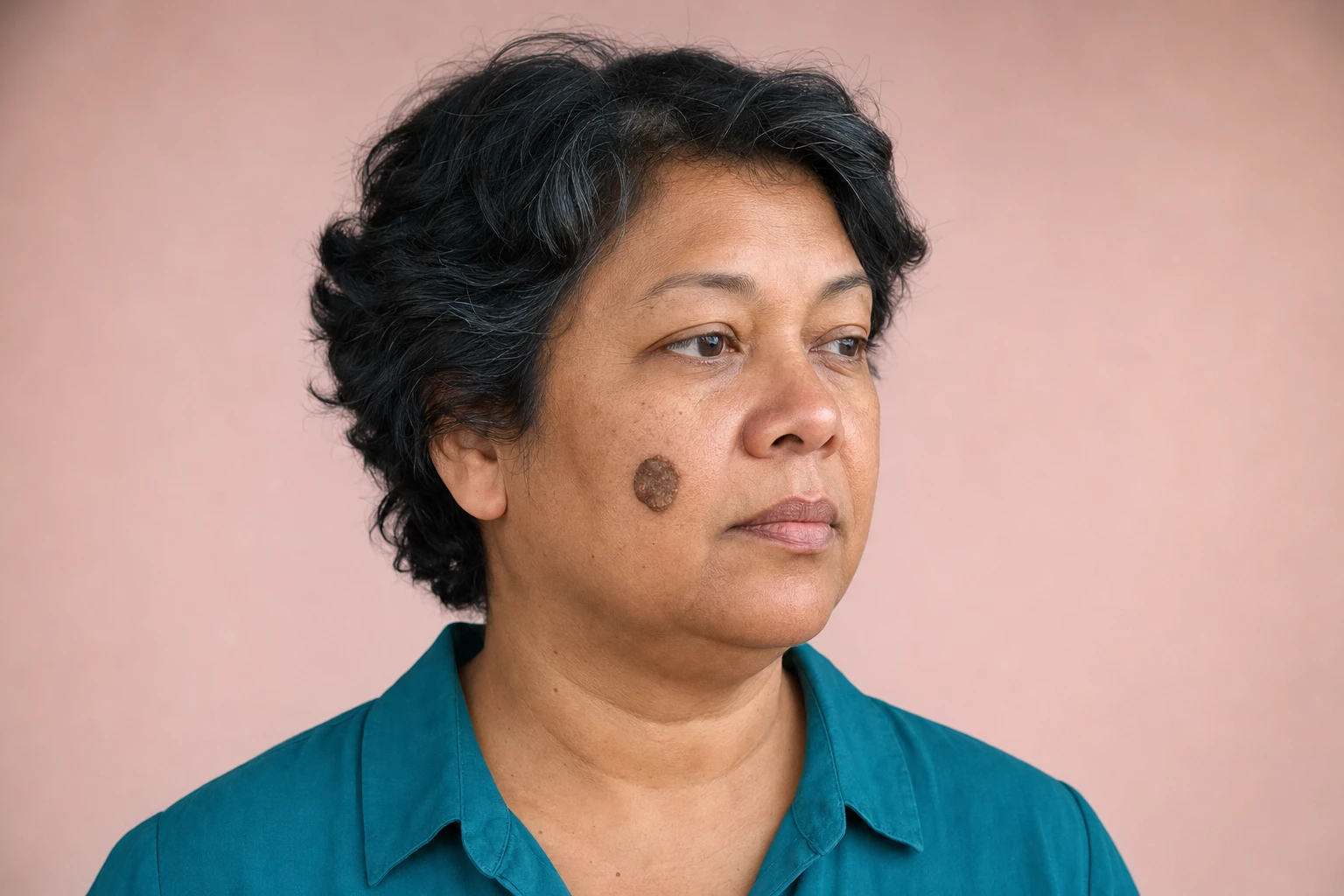
Seborrheic keratosis
- Looks like a wart or a drop of brown wax
- Colour from white to black, most often beige or brown
A seborrheic keratosis often looks like a wart, or like a drop of brown wax placed on the skin, and can become thick. It is most often beige or brown, but its colour ranges from white to black. It is not cancerous. However, neither its colour nor its appearance is enough to distinguish it from cancer: during a medical examination, the doctor can tell them apart.
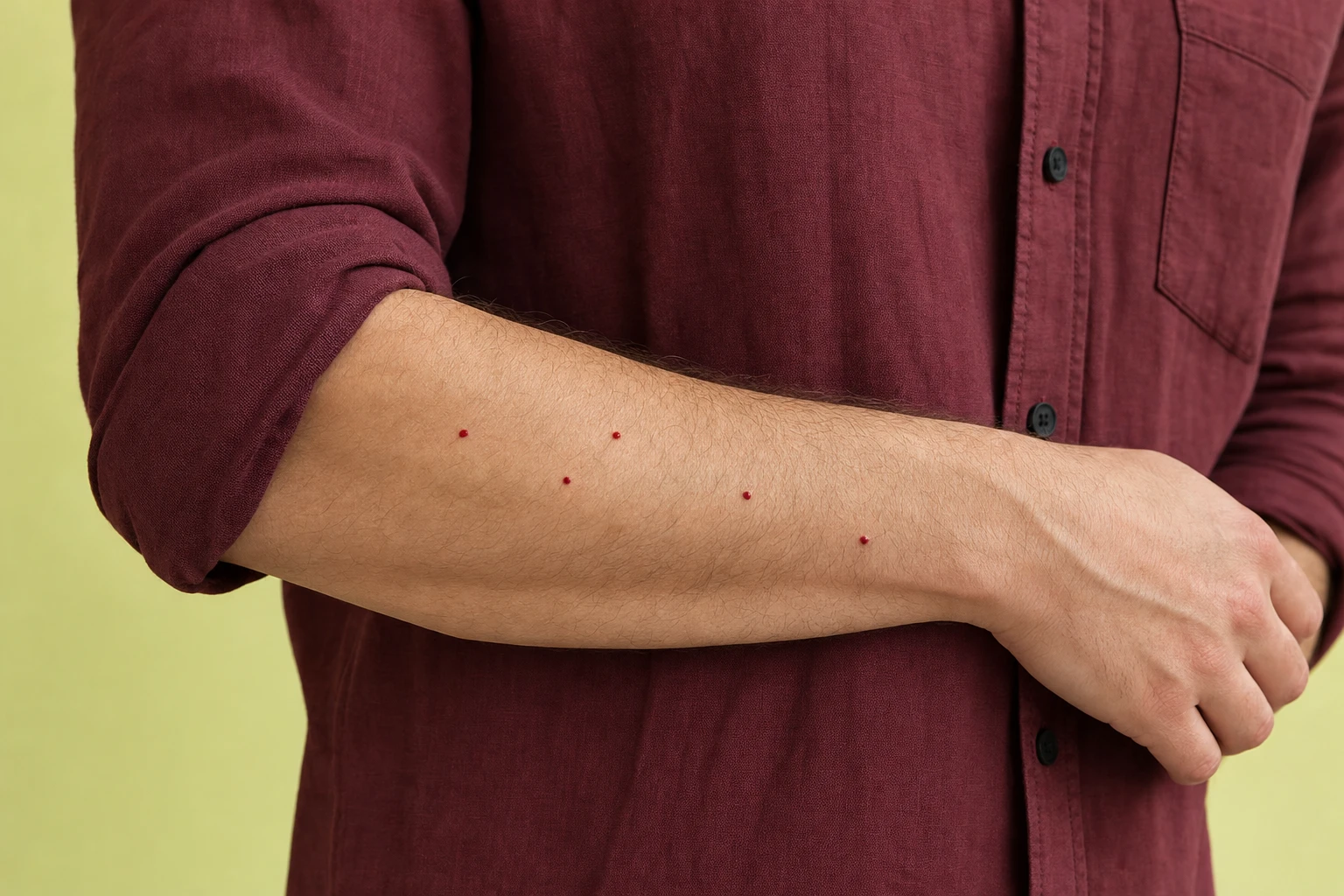
Cherry angiomas
- Growths made up of blood vessels
- Usually cherry red, smooth or raised
Cherry angiomas are benign growths made up of blood vessels. They are usually cherry red and can be smooth or raised above the skin.
Different lesions can share the same colour or the same raised appearance. Even if you recognize one of these appearances, have the growth examined before considering removal.
When to Have a Skin Growth Examined
For a mole, the ABCDE rule gives five signs to look for.
- Asymmetry
-
Asymmetry means that one half is not the same shape as the other.
- Border
-
The border can be irregular, jagged, notched or blurred
- Colours
-
the colours can vary.
- Diameter
-
Diameter is also a sign to look for: a melanoma is usually larger than 6 mm when it is diagnosed, but it can be smaller.
- Evolution
-
Finally, evolution means a change in colour, size, shape or texture, sometimes with itching, burning or tingling.
Any one of these signs warrants an examination, and a small diameter or an even colour does not rule anything out.
An actinic keratosis, caused by the sun or indoor tanning, is a precancerous lesion: it must not be confused with a benign seborrheic keratosis. Like a changing mole, it calls for a medical assessment and is outside the scope of what CARE MD offers.
Seek care right away
If the growth changes colour, size or shape, if it gets bigger, bleeds or itches, or if a new spot does not look like the others. Make an appointment as soon as possible with your doctor, who examines the skin and then, if needed, refers you to a dermatologist. These signs alone do not mean it is cancer, but do not wait to have them examined, and do not start any cosmetic treatment before the diagnosis.
- Changes
- Gets bigger
- Bleeds
- Itches
- New spot
Why Diagnosis Comes Before Any Removal
Different lesions can look the same. Before a cosmetic removal, the doctor therefore tries to identify the lesion by asking how it has changed and about any symptoms, then examining the skin. For most seborrheic keratoses, the examination is enough to recognize them; a cherry angioma can also be identified during an examination, which is sometimes supplemented by a biopsy to confirm the diagnosis. When the appearance suggests cancer, the lesion may be removed so that it can be analyzed under a microscope, as part of appropriate medical care. The possible tests depend on what the doctor finds.
A photo or a message is no substitute for this examination:
- No online diagnosis
- No removal at home
- No cosmetic treatment before a medical diagnosis
Removing a Skin Growth or Leaving It in Place
No discomfort
A lesion identified as benign can stay in place.
A growth identified as benign does not require any action. Skin tags are harmless, most seborrheic keratoses do not need treatment and a cherry angioma is generally not treated.
Discomfort or rubbing
A common reason to discuss removal.
Discomfort may lead you to discuss removal: a skin tag that often rubs against jewellery, clothing or a belt can become irritated. An angioma that bleeds often must first be examined; its removal can then be discussed.
Appearance
A personal preference, which can be a reason to talk about it.
If you do not like how it looks, you can also talk about it: this is a personal preference, not necessarily a medical need.
A lesion that changes, gets bigger, bleeds, itches or worries you should be examined by a doctor before any cosmetic treatment.
Asking for removal does not, however, mean it will be done: the doctor assesses what is possible based on the lesion, its location and your skin.
After-effects
Before deciding, ask whether removal can leave a scar or change the colour of the skin, whether the lesion can come back, how much recovery time to expect and whether several sessions are needed.
- Scarring
- Skin colour
- Recurrence
- Recovery time
- Several sessions
After a seborrheic keratosis is removed, the skin can stay lighter than the surrounding skin. This usually fades over time, but sometimes becomes permanent. Most keratoses that are removed do not come back, while a new one can appear elsewhere. These after-effects relate to seborrheic keratosis; this does not describe the after-effects of every removal technique. For the technique being considered, before deciding, ask the doctor about the risk of scarring or changes in skin colour, whether the lesion can come back, how long the skin takes to recover and whether several sessions are needed in your case.
At CARE MD
What CARE MD Currently Offers
In a Targeted Lesions consultation, CARE MD sees people who have a growth on the skin. The consultation with the doctor allows the lesion to be assessed before removal is discussed.
Removal offered
Removal of skin tags, seborrheic keratoses and cherry angiomas, after a diagnosis and an assessment, using plasma, cryotherapy or CO2 laser, depending on the lesion and the skin.
- Skin tags
- Seborrheic keratoses
- Cherry angiomas
- Plasma
- Cryotherapy
- CO2 laser
- Prior assessment
No removal without a diagnosis made by the doctor.
- Scope
The skin.
- Who performs the removal
A physician or a nurse under medical supervision.
- Suspicious lesion
It is referred for a medical assessment, without cosmetic removal.
No result is guaranteed, including the absence of recurrence.
Who to See, Depending on the Lesion
- Your family doctor
-
For a lesion that changes, bleeds or worries you, start with your family doctor, who examines the skin and can refer you to a dermatologist.
- CARE MD
-
CARE MD is not an emergency service. You come to CARE MD to discuss a growth, to have it assessed or to talk about options once a diagnosis has been made.
Request an Assessment for a Skin Growth
In the form, say where the growth is, when you first noticed it, whether it has changed and whether it causes a symptom such as itching, bleeding or discomfort. These details make your request easier to understand; they do not allow any remote diagnosis and do not guarantee treatment.
Nor does a form provide an urgent response. If the growth changes, gets bigger, bleeds or itches, see your doctor without waiting for a reply.
Frequently Asked Questions
Is a skin growth serious?
Not necessarily. Benign skin growths include skin tags, seborrheic keratoses and cherry angiomas. But appearance alone does not tell you which one it is: a wart or a skin cancer can look like a skin tag, and a seborrheic keratosis can look like cancer. A growth that changes, gets bigger, bleeds or itches should be examined by a doctor as soon as possible. During a medical examination, the doctor can determine what it is.
Sources6 references
Which signs mean I should see a doctor right away?
A change in colour, size, shape or texture, enlargement, bleeding, itching, or a new spot that does not look like the others. For a mole, asymmetry, an irregular border, several colours and an increasing diameter are signs to check during an examination; a small diameter does not rule anything out. These signs alone do not mean it is cancer, but they warrant a prompt appointment with your doctor, before any cosmetic treatment.
Sources4 references
Why is a diagnosis needed before removing a skin growth?
Because different lesions look alike. A skin tag can be mistaken for a wart, sometimes for a skin cancer, and a seborrheic keratosis can look like cancer. The doctor asks how the lesion has changed and about any symptoms, then examines the skin, trying to identify the lesion, and decides whether its appearance warrants analysis under a microscope. Do not try to remove it yourself, and do not go ahead with a cosmetic removal before the diagnosis.
Sources3 references
Does a benign skin growth need to be removed?
No, it does not have to be. Skin tags are harmless, most seborrheic keratoses do not need treatment and a cherry angioma is generally not treated. Removal is discussed when the lesion bothers you, for example by rubbing against clothing or jewellery, or when you do not like how it looks. In both cases, diagnosis comes first. The doctor then assesses what is possible based on the lesion and its location.
Sources3 references
What are the risks and after-effects of removal?
Before deciding, you need to distinguish which after-effects apply to the procedure being considered. After a seborrheic keratosis is removed, the skin can stay lighter than the surrounding skin; this usually fades, but sometimes becomes permanent. Most keratoses that are removed do not come back, but a new one can appear elsewhere. This does not describe the after-effects of every removal technique. For the chosen technique, ask the doctor about the risk of scarring or changes in skin colour, whether the lesion can come back, how long the skin takes to recover and whether several sessions are needed in your case. No result is guaranteed.
Sources1 reference
Does CARE MD remove all skin growths?
No: removal depends on the diagnosis and the assessment. CARE MD removes skin tags, seborrheic keratoses and cherry angiomas when removal is appropriate. A suspicious lesion must be medically assessed, without cosmetic removal.
What information should you include to request an assessment?
Say where the growth is, when you first noticed it, whether it has changed and whether it causes itching, bleeding or discomfort. This information makes your request easier to understand, but the message does not allow a remote diagnosis or promise treatment. Nor is it a substitute for an examination: if the growth changes, gets bigger, bleeds or itches, see your doctor without waiting for a reply.
Sources2 references
Sources10 references+
- Skin tags: Why they develop, and how to remove them — American Academy of Dermatology (opens in a new tab)
- Seborrheic keratoses: Overview — American Academy of Dermatology (opens in a new tab)
- Seborrheic keratoses: Diagnosis and treatment — American Academy of Dermatology (opens in a new tab)
- Cherry angioma — MedlinePlus Medical Encyclopedia (National Library of Medicine) (opens in a new tab)
- What to look for: ABCDEs of melanoma — American Academy of Dermatology (opens in a new tab)
- Actinic keratosis: Overview — American Academy of Dermatology (opens in a new tab)
- Signs and symptoms of melanoma skin cancer — Canadian Cancer Society (opens in a new tab)
- Finding skin cancer early — Canadian Cancer Society (opens in a new tab)
- Diagnosis of melanoma skin cancer — Canadian Cancer Society (opens in a new tab)
- Check Your Skin — Canadian Dermatology Association (opens in a new tab)
Having a Skin Growth Examined Before Any Removal
The appearance of a growth is not enough to know what it is: a medical examination is needed before considering removal.
Limitations and precautions
Do not try to remove a skin growth yourself.
A changing mole and an actinic keratosis call for a medical assessment.
The form is no substitute for an examination and is not for emergencies.
No diagnosis is made online or from a photo: different lesions can look the same.
A wart or a skin cancer can look like a skin tag, and a seborrheic keratosis can look like cancer.
A small diameter or an even colour does not rule out a suspicious lesion.
No result is guaranteed. Neither the disappearance of the lesion nor the absence of recurrence is guaranteed. Before removal, ask the doctor what risks of scarring or changes in skin colour are possible with the chosen technique, what recovery to expect and whether several sessions are needed in your case.
CARE MD only considers removal once the lesion has been diagnosed and assessed.
