


Hair Loss in Women: Causes and Assessment
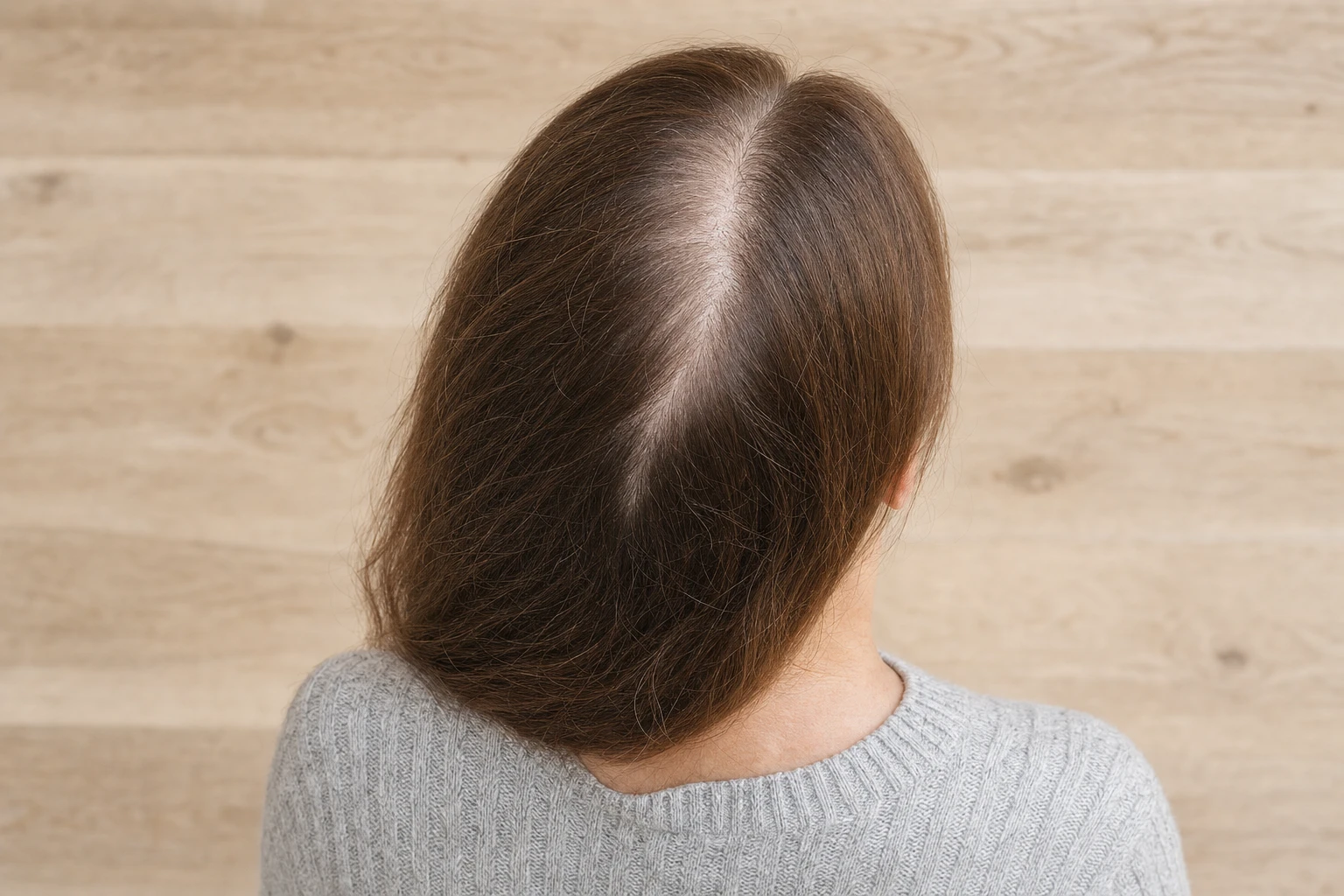
A widening part, a thinner ponytail, more hair in the shower: you notice it before anyone tells you. Hair loss in women can show up in several ways. It may be temporary shedding, hair that becomes finer and finer and leaves the top of the head sparse, or a scalp condition, and these situations sometimes occur together. Identifying the cause makes it possible to choose the next step: waiting for the hair to grow back, correcting what triggered the shedding, or considering long-term treatment.
Shedding, Loss of Density or Breakage
In women, hair shedding shows up on the pillow, in the brush or at the bottom of the shower: the hairs fall out. Loss of density looks different: a wider part, sparser areas, and it can progress even when you are not losing a lot of hair. Breakage, on the other hand, can reduce how full your hair looks without the root being involved. Temporary shedding and gradual thinning can look alike and occur together. Other causes can also make hair seem to be thinning. You do not have to tell them apart on your own: the purpose of the examination is to understand what is happening.
In Brief
Five things to know before deciding- What you notice: a wider part, a thinner ponytail or more hair in the shower; appearance alone does not tell you what is causing the hair loss.
- Possible causes: gradual thinning, delayed shedding after an event, traction from hairstyles, a scalp disease, a deficiency, a thyroid disorder or certain medications, sometimes several at once.
- Signs to have assessed right away: hair loss that is patchy, sudden or heavy, or a scalp that is painful, very itchy, red, scaly or scarred.
- Assessment: your history, an examination of your hair and scalp, then a blood test only if your history and the examination warrant it.
- Options: they depend on the cause, sometimes no treatment is needed, and there is no promise that your hair will grow back.
Causes of Hair Loss in Women
Heredity, hormonal factors, certain diseases, certain medications and hairstyling habits can contribute to hair loss. When it starts and how it is distributed provide clues, but appearance alone is not enough to establish the cause.
Hair That Becomes Finer Over Time
In androgenetic alopecia in women, the follicles gradually produce finer hairs. The part widens and the hair on top of the head becomes sparser, without dramatic shedding when you wash your hair. The hereditary factor can come from either parent, and hormones may also play a role: this hair loss is more common after menopause, but it often begins in a woman's forties or fifties, and sometimes earlier. This type of thinning does not necessarily mean that you have an excess of hormones.
Diffuse Shedding After an Event
Childbirth, an illness, surgery or major stress can cause more hairs to enter the resting phase. The shedding does not happen right away: it starts about three months after the trigger, spread over the whole scalp, and it reduces volume and thickness rather than forming patches. This is the mechanism behind hair loss after childbirth, as well as hair loss that follows an illness or stress. A follicle that enters the shedding phase stops growing and rests for two to four months, then a new hair grows and pushes the old one out: shedding can slow down well before the volume returns, because the new hairs still have to grow.
Repeated Traction
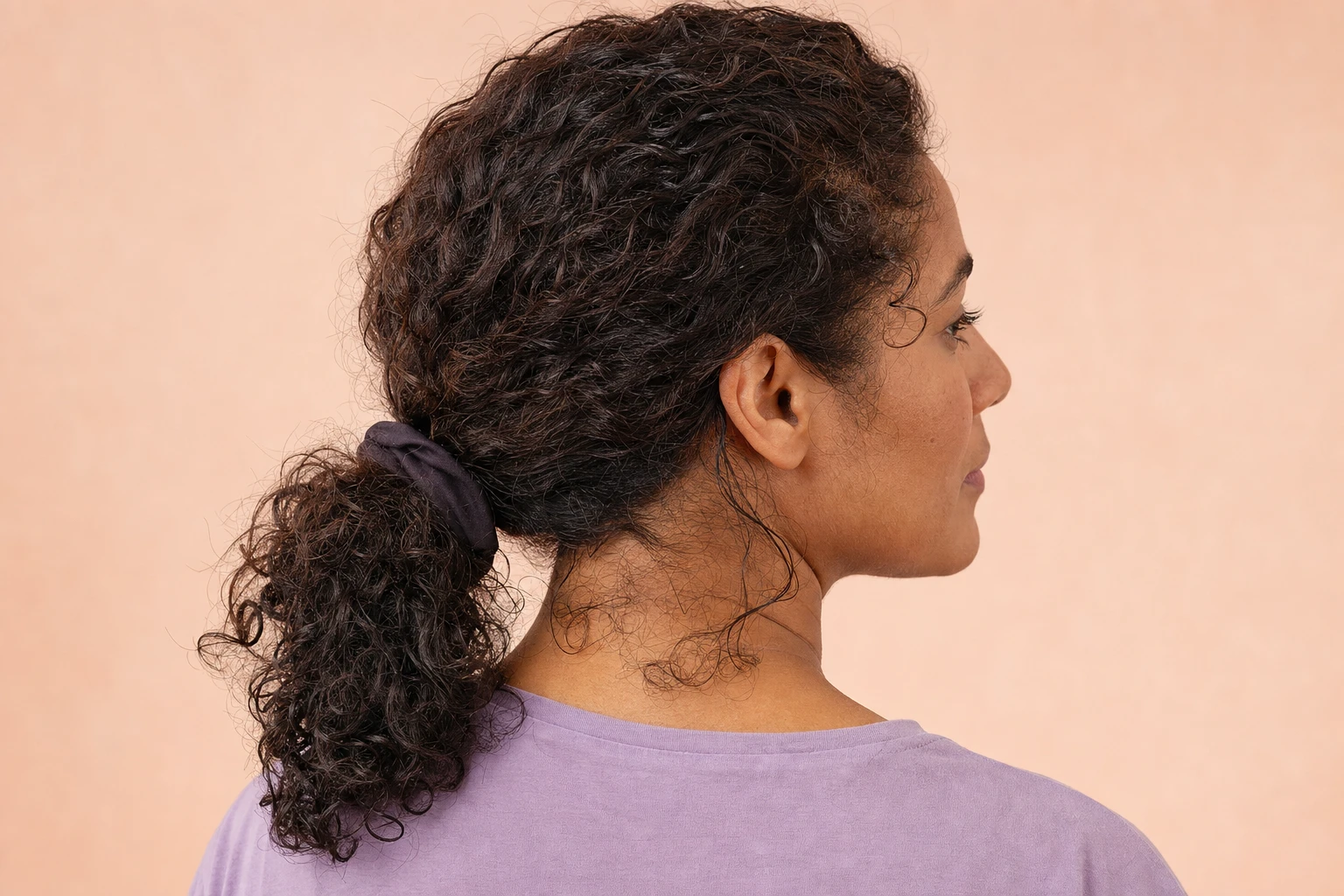
A hairstyle that often pulls on the same areas can break hair and make it fall out. If it hurts, the tension is excessive, and what matters is this tension rather than the name of the hairstyle. Broken hairs around the forehead are one possible sign. When traction lasts a long time, the hair loss can become permanent: loosening hair ties and no longer wearing hairstyles that pull at the roots keeps this tension from continuing.
A Scalp Disease or Infection
Scaling, inflammation and an area with no hair can be caused by a scalp infection, sometimes with intense itching, burning and tenderness where the hair is being lost. Some types of inflammation destroy the follicles, and a destroyed follicle no longer produces hair: this is a reason not to wait. Cosmetic skin care is no substitute for medical management of these conditions, and when the scalp is affected, CARE MD directs you to a doctor.
A Deficiency, the Thyroid, Hormones or the Immune System
Insufficient intake of iron or certain other nutrients can contribute to hair loss, as can a thyroid disorder, which is sometimes accompanied by thinning. Severe fatigue is one of the possible symptoms of a thyroid hormone deficiency, but it does not prove that there is a deficiency, since fatigue can have other causes. Polycystic ovary syndrome (PCOS) can also accompany gradual hair loss: acne, increased hair growth on the face, chest, abdomen or thighs, and irregular periods should be mentioned, although none of these signs confirms PCOS on its own. Finally, in alopecia areata, the immune system attacks the follicles and causes hair loss. These causes require a medical assessment: no single aesthetic treatment can address every type of hair loss.
Certain Medications
Certain medications can cause hair loss. If you suspect a medication you are taking, do not change how you take it or stop taking it without consulting your prescriber. Your prescriber will help you determine whether the medication is responsible.
When Should You See a Doctor About Hair Loss?
Hair loss does not, on its own, mean that a serious disease is present. What matters is the overall picture of signs and how they change, not a one-off count of the hairs you lose.
These signs do not point to a specific disease, but they justify looking for the cause rather than trying a product. Some conditions require medical treatment; prolonged traction or certain types of inflammation can leave permanent damage.
Signs That Call for a Prompt Medical Assessment
- Seek care right away
-
Hair loss that is patchy, sudden or heavy; pain, marked itching, redness, scaling or scarring of the scalp.
- Also mention
-
Severe fatigue, irregular periods, new body hair, or hair loss that persists or speeds up. These changes also justify a consultation, although they do not, on their own, mean that it is urgent.
Having Your Hair Loss Assessed at CARE MD
In Sainte-Thérèse, CARE MD offers Global Aesthetic consultations to women who are concerned about their hair. The purpose of this consultation is to understand what is happening and to guide you. Booking does not mean that a treatment is right for you: the assessment may also show that no treatment is needed. For this appointment, you can book an assessment.
What the Assessment Includes
The doctor asks how long your hair has been falling out, how quickly, whether the hair loss affects the whole scalp or one area, and whether density is gradually changing. The doctor also asks about recent events (childbirth, illness, surgery, stress), your medical history, your medications and supplements, and your hairstyling habits. Examining the scalp provides essential clues, and gently pulling on the hair gives information about its growth and fragility. Depending on the findings, the doctor may direct you to appropriate care.
Is a Blood Test Always Necessary?
No. The decision depends on your history and the examination, for example when the doctor suspects a deficiency, a thyroid disorder, a hormonal imbalance or an infection. For diffuse shedding, it can be used to rule out a thyroid disorder or iron deficiency. It does not replace examining the scalp and is not enough to identify every cause: no single set of tests applies to all women.
Preparing for Your Appointment
Note the approximate date when it started, the areas affected, your symptoms and what happened in the preceding months. Bring a list of your medications and supplements. If you have them, older personal photos can help show how things have changed; they are used for the assessment only. Also say what you are hoping for: understanding the hair loss, preserving density or discussing an option you have already been offered.
What This Assessment Covers, and What It Does Not
The hair assessment is for women. A scalp condition requires medical advice.
To find out who will see you at CARE MD in Sainte-Thérèse, learn about the roles and backgrounds of our professionals.
Treatments Considered After the Assessment
The right goal depends on the cause: letting temporary shedding resolve, removing a source of traction, correcting an identified cause, managing a disease or slowing gradual hair loss. Stabilizing hair loss, regaining volume and seeing an improvement are three different results, and no option guarantees that you will regain your previous density. Sometimes no treatment is needed. The assessment is used to choose among these options based on the cause of your hair loss; booking a consultation at CARE MD does not mean booking one of these treatments.
Temporary Shedding: Monitoring
Once the trigger has gone, shedding can decrease on its own. This delayed shedding, called telogen effluvium, usually does not require medication; taking medication does not speed up recovery. Follow-up is used to check that the shedding is slowing down; if it continues, the assessment includes looking for a possible underlying cause. Volume takes many months to return after the shedding phase.
Correcting an Identified Cause
If a deficiency is identified, the doctor may advise correcting it. A thyroid disorder or a scalp disease requires treating the cause. An infection or painful inflammation may require treatment with medication. Supplements, however, should not be taken indiscriminately: when levels are normal, extra intake can even be harmful. Before looking for a natural treatment for hair loss, have your levels checked to find out whether a deficiency is involved: taking more supplements when levels are normal can cause harm. Without a proven deficiency, no supplement is a universal solution.
Slowing Gradual Thinning
For female pattern thinning, treatments prescribed during a consultation may be considered. This type of hair loss can progress very slowly and has no guaranteed cure. Some treatments must be continued to maintain the effect. Side effects are possible: the doctor explains those of the option being considered. Pregnancy, plans to become pregnant or breastfeeding can rule out certain options. Mention them before choosing, and bring a list of your medications and supplements. These treatments must not be started on your own.
What to Ask Before You Start
Whatever the treatment, ask what realistic goal it is intended to achieve, when the doctor will reassess it, which side effects to watch for and what happens when you stop. The timing of reassessment, how consistently the treatment must be used, whether it needs to be continued and the precautions to take depend on the option chosen. The doctor goes over them with you once the cause has been identified.
What Can You Do Every Day to Protect Your Hair?
Choose hairstyles that do not pull, and loosen those that hurt. Gentle washing, less heat, and brushing and combing without tugging limit breakage: this care protects the hair fibre, but it does not treat a disease of the follicle. If you are troubled by the way your hair looks in the meantime, you can talk about it during the assessment.
A shampoo can have an effect on how your hair looks or on breakage, but it does not make hair grow back and does not stop gradual hair loss from getting worse. No universal product or supplement is a substitute for finding the cause.
Ask Us About Your Hair Loss
Write to us with your questions and explain your concern. Your message lets us reply and guide you; receipt of your message does not confirm an appointment.
FAQ
Why am I losing more hair?
Several mechanisms are possible: more hairs can enter the resting phase after an event, hair can gradually become finer, or traction or a scalp disease may be involved. When the shedding began, how it is distributed and the symptoms that accompany it help tell these apart, and several causes can occur together.
Sources4 references
What is the difference between hair shedding and loss of density?
Shedding mainly refers to hairs that come out. Loss of density shows up as a wider part or sparser areas; it can progress even without a lot of hair in the shower. Breakage can also reduce how full your hair looks, and the examination helps distinguish between these situations.
Sources3 references
Is a blood test always necessary?
No. The decision depends on your history and the examination, for example if a deficiency or a thyroid disorder is suspected. It does not replace examining the scalp and cannot, on its own, identify every cause of hair loss.
Sources2 references
Which scalp signs should you have assessed?
Patchy hair loss, pain, marked itching, redness, scaling or scarring of the scalp warrant medical advice right away. These signs can have several causes, some of which cause lasting damage to the follicles: they should be examined rather than automatically attributed to stress.
Sources3 references
What treatments may be considered?
It depends on the cause: monitoring temporary shedding, removing a source of traction, correcting a proven deficiency, managing a disease or, for gradual hair loss, treatments prescribed during a consultation. Their goals and constraints differ: ask what the recommended option can improve, when it will be reassessed and whether it must be continued to maintain its effect.
Sources5 references
Why might you lose hair at 40 or 50, or after menopause?
Female pattern thinning often begins in a woman's forties or fifties, or later, and it is more common after menopause; hormones may play a role. Age alone does not explain hair loss, however: a deficiency, a medication, a recent event or a scalp condition can also be involved, and sudden shedding, patches or inflammation should not automatically be attributed to menopause.
Sources2 references
What is the best product for hair loss in women?
No product is right for every woman, since cases of hair loss that look similar require different approaches to care depending on their causes. A shampoo can have an effect on how your hair looks or on breakage without making hair grow back, and supplements taken indiscriminately can even be harmful when levels are normal. The assessment comes first: once the cause has been identified, the doctor determines whether a treatment is useful or whether monitoring is enough.
Sources2 references
Sources10 references+
- American Academy of Dermatology — Hair loss: Diagnosis and treatment (opens in a new tab)
- American Academy of Dermatology — Hair loss: Who gets and causes (opens in a new tab)
- American Academy of Dermatology — Hair loss: Signs and symptoms (opens in a new tab)
- American Academy of Dermatology — Thinning hair and hair loss: Could it be female pattern hair loss? (opens in a new tab)
- American Academy of Dermatology — Hairstyles that pull can lead to hair loss (opens in a new tab)
- American Academy of Dermatology — Hair loss: Tips for managing (opens in a new tab)
- British Association of Dermatologists — Telogen effluvium (opens in a new tab)
- British Association of Dermatologists — Hair loss female pattern (androgenetic alopecia) (opens in a new tab)
- NHS — Underactive thyroid (hypothyroidism) (opens in a new tab)
- NICHD (NIH) — What are the symptoms of PCOS? (opens in a new tab)
Hair Loss: Limitations and Precautions
Temporary shedding can resolve, whereas prolonged traction or certain types of inflammation can destroy the follicles. The examination helps distinguish between these situations before a treatment is chosen.
Limitations and precautions
Seek care right away for hair loss that is patchy, sudden or heavy, or for pain, marked itching, redness, scaling or scarring of the scalp.
Do not change how you take a medication or stop taking it without consulting your prescriber, even if you think it is the cause.
Mention whether you are pregnant, planning a pregnancy or breastfeeding before choosing a treatment.
Do not take supplements indiscriminately, and do not start any treatment on your own.
Both regrowth and the return of volume vary from person to person: neither is guaranteed, not even a return to your previous density.
The appearance of your hair does not identify the cause, and several causes can occur together.
Lab tests are not enough to identify every cause.
Prolonged traction or certain types of scalp inflammation can result in permanent hair loss.

Book Your Assessment
If your hair loss concerns you, a Global Aesthetic consultation is an opportunity to look for its cause and ask your questions: book an assessment.