


Dark Spots on the Face: Hyperpigmentation Treatment
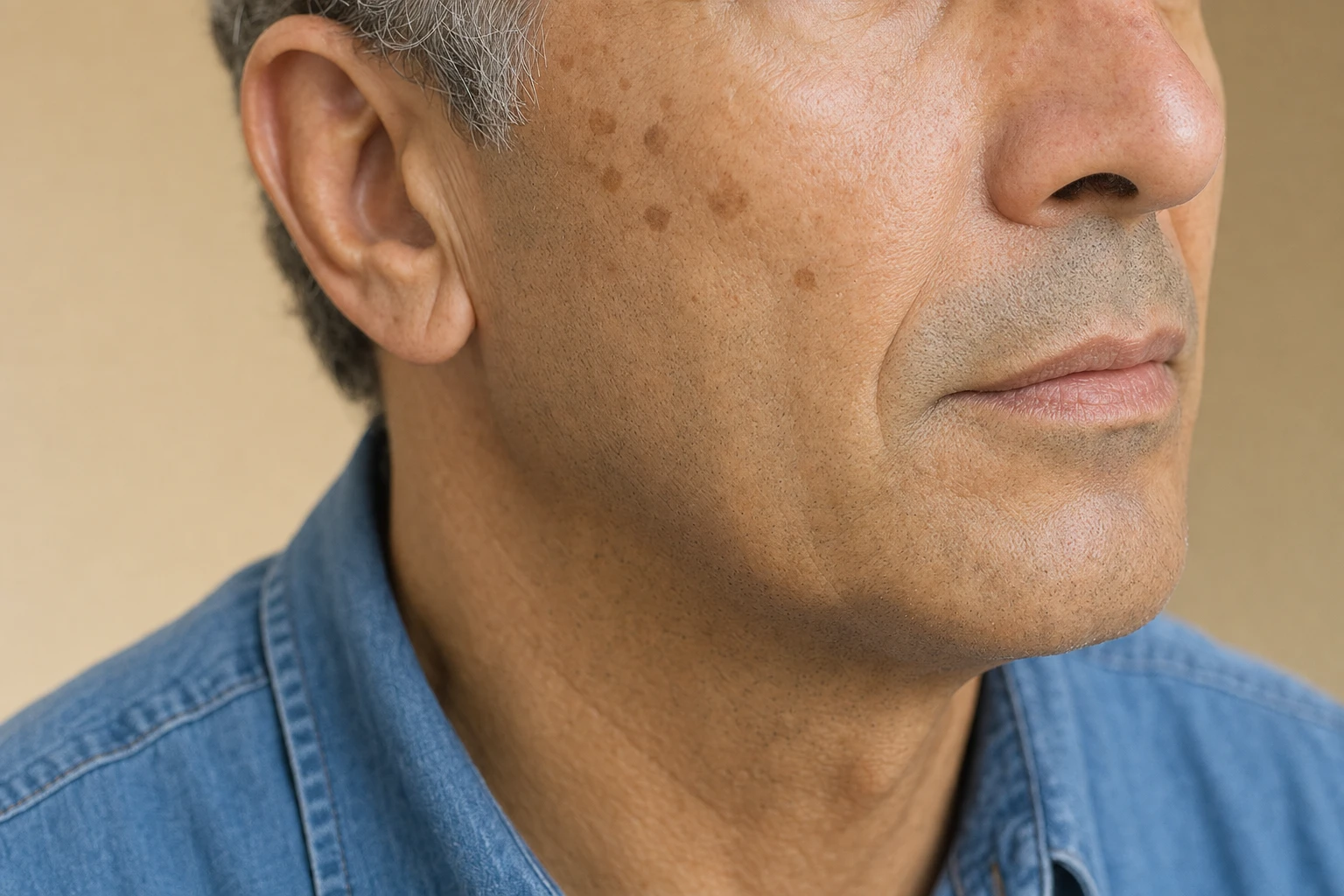
A dark spot has appeared on your cheek, near your temple or on your forehead. Perhaps you see marks that remain after a pimple instead. You are looking for ways to fade these dark spots on your face, but their colour alone does not tell you where they come from, and the cause guides treatment. The sun, skin inflammation or hormonal changes produce spots that look alike but are not treated in the same way. Some even require a medical examination before any cosmetic treatment. At CARE MD, in Sainte-Thérèse, on Montreal's North Shore, you can request a Global Aesthetic consultation. Before choosing a hyperpigmentation treatment, you need to know what kind of spot it is.
At a glance
Five things to know before deciding- Where the spots come from: the sun, skin inflammation or hormones produce spots that look alike. The brown colour alone does not tell you which type you have, and the cause guides treatment.
- Before any treatment: have a doctor examine a spot that is new, looks different from the others, changes, itches or bleeds.
- What CARE MD offers: intense pulsed light (IPL) for pigmented spots on the face, after an assessment. The fractional CO2 laser is one of the resurfacing options; its suitability for a spot is evaluated during the assessment.
- Other approaches: skin care, superficial peels and microneedling each have potential effects, limitations and risks; their role depends on the cause of the spot and on your skin.
- Result and after-effects: irritation or a change in pigmentation is possible, depending on the treatment. Fading, when it occurs, varies with the cause; spots can come back. Daily sun protection remains useful even as they fade.
What Is a Dark Spot on the Face, and Where Does Yours Come From?
Hyperpigmentation is an area of skin that is darker than the skin around it: it contains excess melanin, the pigment that gives skin its colour. Yet "brown" only describes what you see. The same brown colour can come from the sun, inflammation or hormones, and the diagnosis is based on how the spot has developed and on an examination of the skin, not on its colour.
The sun causes flat spots to appear on frequently exposed areas, including the face and hands. Solar lentigines, also called age spots, are one example. A pimple, irritation or injury, on the other hand, can leave a darker spot: this is post-inflammatory hyperpigmentation. When the mark left after a pimple is flat, it is generally not a scar. An acne scar can be indented or raised, and its colour can fade while the indentation or raised area remains.
When a skin condition such as acne or eczema is perpetuating the marks, it is treated before the pigmentation. During the assessment, mention any medication suspected of causing spots: do not stop taking any medication without the advice of the person who prescribed it.
Calling your marks "freckles" is no substitute for a skin examination: colour alone is not enough to identify the cause. Nor is a brown discolouration under the eye, described as pigmented dark circles, enough to tell what causes it. Before choosing a treatment, its nature needs to be clarified.
Brown or Greyish Patches That Keep Coming Back: Is It Melasma?
Melasma appears as brown or greyish patches, usually on the face. The hormonal changes of pregnancy are among its possible factors, and a family history can guide the assessment. Neither hormones nor the appearance of the patches is enough to make the diagnosis: that requires an examination. Melasma can improve, but it often comes back when treatment stops. Maintenance is therefore planned at the same time as the treatment, unlike the management of an isolated sun spot.
When Should a Spot Be Examined Before Any Cosmetic Treatment?
The ABCDE criteria help you recognize what calls for medical advice:
These criteria are not a test: they indicate when to seek medical advice, not what you have. A mole, or a lesion whose nature is uncertain, such as an actinic keratosis or lentigo maligna, must not be treated with a cosmetic procedure: it needs to be examined first. No photo or online text can tell what kind of lesion it is.
Seek care right away
Have a doctor examine a spot that is new, looks different from the others, changes, itches or bleeds, before pursuing any cosmetic treatment. These signs apply to any dark spot on the skin, on the face or elsewhere.
- Asymmetry
-
One half of the spot does not match the other.
- Border
-
The outline is irregular.
- Colour
-
The spot has several colours.
- Diameter
-
A large spot draws attention, but a melanoma can measure less than 6 mm; size alone is therefore not reassuring.
- Evolving
-
The spot changes over time.
Skin Care and Superficial Peels for Dark Spots
For some age spots, a cream or lotion can help, but it requires regular application: improvement takes weeks or months. This timeline does not apply to every cause of pigmentation. Vitamin C is one example of an ingredient used in cosmetics, but its name says nothing about the whole formula. What matters is the cause of the spot, how well your skin tolerates it and the other products you use.
A cream does not eliminate an ongoing cause, and a stronger formula or several layered active ingredients do not guarantee a faster result. A product that burns or stings irritates the skin and can create new spots: choose a well-tolerated formula and have your routine reviewed as soon as your skin reacts. During pregnancy or breastfeeding, have a health professional check the ingredients and treatments being considered. Some spots need treatments prescribed during a consultation, which require a separate assessment.
A peel removes the surface cells of the skin, which contain pigment. It therefore works only on the surface and does not automatically treat every cause of spots. It can also worsen pigmentation, lighten the skin too much or leave a scar. If you have dark skin or your skin tends to develop lasting marks after irritation, this reaction matters when choosing a peel: a peel that injures the surface of the skin can intensify post-inflammatory hyperpigmentation. If you are considering a depigmenting mask, have its ingredients and its place in your routine checked before applying it; the mask's name is not enough to know whether it is appropriate for your skin.
Laser or Pulsed Light: Which Technique Is Right for Dark Spots?
CARE MD offers intense pulsed light, or IPL, for pigmented spots on the face. IPL is not a laser: it emits light covering several wavelengths, whereas a laser emits a specific wavelength, which is absorbed and then converted into heat in the targeted tissue. IPL can be considered for certain pigmented lesions, including solar lentigines. The choice depends on the diagnosis, skin colour and the parameters chosen. On dark skin, hyperpigmentation is possible; adjusting the settings does not eliminate this risk. IPL is not a universal solution.
For melasma or a mark left by a pimple, greater caution is needed: a procedure that injures the epidermis can worsen post-inflammatory hyperpigmentation, and superficial pigment does not respond the same way as deep pigment. Which approach is appropriate is determined during the assessment. The same pulsed light is also used for facial photorejuvenation, which has a different goal from fading a spot.
CARE MD also offers the fractional CO2 laser, a resurfacing technique. Its energy is absorbed mainly by the water in the tissues, not by melanin: it creates small, controlled injuries whose repair renews the skin. For spots, its benefit is therefore not a given. The fact that it is offered is not enough reason to choose it for a spot: its suitability is evaluated during the assessment. Your skin tone and how your skin reacts after irritation also matter when choosing a treatment; a procedure that injures the surface of the skin can worsen post-inflammatory hyperpigmentation.
Microneedling and Dark Spots
Microneedling involves making small punctures in the skin with needles. The repair that follows can stimulate collagen and improve the appearance of some scars, fine lines or uneven texture. Improving texture is a different goal from fading a spot: the effect on pigment is not a given and depends on the cause.
After the session, the skin can darken or lighten, with redness, a burning sensation and swelling. Some devices have not been studied on dark skin. Mention any tan, sunburn, infection or active pimples before the session.
Depending on Your Skin Tone and Past Reactions: Which Precautions Apply?
Your skin tone matters in every choice, whatever the treatment. On dark skin, marks after inflammation are more common, darker and longer-lasting, and an irritating procedure can intensify pigmentation or leave a lighter area. Three other factors also matter when choosing a treatment: a recent tan, how your skin has reacted to previous treatments and your history of marks after a pimple or irritation. Discuss them before the treatment: adjusted settings do not guarantee safety.
The risks differ from one treatment to another:
- Topical skin care
-
Irritation, which can perpetuate spots or create them.
- Peel
-
Worsened pigmentation, overly lightened skin, scarring.
- Microneedling
-
Darker or lighter skin, redness, burning sensation, swelling.
- IPL
-
Hyperpigmentation is possible on dark skin; on pigmented lesions, darkening followed by crusting can occur.
- Lasers in general
-
Pain, redness, bruising and swelling; blisters, burns, infection and changes in pigmentation are possible.
- Fractional CO2 laser
-
It passes through the skin barrier, with a risk of infection; prolonged redness can be caused by the parameters, an infection or contact dermatitis, and too much energy or too many passes can leave a scar.
After some laser treatments on sun spots, the spot can darken or form a crust for a while. This darkening does not prove that the treatment worked. Before a session, ask which reactions are usual, which signs mean you should call and how to protect your skin afterwards. A spot that keeps darkening, redness that sets in or a wound that is slow to heal should be reassessed; do not add a stronger product on your own.
How Can You Prevent Dark Spots on the Face?
First, calm whatever is causing irritation: acne, eczema or a product that stings perpetuates the marks. Avoid skin care that burns and keep treating the cause. For sun protection, sunscreen is the key measure; shade, clothing that covers the skin and a wide-brimmed hat complement it without replacing it. This protection remains useful after an improvement: age spots can reappear after treatment, and no measure guarantees that no spot will come back.

Which Sunscreen Should You Choose, and How Should You Apply It?
A broad-spectrum sunscreen protects against UVA and UVB; aim for an SPF of 30 or higher. For spots, a tinted sunscreen containing iron oxides adds protection against visible light, which complements UV protection without replacing it. A tint suited to your skin tone avoids a white cast, and a non-comedogenic formula is more appropriate for oily skin.
Apply it generously and evenly, as directed on the label, at least fifteen minutes before sun exposure. Use about one teaspoon for an adult's face and neck. Outdoors, reapply it at least every two hours, and more often after sweating, swimming or drying off with a towel. Even a water-resistant product needs to be reapplied after swimming or heavy sweating.
How Long Does It Take, and Do Spots Come Back?
The time it takes depends on the cause and the depth of the pigment. Once the cause is under control, some spots that are a few shades darker than your skin fade in six to twelve months, and deeper pigment can persist for years. This timeframe describes the natural course of these spots, not the length of a treatment. The number of sessions and maintenance are decided during the assessment, depending on the spot and the treatment chosen.
A spot can come back: melasma often returns when treatment stops, sun spots sometimes reappear, and the sun or new inflammation causes new ones to form. The result varies from person to person, and complete disappearance is not guaranteed.
How Can You Prepare for the Assessment at CARE MD?
To prepare your questions, you can note when the spots appeared and whether they followed a pimple, irritation, sun exposure or a hormonal change. A list of your skin care products, treatments and medications, along with photos showing how the spots have evolved, can help you explain what has changed. Also think about your reactions to previous treatments.
CARE MD offers a Global Aesthetic consultation. Before any procedure, the nature of the spot, what you would like and the limitations of the options need to be discussed with the doctor; not treating can also be a choice. If a first conversation takes place remotely, it does not replace an in-person examination before a treatment is chosen. Before a laser treatment, ask whether this technique is appropriate for your skin, what after-effects to expect, what follow-up is needed and which risks to discuss. You can ask our professionals your questions, in particular to find out who will perform the treatment being considered.
Ask Us About Your Dark Spots
Frequently Asked Questions
How do you remove dark spots on the face?
It starts with the cause: active inflammation is treated first, the skin is protected from the sun and the skin care you apply must be well tolerated. A cream or lotion can help some age spots fade, with regular application over several weeks or several months. Vitamin C is a cosmetic ingredient, but its name alone does not tell you whether a formula is appropriate for your skin. A procedure such as IPL comes into play only after the spot and the skin have been assessed, because an option suited to a sun spot is not automatically appropriate for melasma or a mark left by a pimple. Complete disappearance is not guaranteed, and spots can come back.
Sources5 references
Is a cream enough to treat dark spots?
A cream can help some age spots fade, but slowly: it requires regular application, and improvement takes weeks or months. It does not eliminate an ongoing cause, such as irritation or acne that keeps marking the skin. A stronger formula, or several layered active ingredients, does not guarantee a faster result and can irritate the skin, and so create new spots. Some spots require treatments prescribed during a consultation, after a separate assessment.
Sources2 references
Why does the spot darken after the session, and can it come back?
After some laser treatments, and after IPL on pigmented lesions, a spot can darken and form a crust for a while. This is a possible reaction to the treatment, not proof that it works. Before the session, ask which reactions are usual and which signs mean you should call. A spot that keeps darkening, redness that persists or a wound that is slow to heal should be reassessed. A spot can also come back later with sun exposure or new inflammation, which is why sun protection matters.
Sources5 references
How long does it take for dark spots to fade?
Once the cause is under control, some spots that are a few shades darker than your skin fade in six to twelve months, and deeper pigment can persist for years. This timeframe describes the natural course of these spots, not the length of a treatment. The number of sessions and maintenance are decided during the assessment, depending on the spot and the treatment chosen, and the result varies from person to person.
Sources1 reference
How can you tell whether a dark spot is cause for concern?
A spot that is new, different from the others, changes shape or colour, itches or bleeds must be examined by a doctor before any cosmetic treatment. The ABCDE criteria help you keep this in mind: asymmetry, an irregular border, several colours, diameter and change over time. A melanoma can measure less than 6 mm, so a small size is not reassuring. These criteria are not a diagnosis: only the doctor can tell, on examination, what kind of spot it is.
Sources1 reference
How can you prevent dark spots on the face?
Protect your skin from the sun with a broad-spectrum sunscreen with an SPF of 30 or higher, applied generously and reapplied at least every two hours outdoors, along with shade, clothing that covers the skin and a wide-brimmed hat. Also calm whatever irritates your skin: acne, eczema or a product that stings can perpetuate marks. These steps reduce the risk without eliminating it, and they remain useful after an improvement.
Sources3 references
Can microneedling or a peel fade dark spots?
A peel removes the surface cells that contain pigment, but it does not automatically treat every cause of spots and can worsen pigmentation or leave a scar. Microneedling stimulates collagen and can improve skin texture, which is a different goal from fading a spot; it can also darken or lighten the skin. In both cases, the effect on your spots depends on their cause and is discussed during the assessment.
Sources3 references
Sources14 references+
- How to fade dark spots in darker skin tones — American Academy of Dermatology (opens in a new tab)
- Postinflammatory hyperpigmentation — DermNet (opens in a new tab)
- Acne scars: Overview — American Academy of Dermatology (opens in a new tab)
- What can get rid of age spots? — American Academy of Dermatology (opens in a new tab)
- Melasma: Causes — American Academy of Dermatology (opens in a new tab)
- Melasma — British Association of Dermatologists (opens in a new tab)
- What to look for: ABCDEs of melanoma — American Academy of Dermatology (opens in a new tab)
- Microneedling can fade scars, uneven skin tone, and more — American Academy of Dermatology (opens in a new tab)
- Microneedling Devices — U.S. Food and Drug Administration (opens in a new tab)
- Current Trends in Intense Pulsed Light — Journal of Clinical and Aesthetic Dermatology (opens in a new tab)
- Cosmetic Laser Treatments — Health Canada (opens in a new tab)
- An Overview of the Mechanisms of Fractional CO2 Laser in Scar Treatment — Lasers in Medical Science (opens in a new tab)
- Fractional CO2 Laser Resurfacing Complications — Seminars in Plastic Surgery (opens in a new tab)
- Sunscreens — Health Canada (opens in a new tab)
Dark Spots: What Treatments Do Not Guarantee and What Calls for Caution
A dark spot cannot be identified by its colour alone: its nature and cause come before the choice of treatment, and only the doctor can tell, on examination, what kind of spot it is.
Limitations and precautions
Have a spot examined before any cosmetic treatment if it is new, different, changing, itchy or bleeding.
A mole or a lesion of uncertain nature must not be treated with a cosmetic procedure.
Do not stop taking any medication without the advice of the person who prescribed it.
Before a treatment, mention any tan, sunburn, infection, active pimples, your past reactions and whether you are pregnant or breastfeeding.
After a treatment, a spot that keeps darkening, persistent redness, signs of infection or slow healing should be reassessed.
Daily sunscreen and shade protect the skin before, during and after any treatment.
No treatment guarantees that a spot will disappear, how long it will take or how long the result will last; spots can come back.
A treatment that is appropriate for a sun spot is not automatically appropriate for melasma or a mark left by a pimple.
IPL is not a universal solution: choosing it depends on the diagnosis, skin colour and the parameters.
The fractional CO2 laser targets the water in the tissues, not melanin: its benefit for a spot is not a given; its suitability is evaluated during the assessment.
Peels and microneedling can darken or lighten the skin; some microneedling devices have not been studied on dark skin.
