


skin tone & redness
Upper Lip Melasma (Melasma Moustache): Understanding the Pigmentation and Care
At a glance
A dark patch above the lip can resemble a moustache without being hair. Its appearance alone does not establish melasma.
Gentle skin care and sun protection help limit aggravating factors. Procedures have risks, and melasma can return after improvement.
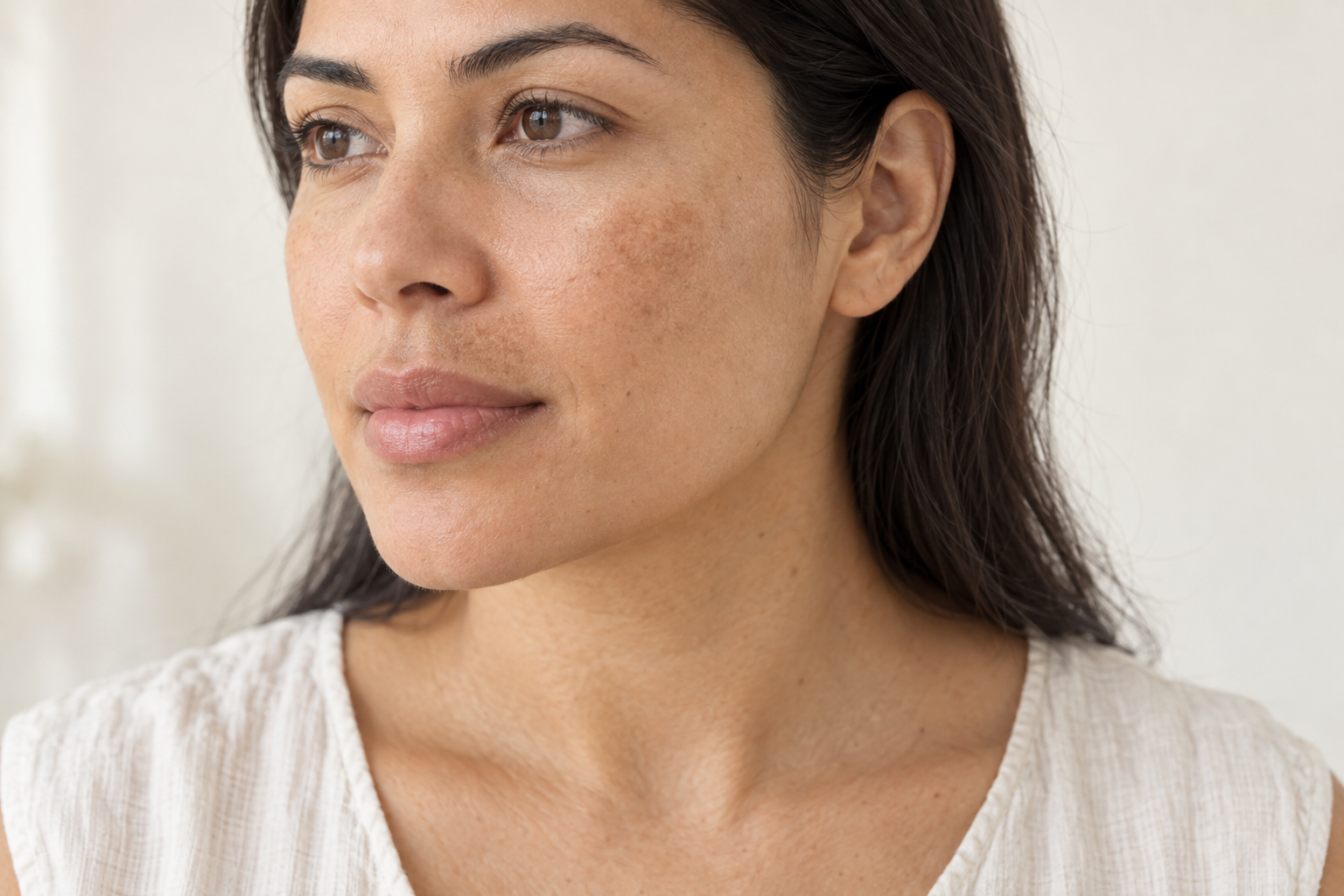
Upper lip melasma is an area of darker skin above the mouth. Its location can create the appearance of a “moustache”, even when the issue is pigmentation. But a dark patch in this area is not necessarily melasma: its cause needs to be identified before choosing skin care or treatment.
If you want this darker area to fade, the first consideration is therefore the nature of the patch. This article focuses on the upper lip; the melasma guide explains care for melasma across the face.
Pigmentation to distinguish from other marks
Melasma produces flat brown or greyish patches, particularly on the cheeks, forehead and above the upper lip. It is more common in women and in people with medium to darker skin tones. The term “mask of pregnancy” describes one setting in which it can develop, but it can also occur outside pregnancy.
A dark mark can also follow irritation, a burn or a skin injury. This is another possible explanation for pigmentation. A patch that appears after an irritating product is therefore not enough to establish that it is melasma.
Distinguishing pigment from hair also matters: a concern about skin colour is different from a request for hair removal. The word “moustache” alone cannot determine the choice of a procedure.
Sun, hormones and individual factors
The exact cause of melasma is not fully understood. Sun exposure, hormonal changes during pregnancy, certain medicines and a family predisposition can play a role. These factors do not explain every situation in the same way.
You can note when the patch appeared and which changes in skin care or medicines preceded it. These are points to discuss during assessment, rather than reasons to identify the cause on your own. Do not stop contraception or another medicine on your own initiative.
Gentle skin care and daily protection
Sun protection accompanies melasma care, including when the patch starts to fade. Broad-spectrum sunscreen with SPF 30 or higher is used alongside shade and a hat. Tinted sunscreen containing iron oxides provides additional protection against visible light, which can worsen melasma.
Skin care also needs to be well tolerated. Products that sting or burn can irritate the skin and worsen dark patches. Gentle, fragrance-free products are preferable.
Fading the patch without promising disappearance
Skin-applied care and sun protection often form the basis of treatment. Choices depend in part on skin tone, triggering factors and pigment depth. A location above the upper lip does not, by itself, define a treatment protocol.
Procedures carry risks. Chemical peels can worsen pigmentation, make some areas too light or leave scars. Laser results vary, and lasers can also change skin colour. The existence of these options does not mean that they suit every patch.
Melasma can fade, persist or return after improvement. Its course during or after pregnancy varies; lasting disappearance cannot be promised.
Medical information
A patch above the lip needs to be identified before pigment-reducing treatment. Some products should be avoided during pregnancy; choosing skin care requires medical advice. Irritation caused by a product can worsen pigmentation.
Preparing a conversation about treatment
You can prepare a list of the products you use and questions about expected benefits, risks and ongoing care. Choosing a treatment requires an in-person assessment. The virtual consultation offered by CARE MD is an initial conversation; it does not replace that assessment.
Frequently asked questions
Is a melasma moustache caused by hair?
No. The term describes the appearance of darker skin above the lip. Hair and pigmentation are different concerns, and both may need to be distinguished before choosing treatment.
Does upper lip melasma only occur during pregnancy?
No. Pregnancy can be a trigger, but melasma also occurs outside pregnancy. Sun exposure, some medicines and a family predisposition can contribute. Do not stop a medicine without medical advice.
Can upper lip melasma disappear permanently?
It can fade, persist or recur after improvement. Ongoing sun protection remains useful; neither the location of the patch nor a procedure guarantees lasting disappearance.
Sources6 references+
- Melasma: Overview — typical appearance and distribution of melasma (opens in a new tab)
- Melasma: Diagnosis and treatment — diagnosis, basic care and procedure risks (opens in a new tab)
- How to fade dark spots in darker skin tones — causes of dark spots, fading times and precautions (opens in a new tab)
- Melasma: Causes — sun, hormonal and family factors in melasma (opens in a new tab)
- Melasma: Self-care — well-tolerated care and protection against sun and visible light (opens in a new tab)
- Melasma — course, recurrence and limitations of treatment options (opens in a new tab)