


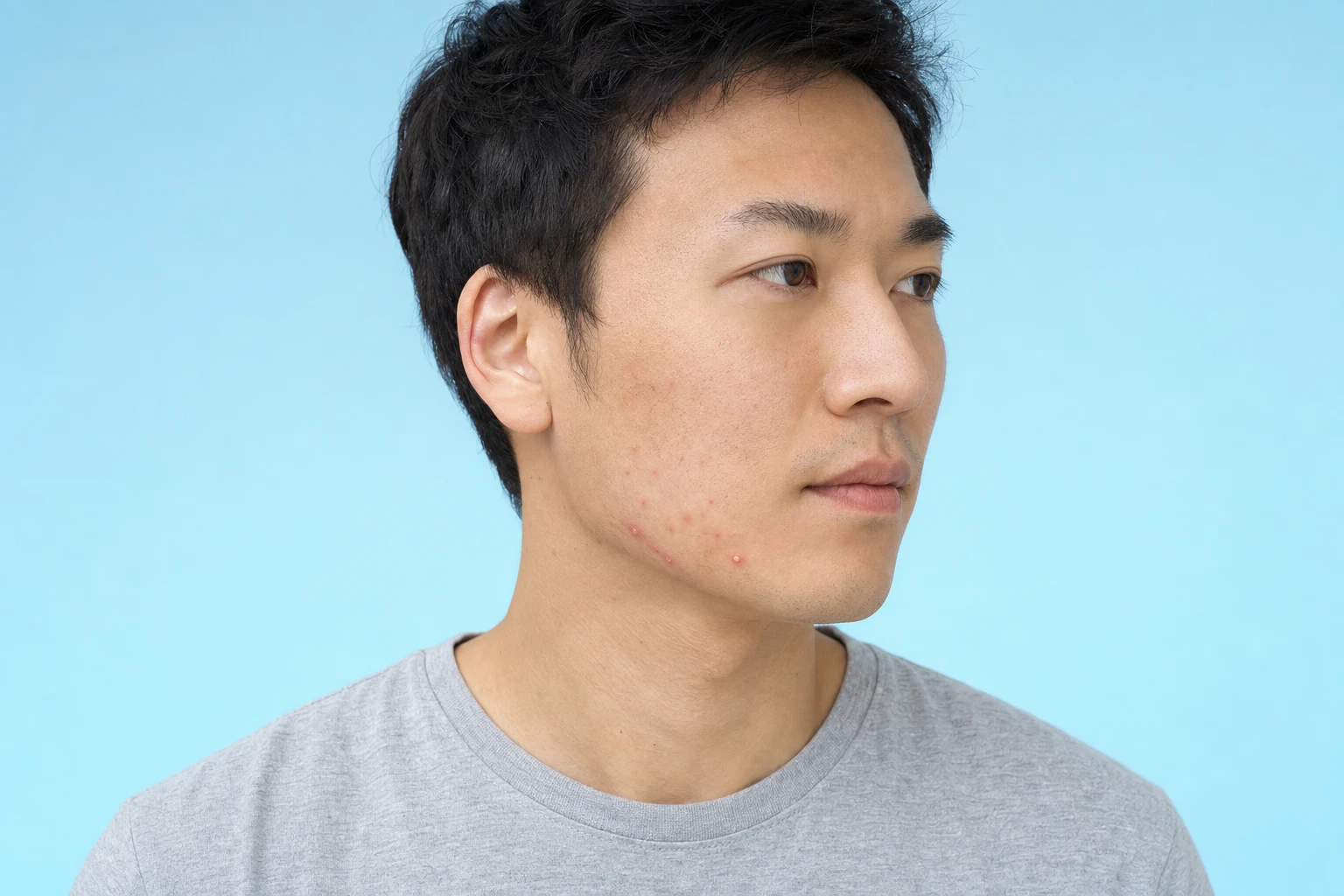
In Brief
Five things to know before deciding- Cause: pores clogged by dead cells and sebum, bacteria and inflammation; it is not due to poor hygiene, and in adulthood, hormones, stress and certain medications can keep flare-ups going.
- Identifying it: blackheads and whiteheads, red pimples, pus-filled pimples, deeper nodules; the extent, depth, scarring and toll on your mood indicate how severe it is, and the doctor confirms on examination that it really is acne.
- Treatments: applied to the skin or taken by mouth, prescribed during a medical consultation and chosen according to your lesions, their severity and how well you tolerate treatment; none suits everyone.
- Timeline: at least six to eight weeks before you see fewer new flare-ups, a guideline rather than a guarantee.
- Precautions: mention whether you are pregnant or planning a pregnancy, your medical history and your medications before any treatment; severe acne and hormonal treatment require follow-up.
Acne Treatment: What to Understand Before Your Consultation
You are thirty, forty or fifty and the pimples are still there, or they have just appeared even though your skin had been clear for a long time. Acne is not limited to youth: it can last into your fifties, and it sometimes appears for the first time in adulthood.
Acne treatment depends on the lesions you have, their severity, what you have already tried and how well your skin tolerates treatment. Facial acne involving mainly clogged pores does not raise the same questions as deep inflammatory pimples. Understanding this difference helps you choose a treatment and understand its limitations.
Treatments prescribed during a medical consultation are applied to the skin or taken by mouth. The choice also depends on your medical history and your medications. For some women whose acne persists, a hormonal approach can be discussed; it is not the answer to all adult acne.
The Causes, Types and Severity of Acne
What Happens in the Skin
Acne develops when dead cells clog the pores and sebum, the oily substance produced by the sebaceous glands, builds up behind this plug. Bacteria present in the pores contribute to the plug and to inflammation. Acne is therefore not merely an infection, and it is not a sign of dirty skin: it does not reflect your hygiene habits. Bacteria, hormones and stress contribute to flare-ups, but none of them has been shown to be the cause on its own.
Why It Persists in Adulthood
In adults, several factors contribute, and none explains everything. Hormonal changes play a role, but they are not the only cause. Stress is linked to flare-ups. Certain medications can cause pimples or make them worse: if you suspect that your medication is contributing, keep taking it and talk to the doctor who prescribed it.
The links between diet and acne remain uncertain. A specific diet cannot be recommended on its own to treat acne: treatment and assessment still have their place. Nor is there a food that everyone should cut out. Vitamin B12 supplements have been linked to a change in the activity of skin bacteria in some people; this does not mean that they cause your acne. If this supplement was prescribed for you, talk to the prescriber before changing how you take it.
Are you wondering whether cannabis contributes to your pimples? An association with acne is not enough to make it the cause of your flare-ups. Raise this question during your consultation, along with your medications and supplements.
Identifying Lesions and Their Severity
A blackhead is an open comedone, and a whitehead is a closed comedone. A papule is a raised red pimple; a pustule is a red pimple that contains pus. A nodule is a deeper lesion, under the skin. These lesions can occur together on the same face.
Severity is not determined using a score you calculate yourself. It is assessed based on the extent of the lesions, their depth, the scars they leave and their effect on your mood. Severe acne covers a large part of the face, back or chest, with many pimples, deeper nodules and cysts, redness and inflammation. Yet acne that is not widespread can still weigh heavily on you: how you feel matters as much as the number of pimples.
A Diagnosis Confirmed Through an Examination
Only the doctor can confirm, on examination, that your pimples are acne, by looking at the lesions and how they are distributed. The doctor also rules out conditions that look similar, such as rosacea, folliculitis or a rash caused by a medication. What is sometimes called acne rosacea is a form of rosacea, not acne: blackheads and whiteheads point to acne, persistent redness in the centre of the face points to rosacea, and a single one of these signs is not enough to tell them apart.
Daily Skin Care
For your facial skin care, cleanse gently: washing more often, scrubbing, exfoliating or using harsh cleansers and alcohol-based lotions irritates the skin and can make acne worse. Choose moisturizers and sunscreens that are non-comedogenic, meaning formulated not to clog pores, and oil-free. Repeatedly squeezing or picking at pimples increases the risk of scarring. These habits support treatment; they do not replace it.
Prescribed Treatments Applied to the Skin
What They Do
Treatments prescribed during a medical consultation that are applied directly to the skin are part of acne management. Some act on clogged pores and calm inflammation. They can be combined, because acne has several components and not every treatment acts on the same one. The choice of treatment and how to apply it depend on the lesions you have and how well your skin tolerates it.
Irritation and the First Few Weeks
Early on, many of these treatments dry out the skin or make it peel or turn red, and sometimes more pimples seem to appear at first. Report these reactions to the prescriber so that the treatment can be adjusted. Do not let significant irritation continue without telling the prescriber.
Prescribed Treatments Taken by Mouth
What “Systemic” Means
A treatment is called systemic when it is taken by mouth rather than applied to the skin.
Which Types of Acne Are These Treatments Considered For?
Some treatments taken by mouth are considered for moderate to severe inflammatory pimples. Their limitations differ from one option to another: some do not work on nodular acne, which is one of the reasons the choice is made during a medical consultation, never indiscriminately.
Bacteria and Resistance
Among these options, those that act against bacteria are used for as short a time as possible, because repeated use causes bacteria to become resistant. The prescriber chooses the shortest duration and monitors how your acne responds.
Systemic Treatment for Severe Acne
When It Is Considered
For severe acne, or when the usual treatments, applied to the skin or taken by mouth, have not been enough, a particular systemic treatment can be considered during a consultation. Deep lesions and the risk of scarring are factors in this decision.
What It Can Do, and What Cannot Be Promised
This treatment can reduce severe acne, sometimes making it disappear; it does not guarantee that the acne will not come back. If flare-ups return during or after treatment, talk to the prescriber to reassess your treatment plan.
Eye Dryness and Irritation
This option can also dry out and irritate the eyes. Mention these symptoms to the prescriber: they are among the effects to discuss at follow-up, even if the pimples are improving.
Pregnancy and Follow-Up
This treatment can cause serious birth defects in an unborn child. If you are pregnant or planning a pregnancy, say so before any discussion of treatment. A doctor assesses each person before prescribing it, then monitors them during treatment. You and the prescriber clarify which tests and pregnancy prevention measures apply.
How Long It Takes, and When to Reassess
How Long Before You See Improvement?
Allow at least six to eight weeks before you notice fewer new flare-ups. This is the guideline for the first signs of improvement, not for all lesions to disappear or for treatment to end, and the timing varies from one treatment and one person to another. Note the start date, how often you actually use the treatment and how your skin reacts: at follow-up, these notes help distinguish between not having used the treatment long enough, poor tolerance and an insufficient response. A relapse can occur during or after treatment; if it does, talk to the prescriber to reassess your treatment plan.
What Is the Most Effective Medication?
There is no medication that is the most effective for everyone: no acne treatment suits every person, even though the goals are the same. The choice is based on the type of lesions, their severity, how well your skin tolerates treatment, your medical history, your medications, the treatments already tried and whether you are pregnant. It is reassessed over time.
Can You Get Rid of Adult Acne or Acne on the Face?
The realistic goal is to reduce flare-ups with a treatment your skin tolerates, observe how your skin responds, then reassess. The result and the timing vary from person to person; no treatment suits everyone. In adult men too, pimples that are still present must be distinguished from the marks left after a flare-up. On medium to dark skin, particularly skin types IV to VI, a darker spot is not an active pimple: treating flare-ups and fading these marks are two different goals. The choice is discussed based on your lesions and your skin, without assuming that one option is appropriate for all skin tones.
Seek Care Right Away
Seek care right away
Arrange a medical consultation if any of these signs appear:
- scars or spots that persist and build up;
- deep nodules;
- acne that appears suddenly in adulthood, with irregular periods or increased hair growth;
- acne that affects your mood, even if it is not widespread;
- acne that gets worse despite treatment, or a side effect during treatment.
These signs warrant a medical consultation, not necessarily emergency care. A significant side effect during treatment should be reported right away to the person who prescribed the treatment.
After Acne: Scars and Spots
Preventing New Scars
Controlling active acne helps prevent new scars by reducing inflammation. Repeatedly squeezing or picking at pimples increases the risk. No method guarantees that no scar will form.
Indentation, Raised Area or Spot?
An acne scar can be indented, with a loss of tissue, or raised, with excess tissue. A darker spot, known as post-inflammatory hyperpigmentation, appears after irritation or an injury to the skin: it is neither an active pimple nor a scar, whether your skin is medium-toned, dark or any other tone. Peels, procedures that target individual scars and fillers are used for acne scars that have already formed, not for pimples that are still present. These options are discussed according to the indentations or raised areas to be corrected.
Hormonal Acne
Adult Acne: Causes, Hormones and When to See a Doctor
In adulthood, hormones fluctuate, affecting acne in many women: around their periods, during pregnancy, in perimenopause and menopause, and when starting or stopping hormonal contraception. That is why acne can appear for the first time around age fifty. These fluctuations are not enough to conclude that there is a hormonal imbalance, and they do not mean that a treatment needs to be changed or stopped: do not change anything without talking to the doctor who prescribed it. Instead, note when your flare-ups occur, the products you use and your current treatments: this information helps identify what contributes to them. See a doctor if acne appears suddenly in adulthood with irregular periods or increased hair growth, or if it leaves scars or spots.
What Hormonal Acne Is
Acne is described as hormonal when flare-ups seem to follow hormonal changes. Pimples on the lower face are not enough to conclude that the cause is hormonal. The doctor examines the skin and takes your medical history into account.
If you have polycystic ovary syndrome (PCOS), tell the doctor about this diagnosis and your current treatments; your pimples cannot be used to diagnose it. If you suspect endometriosis, discuss it in a separate consultation: do not assume straight away that it is causing your pimples.
What a Hormonal Approach Does
Any medication that acts on hormones is considered a hormonal treatment. For some women whose acne persists, the doctor may discuss this approach after examining the skin and gathering information about your health. This approach targets the effects of hormones; it is different from treatments that target bacteria or clogged pores. It does not suit everyone; results vary from person to person.
Precautions to Discuss
Some hormonal options increase the risk of blood clots, heart attack and high blood pressure. So mention your medical history of blood clots, heart disease, high blood pressure or migraines, as well as your medications, supplements and natural health products. Also say whether you are pregnant or planning to become pregnant. After an examination, the doctor determines what would make an option unsuitable for you.
Prepare for Your Acne Consultation
If you are looking for an acne clinic, prepare the questions that matter to you: what examination is done before a treatment is chosen, what risks are involved and what follow-up is provided? The name of a consultation is not enough to confirm that a treatment will be prescribed at that consultation.
Before seeing a doctor about adult acne, gather the information that will help the doctor: a description of your lesions and how your flare-ups have developed, what you have already tried, for how long and how well your skin tolerated it, your medications, supplements and natural health products, your skin care products, and whether you are pregnant or planning a pregnancy. Also think about your questions: why this treatment, how to use it and for how long, what results to expect and when you might see improvement, what risks are involved and what follow-up is provided.
A question before your consultation? Write to us: your message is not an appointment request, and it is no substitute for an examination.
Frequently Asked Questions About Acne Treatment
What is the most effective medication for acne?
None is the most effective for everyone. Even though the goals are the same from one person to another, there is no acne treatment that suits everyone. The choice depends on the type of lesions, their severity, how well your skin tolerates treatment, your medical history, your medications and whether you are pregnant, and it is reassessed over time. This is why an examination is useful before any prescription.
Sources5 references
How is back acne treated?
Widespread acne can spread to the back and chest. Cleanse the skin gently, without repeated scrubbing or exfoliating, because irritation can make acne worse, and do not squeeze pimples, which increases the risk of scarring. When lesions are numerous or deep, spread to the back and chest, leave scars or do not improve, a medical examination is an opportunity to choose how to manage them. Treating active pimples and making existing scars less noticeable are two separate goals.
Sources3 references
How do you get rid of adult acne?
No method is certain to clear acne, or to do so within a guaranteed timeframe. The realistic goal is to reduce flare-ups with a treatment your skin tolerates, observe how your skin responds and then reassess: the first signs of improvement take at least six to eight weeks to appear. Adult acne often has several contributing factors, including hormones, stress and certain medications, and an examination helps identify them. If it comes back after treatment, talk to the prescriber to reassess your treatment plan.
Sources3 references
How do you get rid of acne on your face?
Start with gentle care: cleanse without scrubbing, choose non-comedogenic products and leave pimples alone. These habits support the treatments prescribed during a consultation, applied to the skin or taken by mouth, which are chosen according to your lesions, their severity and how well you tolerate treatment. The darker spot left after a pimple is not an active lesion and is not treated the same way as a pimple.
Sources3 references
How does systemic treatment for severe acne work?
Systemic means taken by mouth rather than applied to the skin. This treatment is recommended for severe acne or when the usual treatments have not worked. It can reduce severe acne, sometimes making it disappear, without guaranteeing that it will not come back. It carries serious risks during pregnancy and requires an assessment before it is prescribed, then follow-up during treatment.
Sources1 reference
When should you see a doctor about acne?
Seek care right away if scars or spots are building up, if deep nodules appear, if acne appears suddenly in adulthood with irregular periods or increased hair growth, if it affects your mood or if it gets worse despite treatment. A side effect during treatment should also be reported right away to the prescriber. These signs warrant a medical consultation, not necessarily emergency care.
Sources1 reference
Sources13 references+
- Acne, Canadian Dermatology Association (opens in a new tab)
- Adult acne, American Academy of Dermatology (opens in a new tab)
- Diet and acne, American Academy of Dermatology (opens in a new tab)
- Acne vulgaris: management, NICE NG198 (opens in a new tab)
- Vitamin B12 and skin bacteria, Kang et al. (opens in a new tab)
- Acne: Diagnosis and treatment, American Academy of Dermatology (opens in a new tab)
- Acne vulgaris: Differential diagnosis, NICE CKS (opens in a new tab)
- Hormonal approach to acne, American Academy of Dermatology (opens in a new tab)
- Updated guidelines for the management of acne, American Academy of Dermatology (opens in a new tab)
- Acne treatment during pregnancy, American Academy of Dermatology (opens in a new tab)
- Acne scars: Consultation and treatment, American Academy of Dermatology (opens in a new tab)
- Cannabis and acne, Wolkenstein et al. (opens in a new tab)
- Endometriosis, NHS (opens in a new tab)
Acne: Prescribed Treatments, Pregnancy and Medical Follow-Up
On examination, the doctor confirms acne and guides the choice of treatment based on your lesions and medical history.
Limitations and precautions
If you are pregnant or planning a pregnancy, say so before any treatment, even a cream you are familiar with. A treatment taken by mouth for severe acne can cause serious birth defects in an unborn child.
Do not stop taking a medication on your own initiative, even if you suspect it is making your pimples worse: talk to the doctor who prescribed it.
Many treatments initially dry out the skin or make it peel or turn red, and some hormonal options increase the risk of blood clots, heart attack and high blood pressure: mention your medical history.
No treatment suits everyone, and no result or timeline can be guaranteed; a relapse remains possible during or after treatment.
The six-to-eight-week guideline refers to the first signs of improvement, not to the end of treatment.
Acne cannot be diagnosed remotely: rosacea, folliculitis and a rash caused by a medication can look like it.
The links between acne and diet or vitamin B12 remain uncertain.

Talk to a Doctor About Your Acne
Would you like to talk about your skin concerns? CARE MD offers a Global Aesthetic consultation in Sainte-Thérèse. This consultation does not guarantee a prescription or medical treatment for acne.