


Facial Treatments at a Medical Aesthetic Clinic
Your skin feels tight after cleansing, some products sting, or you would like your skin to feel smoother again. When you are looking for a facial treatment in Sainte-Thérèse or on the North Shore, names like “radiance” and “anti-aging” are not enough to choose one. Choosing a cosmetic facial treatment therefore means knowing what each step does, what it does not do and what your skin tolerates.
CARE MD, in Sainte-Thérèse, on Montreal's North Shore, also takes care of facial skin, from routine care to treatments that target a specific sign. To choose, start from what you notice on your skin, rather than from the name of a treatment.
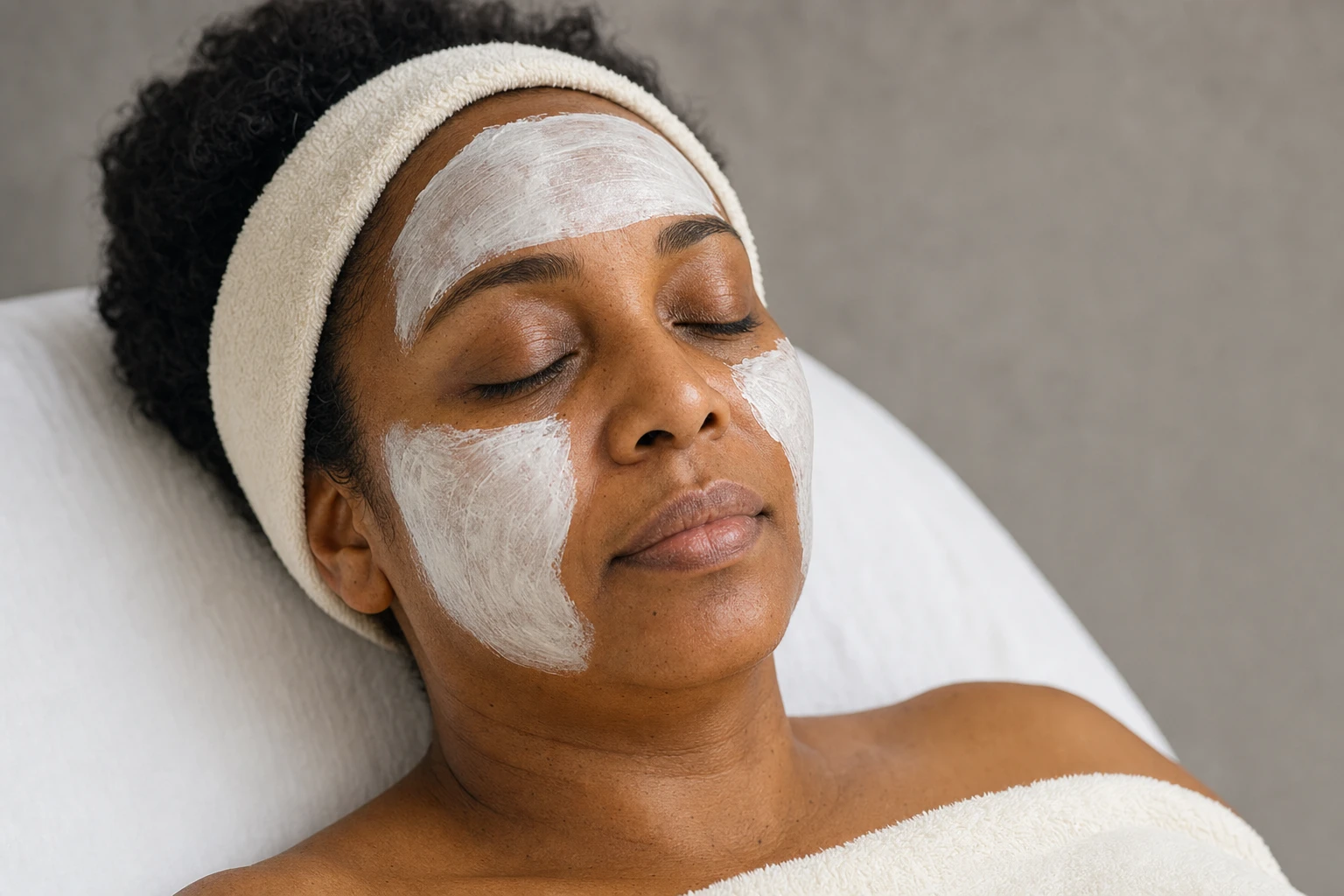
In Brief
Five things to know before deciding- What a facial treatment is: routine care that cleanses the skin, hydrates it, exfoliates it when appropriate, soothes it and protects it. It is no substitute for targeted medical treatment.
- How to choose: based on what you want to change, your skin type and what your skin tolerates, rather than on the name of the treatment.
- What it does not do: erase pronounced wrinkles, or treat deep acne, rosacea or a spot that persists; these signs require targeted care.
- Precautions: during pregnancy or breastfeeding, have the ingredients and treatments used checked. If your skin is sensitive or tends to develop lasting marks, describe how it has reacted in the past. If you have been diagnosed with rosacea, avoid rubbing, scrubbing and massage, and stop exfoliating. Do not exfoliate a wound or sunburned skin.
- Before the session: ask about the steps, the products, what to expect afterwards and who will perform the treatment.
A Facial Treatment Cares for the Skin, While Medical Treatment Targets a Specific Sign
A facial treatment cares for the skin: it cleanses, hydrates, exfoliates when appropriate, soothes and protects it. At home, everyday care combines cleansing, moisturizing and sun protection. Before a session, ask whether exfoliation, a mask or a device-based technique is planned, and what each one is for. These words alone do not describe a specific treatment.
Medical treatment, on the other hand, targets a specific sign: deep acne, rosacea, a spot that persists or changes, a pronounced wrinkle. Routine care can accompany a treatment, for example for rosacea, without ever replacing it.
Choosing Based on Your Needs, Your Skin Type and What Your Skin Tolerates
The choice starts with what you notice: skin that feels tight, products that sting, a shiny forehead while your cheeks are dry. Sensitive skin can sting or burn after a product is applied, dry skin is scaly, itchy or looks rough, oily skin is shiny, and combination skin is dry in some areas and oily in others. These indicators help describe your skin; they do not establish a diagnosis. If your forehead is shiny but your cheeks are dry, mention both: oily skin also needs hydration.
Whether you are a woman or a man, describe what is changing in your skin and what makes it react. If you shave, describe your habits and how your skin reacts before a facial treatment for men.
Cleansing, moisturizing, protecting: three distinct functions
A gentle, non-abrasive, alcohol-free cleanser removes dirt, oil and debris from the surface and helps prevent clogged pores and pimples. Scrubbing vigorously irritates the skin: a light touch is better than skin that feels “stripped”.
A moisturizer holds water in the skin, even when it is oily, and helps it look brighter. It can combine three kinds of ingredients: humectants, which draw water to the outer layer; occlusives, which form a barrier against water loss; and emollients, which soften and smooth the surface. Sun protection plays a different role: it helps prevent wrinkles, age spots and skin cancer, which a moisturizer alone does not do.
The word “radiance” is vague. If your skin is dry and rough, hydration helps it retain water and helps smooth its surface. Uneven skin tone is not corrected simply by moisturizing more. If products sting, first look for gentle care that your skin tolerates: adding exfoliation is not an automatic answer. To soothe skin that reacts, avoid anything that irritates it and look for products it tolerates. A mask does not guarantee that redness will disappear.
What Happens During a Facial Treatment
Before booking, ask what the session will include. Cleansing, hydration and sun protection have distinct functions; they do not set a protocol. Here are the steps to discuss:
The exact steps, the products and any device used are determined with the person performing the treatment.
- Discussion and skin observation
-
Explain what you want to change and what you already use; ask how the condition of your skin will be checked before the treatment.
- Cleansing
-
It removes dirt, oil and debris, without irritating friction.
- Appropriate exfoliation, if indicated
-
It removes dead cells from the outer layer; the method and intensity depend on the skin, and this step is not always included.
- Mask
-
If one is planned, ask about its formula, its purpose and the precautions that apply given how your skin reacts to products. Its name does not tell you what ingredients it contains.
- Hydration and sun protection
-
Hydration holds water in the skin; sun protection shields it from the sun's rays.
- Aftercare instructions
-
Before leaving, make sure you know what skin care to continue, which precautions to take after the treatment and whom to contact if a reaction occurs.
Facial Cleansing: Washing, Exfoliation or Extraction?
A “deep” facial cleansing treatment does not refer to a specific technique. Surface washing, exfoliation and extraction are three different procedures. Extraction physically removes the contents of blackheads and whiteheads with sterile instruments; it is not part of every treatment, and the word “deep” does not guarantee it. Ask whether your session includes one.
Blackheads and whiteheads can come back after extraction: a skin care plan helps prevent new ones. Squeezing a pimple yourself often pushes its contents deeper, which increases inflammation, and bacteria from your hands can cause an infection.
Small pimples and blackheads are not deep acne. When pimples are large, painful, deep in the skin or leave scars, acne treatment is needed: a cosmetic cleansing treatment does not fulfil that role.
Exfoliation and Other Surface Options
Exfoliation removes dead cells from the outer layer of the skin, and it is not right for everyone. It can be mechanical, using a brush, pad, sponge or scrub, or chemical, using alpha hydroxy acids or beta hydroxy acids. How often to exfoliate depends on your skin type and the method: the more aggressive the exfoliation, the less often it should be done. At home, it can dry out the skin: apply a moisturizer afterwards. This home care instruction does not set the steps of a professional session.
If it is too aggressive, it can leave dark spots, especially on darker skin or on skin prone to marks after a pimple, an insect bite or a burn. An open wound or sunburned skin must never be exfoliated. Some products you already use make the skin more sensitive or cause peeling, such as a prescribed skin treatment or a product containing retinol or benzoyl peroxide: adding exfoliation can worsen dryness or cause breakouts. Mention them before any exfoliating treatment.
A chemical peel is not considered in the same way as a regular exfoliant: its depth and what to expect afterwards must be clarified, and some peels require a recovery period.
Among general exfoliation options, microdermabrasion uses a handheld device that gently removes the surface layer of the skin. Afterwards, the skin may be pink or red and slightly swollen, and this tends to go away within a day. Before considering it, mention any current or past prescribed acne treatment, and first have a spot examined if it is growing, bleeding or changing in appearance, such as an unusual brown spot.
Some treatments add red or near-infrared light. This is a non-invasive light exposure that does not exfoliate, and it is presented as a complement to usual care. Devices and exposure times vary. Before choosing this treatment, ask which device is used and what the goal is. Mild, temporary pain or skin irritation may occur.
Before considering microdermabrasion or a light-based treatment at CARE MD, ask whether this option is offered and appropriate for your skin. Mention how your skin has reacted to products and your medical history: the name of a device is not enough to choose it.
Anti-Aging and Radiance: What a Treatment Changes on the Surface
A moisturizer helps smooth and hydrate the skin; it can make fine lines less noticeable. This is a surface effect: no routine skin care comes with a promise of lasting correction of a pronounced wrinkle or sagging skin.
If a deep furrow, an established wrinkle or a loss of firmness is what concerns you, the question is different. Facial rejuvenation targets these specific signs, with options chosen according to what you want to change. Increasing the intensity of a radiance treatment is no substitute for this approach.
Depending on Your Situation: What Requires Attention
Pregnancy and breastfeeding
If you are pregnant or trying to become pregnant, tell the professionals who care for you about all your medications and prescribed treatments: they can adapt your treatment plan during pregnancy and breastfeeding. Some skin care ingredients should be avoided, including retinoids and retinol. The name of a treatment does not tell you what ingredients it contains, so ask for the list. A peel or device must not be assumed to be appropriate during pregnancy or breastfeeding: this needs to be checked.
Black or mixed-race skin
Aggressive exfoliation can leave dark spots, especially on darker skin. Mention any lasting marks your skin has developed after a pimple, an insect bite, a burn or irritation, even if your skin is calm on the day of the session. Skin colour alone does not set a protocol: the intensity is adapted to how your skin has reacted in the past.
Sensitive skin or rosacea
Sensitive skin can sting or burn after a product is applied; this reaction is not enough to conclude that you have rosacea. When rosacea has been diagnosed, rubbing, scrubbing and massaging the skin should be avoided, and exfoliation should be stopped. A moisturizer applied to dry skin reduces the risk of burning or stinging. Appropriate skin care can improve the results of rosacea treatment, without replacing it. What matters is what your skin tolerates, far more than the promise of a “soothing” treatment.
Other situations to check
Mention if you have herpes, inflammatory acne, a recently prescribed treatment or a past reaction to a product, and ask whether these change the treatment being considered. Not all of them mean that a session has to be postponed. For exfoliation, the precaution is specific: do not exfoliate an open wound or sunburned skin. Products and prescribed treatments should be mentioned; never change how you use a treatment on your own initiative.
After a Treatment: Possible Reactions and Warning Signs
At home, exfoliation can dry out the skin: apply a moisturizer afterwards. After a session, follow the instructions for the procedure performed. Exfoliation that is too aggressive can increase dryness, irritation and dark spots. After microdermabrasion, the skin may be pink or red and slightly swollen; these reactions usually subside within a day.
Dryness that persists despite routine care requires an assessment, as does acne that is deep, painful or leaves scars. Before the session, ask whom to contact after the treatment, which reactions are expected and which ones require a prompt consultation. If a reaction worries you or persists, contact the person who performed the treatment for guidance; this contact is not an emergency instruction that applies to every procedure.
Seek care right away
Before any procedure on a spot that is growing, bleeding or changing in appearance, have it examined: it could be skin cancer. Do not wait for a treatment session to have this lesion examined.
Preparing for the Session and Continuing Care at Home
Before the session, make a note of what you already use, including your medications and prescribed products, the products that have made your skin sting, burn or turn red, your allergies, your recent treatments, your sun exposure and any event you are preparing for. Men should also provide details about shaving.
Then ask specific questions:
- What steps are planned, with which products, and with which device, if any?
- What is each step for: cleansing, retaining moisture, exfoliating?
- What reactions are possible, and what instructions should I follow afterwards?
- Who will perform the treatment, and who will respond if a reaction occurs? Ask our professionals who will perform the treatment and who will provide follow-up.
Let's Talk About Your Skin Care Needs
At home, everyday care combines a non-abrasive cleanser, a moisturizer and sun protection. In your facial skin care routine, adding exfoliation or a product that causes peeling can increase irritation. After a session, ask which products to continue or resume using, and when: the instructions depend on the procedure performed.
Do not exfoliate any open wound or any sunburned area.
Frequently Asked Questions
Dry skin or dehydrated skin: what is the difference, and which facial treatment is appropriate?
Dry skin is rough, itchy or has small flakes. The word “dehydrated” emphasizes a lack of water, but neither word tells you the cause of what you are feeling or which treatment to choose: tightness alone is not enough to decide. A gentle cleanser, a moisturizer that holds in water and sun protection make up basic care. If dryness persists despite this routine care, an assessment is the right next step.
Sources2 references
How often should you have a facial treatment?
No single schedule applies to all the treatments grouped under this name. At home, how often to exfoliate depends on your skin type and the method: the more aggressive the exfoliation, the less often it should be done. This frequency does not determine how often to have a professional session. Some peels require a recovery period, which matters if you are planning a session before an event. Before scheduling the next one, ask what to expect after the specific treatment and note how your skin reacted to the previous one.
Sources2 references
Can you have a facial treatment during pregnancy?
If you are pregnant or trying to become pregnant, tell the professionals who care for you about all the medications and prescribed treatments you use: they can adapt your treatment plan during pregnancy and breastfeeding. Some skin care ingredients should be avoided, including retinoids and retinol, and the name of a treatment does not tell you what ingredients it contains: ask for the list. A peel or device must not be assumed to be appropriate; this needs to be checked beforehand.
Sources1 reference
Sensitive skin or rosacea: which facial treatment should you choose?
Sensitive skin can react to a product by stinging or burning; this is not enough to establish that you have rosacea. When rosacea has been diagnosed, a gentle cleanser and a moisturizer applied to dry skin can accompany treatment, whereas rubbing, scrubbing and massaging the skin should be avoided, and exfoliation should be stopped. The useful criterion is what your skin tolerates, and routine care is no substitute for treatment. Mention your diagnosis and the products that trigger your reactions.
Sources2 references
What does “deep” facial cleansing mean?
The expression does not refer to a specific technique. Surface washing removes dirt, oil and debris; exfoliation removes dead cells; extraction physically removes the contents of blackheads and whiteheads with sterile instruments. “Deep” guarantees neither of the last two and does not treat acne. Ask what the session includes, and do not squeeze your pimples yourself: this can increase inflammation and cause an infection.
Sources3 references
Can a facial treatment correct acne, spots or pronounced wrinkles?
Routine care does not serve that purpose. Acne that is deep, painful or leaves scars requires medical care; a spot that is growing, bleeding or changing should be examined; a pronounced wrinkle or sagging skin calls for options that target that specific sign. Hydration can only make fine lines less noticeable on the surface, with no promise of a lasting result.
Sources3 references
How much does a facial treatment cost?
The cost depends on what the treatment includes, and this is clarified with CARE MD once your needs have been discussed and the appropriate care pathway has been determined. The same treatment name can cover very different steps: a price is only meaningful for a specific set of steps. Before deciding, ask for a description of the steps, the products and what to expect afterwards.
Sources12 references+
- American Academy of Dermatology — Skin care on a budget (opens in a new tab)
- American Academy of Dermatology — Face washing 101 (opens in a new tab)
- Clinical Medicine and Research — The Role of Moisturizers in Addressing Various Kinds of Dermatitis: A Review (opens in a new tab)
- American Academy of Dermatology — Dermatologists' top tips for relieving dry skin (opens in a new tab)
- American Academy of Dermatology — How to safely exfoliate at home (opens in a new tab)
- American Academy of Dermatology — Pimple popping: Why only a dermatologist should do it (opens in a new tab)
- American Academy of Dermatology — Adult acne treatment dermatologists recommend (opens in a new tab)
- American Academy of Dermatology — Microdermabrasion: FAQs (opens in a new tab)
- American Academy of Dermatology — Chemical peels: Overview (opens in a new tab)
- American Academy of Dermatology — Is red light therapy right for your skin? (opens in a new tab)
- American Academy of Dermatology — Dermatologist-approved pregnancy skin care (opens in a new tab)
- American Academy of Dermatology — 7 rosacea skin care tips dermatologists recommend (opens in a new tab)
Facial Treatments: What They Do Not Do and What Calls for Caution
At CARE MD, you choose your treatment after your skin has been assessed.
Limitations and precautions
Mention which products have made your skin sting, burn or turn red, and which skin care products and prescribed treatments you use. Always get medical advice before changing how you use a treatment.
If you are pregnant or planning a pregnancy, have the ingredients and treatments you use checked so that you can avoid those that are not suitable. If you are breastfeeding, also have your treatment plan checked.
If you have darker skin or skin that marks easily, do not use aggressive exfoliation and describe any marks that appeared after irritation.
If you have been diagnosed with rosacea, remove exfoliation from your routine and do not subject your skin to rubbing, scrubbing or massage.
Have any spot that is growing, bleeding or changing examined right away. For persistent dryness or deep acne, ask for an assessment.
You can care for your skin with a facial treatment, but you cannot use it to treat deep acne, rosacea or a persistent spot, or to provide lasting correction of a pronounced wrinkle or sagging skin.
You have no guarantee of a result: results differ from person to person.
Before the session, ask about the steps, the products and what to expect afterwards: the name of the treatment is not enough.
Allow for a recovery period with some peels; do not confuse them with your regular exfoliants.

Let's Talk About Your Skin Before You Choose a Treatment
To discuss your skin and the treatment being considered, contact CARE MD. The appropriate care pathway will be determined before you book; this discussion does not confirm in advance that a treatment or peel is indicated for you.