



Main takeaways
Post-inflammatory hyperpigmentation (PIH) is a darker spot that remains after skin inflammation or injury. It can affect all skin tones, but it is more common and often lasts longer in darker skin. If you notice a mark after a pimple or irritation, its history can help clarify the cause.
- Inflammation can increase melanin production: This pigment gives skin its colour. After inflammation, it can build up in the surface or deeper layers where the skin was affected.
- Acne can leave darker spots: This does not happen after every pimple. Picking at lesions does increase the risk of marks and scars, particularly in skin prone to hyperpigmentation.
- The depth of the pigment affects how it changes over time: A surface spot may fade more readily than deeper pigment. A greyish colour may accompany deeper pigmentation, but an examination is still needed to identify its nature.
- Sun protection supports care: UV rays can darken marks after inflammation. Protecting exposed areas limits this worsening while the skin recovers.
- Darker skin is more often affected: Marks can be more intense and last longer. An irritating treatment can itself cause new pigmentation; skin tolerance matters when choosing treatment.
- Treatment depends on what causes the spots: Managing inflammation and sun protection accompany any treatment considered. Combining several procedures does not guarantee a better result.
- Prevention involves limiting irritation: Picking pimples and using irritating cosmetics can contribute to marks. Friction that irritates the skin can also contribute to pigmentation after inflammation.
- Treatment takes the skin into account: The depth of the pigment, the initial cause and the response to treatment are among the factors to consider. One approach does not suit every situation.
The following sections explain what causes the marks, what the doctor looks for during a medical examination and useful precautions. The aim is to understand the spot before choosing treatment, taking into account the risk of irritation and the time needed for it to fade.
introduction
Post-inflammatory hyperpigmentation can appear after acne, eczema, irritation or injury. Inflammation can increase pigment production in the affected area; the spot may remain after the pimple or initial lesion has cleared. These marks can last a long time, especially in darker skin. Care starts with the cause of the inflammation and how well the skin tolerates treatment.
You can prepare for a consultation by noting what happened before the spots appeared, how they have changed and the products used. This information helps distinguish PIH from other causes of pigmentation, without drawing conclusions from colour alone.
Causes and mechanisms of post-inflammatory hyperpigmentation
PIH is darker pigmentation at the site of previous inflammation or injury. Understanding that event helps distinguish these marks from other pigmentary conditions.
Inflammation and melanin production
Acne, eczema, an infection or an injury can trigger PIH. Inflammation stimulates the cells that make melanin. This pigment can remain in the epidermis or reach the dermis when the skin’s basal layer is damaged. Some procedures can also worsen pigmentation by causing further irritation or skin injury.
Types of hyperpigmentation: superficial or deep
Pigmentation can lie in the surface or deeper layers of the skin:
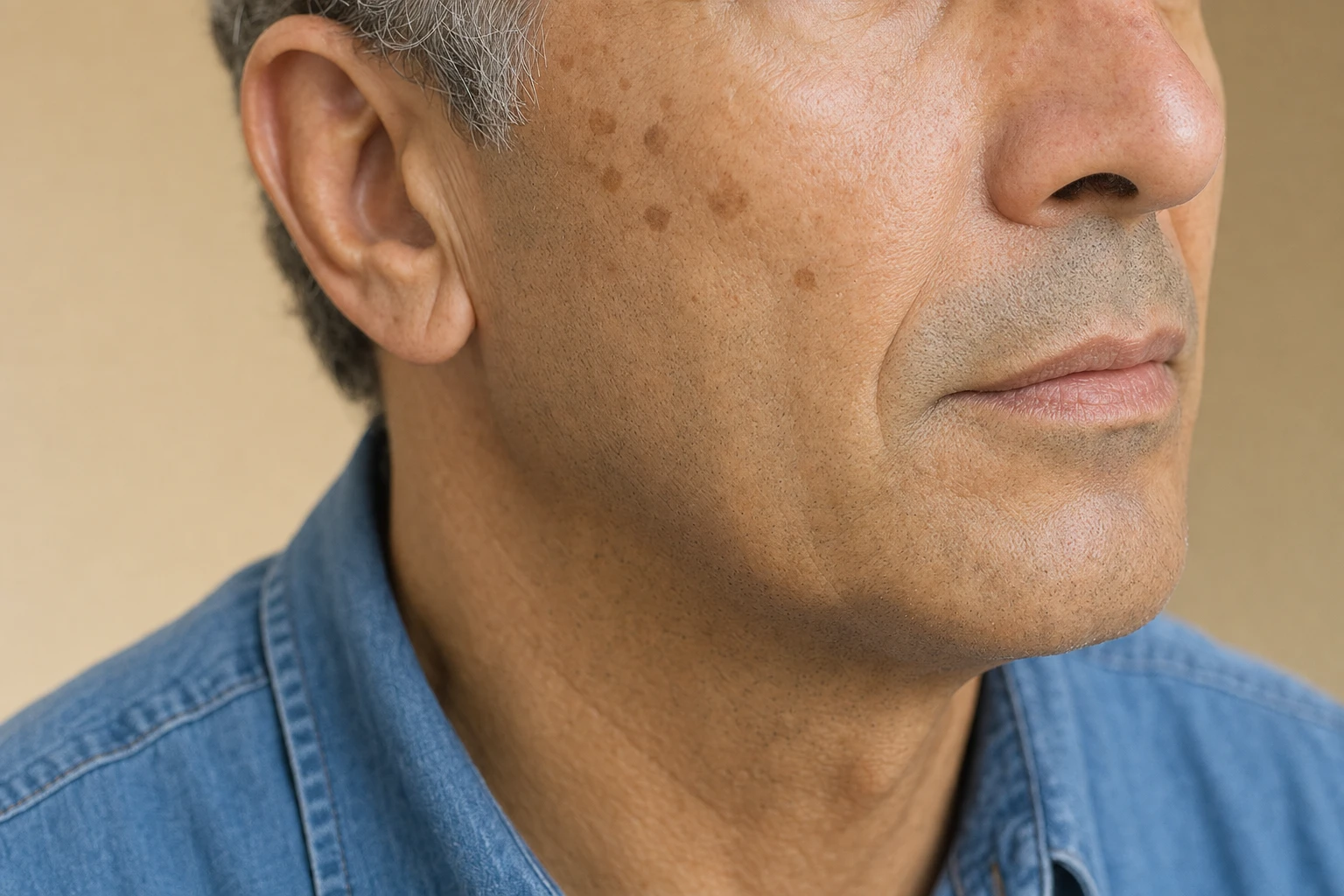
- Epidermal PIH: Pigment builds up in the epidermis, the surface layer of the skin. The spots are often brown. Some treatments applied to the skin may reduce them, with a variable response.
- Dermal PIH: Pigment lies deeper in the dermis, where immune cells can take it up. Marks may look greyish or purplish brown and take longer to fade.
Role of UV and aggravating factors
UV rays can darken PIH marks. Sun protection is therefore part of care. Other forms of skin damage can also cause the spots to persist:
- Picking at lesions: Scratching, puncturing or squeezing an acne pimple increases the risk of spots and scars.
- Using irritating products: A cosmetic or skin-care product that irritates the skin can cause new, darker marks.
- Repeated friction: When it irritates or injures the skin, hyperpigmentation can follow.
Influence of skin type
PIH can affect every skin colour. However, it is more common in darker skin, where marks can be more intense and last longer. Skin colour alone cannot predict how long a spot will last or determine a treatment protocol.
Differential diagnosis and PIH assessment
Before treating a spot as PIH, an examination helps identify its cause and distinguish it from other pigmented lesions.
Differential diagnosis
Other conditions can cause pigmented lesions, including:
- Melasma: Spots that develop mainly on the face, sometimes during pregnancy or while taking certain contraceptives. Hormones are among the possible factors, along with sun exposure.
- Solar lentigo: A brown spot that appears on an area often exposed to the sun.
- Seborrhoeic keratosis: A benign skin growth, often brown, that becomes more common with age. It can resemble other lesions and sometimes needs to be examined.
- Naevus (mole).
Diagnosis is based on the spot’s history and a skin examination. A biopsy, which takes a small sample of skin, may sometimes be needed to clarify the diagnosis.
PIH assessment
During the assessment, the doctor may consider the following:
- Medical history: When the spots appeared, previous acne or eczema, injuries, products used and sun exposure provide useful information. Previous episodes of pigmentation are also part of the history to report.
- Clinical examination: The doctor examines the location and appearance of the spots, including their colour, size and shape.
- Depth assessment: A Wood's lamp (which emits special ultraviolet light) may help determine whether pigmentation is superficial (epidermal), as it will appear clearer under this light, or deep (dermal), as its appearance will not change.
Treatment options for PIH
The choice of treatment depends in part on the cause of inflammation, the depth of the pigment and skin tolerance. Advice from a dermatologist can help clarify these factors and the available options.
Lightening creams and lotions (topical agents)
Some treatments applied to the skin can reduce surface spots. Their effect varies, and irritation can worsen pigmentation. Choosing a product therefore requires considering what caused the marks and what the skin tolerates.
- Hydroquinone: This is the most powerful lightening agent, but it must be used cautiously because of irritation risk and a reverse effect in which skin becomes darker (a phenomenon called ochronosis).
- Retinoids: They promote skin-cell turnover and pigment elimination.
- Azelaic acid: It has properties that calm inflammation and lighten skin.
- Kojic acid: It slows melanin production.
- Vitamin C: An antioxidant that brightens the complexion and protects against cellular damage.
- Niacinamide: It reduces inflammation and hyperpigmentation.
Dermatological procedures
Several dermatological procedures can treat PIH, particularly when topical treatments are insufficient:
- Chemical peels: This technique applies an acid solution to skin to remove superficial layers (exfoliate) and encourage cell turnover. Glycolic acid, salicylic acid or trichloroacetic acid (TCA) peels may be used.
- Microdermabrasion: This technique “sands” the superficial skin layer with a specific device to exfoliate it.
- Lasers: Different laser types can target melanin pigment, such as Q-switched lasers, fractional lasers or pulsed dye lasers. Laser selection depends on skin type and pigmentation depth.
- Microneedling: This technique uses a device fitted with microneedles to create tiny skin punctures. This stimulates collagen production and helps lightening products penetrate skin better.
Important precautions and considerations
Precautions are part of care, whatever treatment is being considered:
- Sun protection: Daily application of broad-spectrum sunscreen with SPF 30 or higher supports treatment on exposed areas. Tinted sunscreen containing iron oxides also protects against visible light.
- Avoiding irritation: Gentle, well-tolerated products limit skin damage that could create new spots.
- Adapting treatment to the skin: Irritation caused by a treatment can worsen PIH. Tolerance and a history of pigmentation need particular attention; no single concentration is suitable for all darker skin tones.
PIH prevention
Prevention aims to limit new inflammation and factors that darken spots:
- Sun protection: Broad-spectrum sunscreen with SPF 30 or higher is applied daily to exposed skin, even on cloudy days. Outdoors, it is reapplied every two hours and after swimming or sweating.
- Avoiding picking at lesions: Scratching, puncturing or squeezing acne pimples increases the risk of marks and scars.
- Using gentle products: Non-irritating products, including fragrance-free options, may be better suited to skin prone to spots. A product that burns or stings must be stopped and its use reassessed.
- Managing inflammation: Acne or eczema that keeps flare-ups occurring must also be treated. Fading a spot without addressing its cause does not prevent new marks from appearing.
- History of pigmentation: PIH that appeared after a treatment or procedure should be reported before another procedure. The risks and other options should be discussed with an experienced professional.
These measures may limit factors that contribute to spots. They do not guarantee that spots will disappear or that new marks will not appear.
Conclusion
Post-inflammatory hyperpigmentation may fade, but its course depends on the cause and the depth of the pigment. Sun protection, well-tolerated products and managing inflammation remain essential. You can seek advice about a persistent mark or one with an unclear cause before choosing treatment.
Ask us your questions about this treatment
How long can the marks last?
Once the cause of inflammation is controlled, some spots a few shades darker than the surrounding skin usually fade within six to twelve months. Deeper pigment may persist for several years. This describes a possible course, not a guaranteed deadline or the expected result of a laser session. If new breakouts or irritation continue, new marks may appear alongside older ones.
To discuss progress, note how long the marks have been present and whether new lesions are appearing. A lack of improvement, an uncertain cause or a change in appearance calls for reassessment rather than adding more irritating products.
Sources9 references+
- How to fade dark spots in darker skin tones — causes of dark spots, fading times and precautions (opens in a new tab)
- Postinflammatory hyperpigmentation — PIH mechanism and treatment limits according to pigment depth (opens in a new tab)
- What can get rid of age spots? — distinction and general options for solar lentigines (opens in a new tab)
- What to look for: ABCDEs of melanoma — changes in a spot that warrant examination (opens in a new tab)
- Melasma: Causes — sun, hormonal and family factors in melasma (opens in a new tab)
- Seborrheic keratoses: Overview — distinction between flat pigmentation and a raised lesion (opens in a new tab)
- Acne scars: Overview — distinction between post-acne marks and scars (opens in a new tab)
- Acne: Tips for managing — reducing irritation and avoiding picking acne lesions (opens in a new tab)
- How to apply sunscreen — application and reapplication of sunscreen (opens in a new tab)
Medical information
The options, expected benefits, limitations, contraindications and risks vary by person and treatment. An assessment by a qualified professional is necessary; this page does not replace a medical consultation. A spot that is new or different from others, or that changes, itches or bleeds, warrants medical advice. A medication suspected of causing spots must not be stopped without advice from the prescriber.
