


Rosacea: A Complete Guide to Causes and Treatments
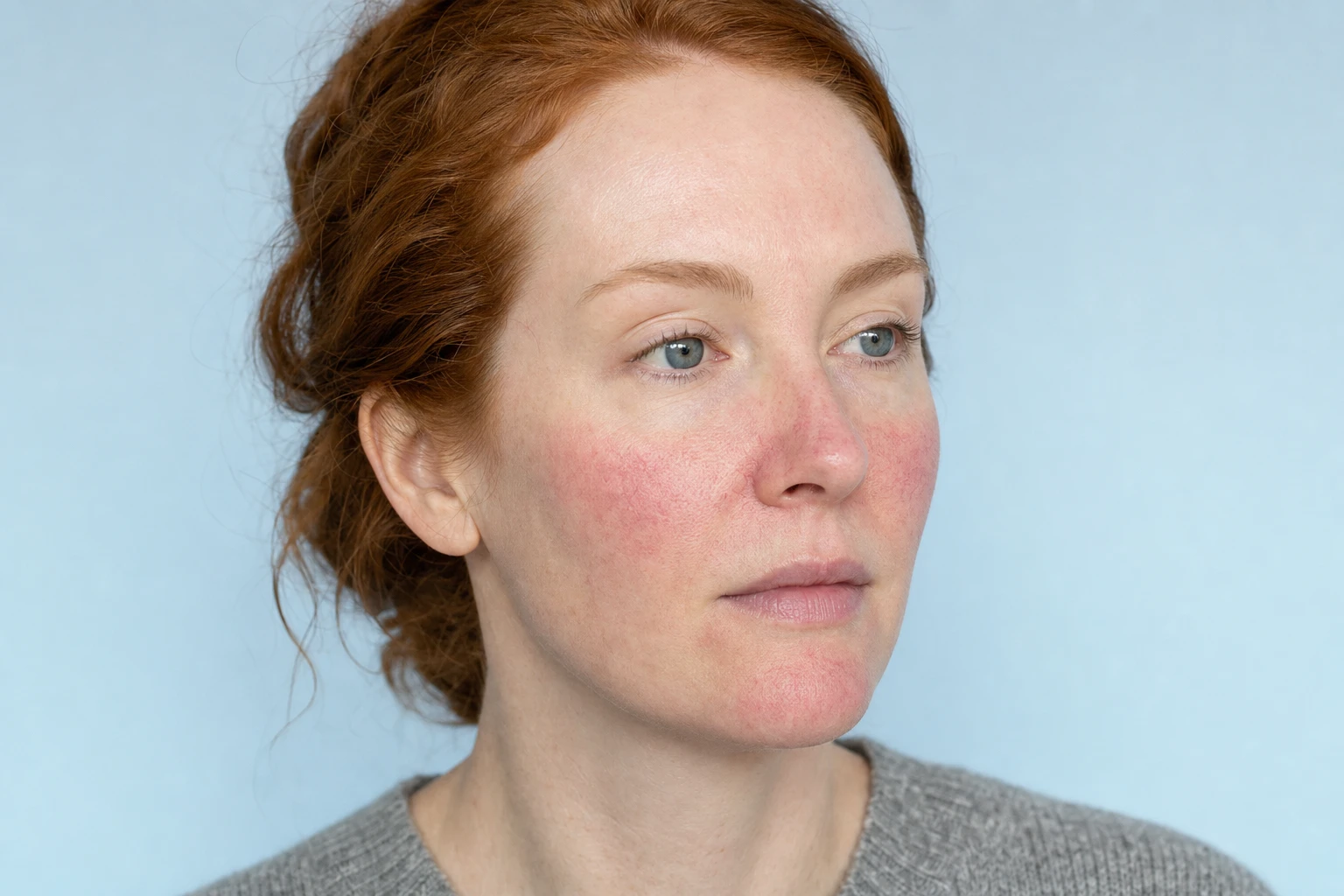
Your cheeks turn red easily, and eventually they stay red. You may also see small blood vessels on your cheekbones, or pimples that keep coming back. If you are looking for rosacea treatment, the first question is whether it really is rosacea: several conditions cause facial redness, and the choice of treatment depends on what is present. Facial rosacea is a chronic inflammatory condition. It can be controlled, but there is no known cure. In Sainte-Thérèse, CARE MD offers a medical assessment to clarify what is making your face red before discussing the options, including intense pulsed light (IPL).
At a glance
Five things to know before deciding- What it is: a chronic inflammatory condition of the face, with persistent redness and sometimes small visible blood vessels, pimples or thickening skin. It can be controlled; there is no known cure.
- Who confirms it: a doctor. Several conditions can make the face red: the cause needs to be clarified before choosing a cosmetic treatment.
- What helps day to day: gentle cleansing, moisturizing, sun protection and identifying your personal triggers, in addition to treatments prescribed during a consultation when they are needed.
- What CARE MD offers: vascular intense pulsed light (IPL) for the face, which targets redness and small visible blood vessels, after a medical assessment. Inflamed pimples require separate treatment.
- Results and risks: they vary from person to person; new blood vessels can appear and skin colour can change. No result is guaranteed.
What Is Facial Rosacea?
Redness can come and go at first, then persist. Small visible blood vessels and pimples can also appear on the cheeks, nose, chin and forehead. These are possible signs of rosacea, not a diagnosis: a doctor must examine your skin. Neither a mirror nor a photo is enough. The intensity varies from one period to the next; skin that has been calm for weeks can have a new flare-up.
Forms and Signs: What Changes the Goal of Treatment
Rosacea does not take a single form, and its signs can overlap in the same person. What matters in choosing a treatment is what the doctor observes on your skin, rather than placing you in a category.
- Redness and small blood vessels
-
Redness can be diffuse, while small blood vessels stand out on the skin. These signs can occur with rosacea but are not enough to confirm it. Daily care limits irritation; a light-based treatment can fade visible blood vessels.
- Inflamed pimples
-
The goal is to calm inflammation, which treatments prescribed during a consultation aim to do.
- Thickening skin
-
On the nose, this is called rhinophyma. If the skin on your nose is thickening, the doctor must assess it separately before discussing treatment.
Daily Care, Prescription Treatments or Intense Pulsed Light: What Each One Changes
These three approaches do not address the same signs, and none of them suits everyone. Gentle care, sun protection and managing triggers go along with any treatment that is needed. Several approaches can be combined, but the choice depends on your signs, not on a combination that would suit everyone.
- Daily care
-
It is the foundation of care and limits irritation. It is not enough to correct every sign.
- Treatments prescribed during a consultation
-
They are applied to the skin or taken by mouth and can target inflammation. Not all of them have an effect on redness or flushing.
- Intense pulsed light
-
It targets redness and small visible blood vessels. It does not cure rosacea; inflamed pimples and thickening of the skin require separate treatment.
A treatment applied to the skin can target pimples. If it is not enough, the doctor can consider a treatment taken by mouth. The choice depends on your situation: do not self-prescribe any treatment. How well the treatment is tolerated, follow-up and precautions, particularly if you are pregnant, are discussed with the person prescribing your treatment, because they depend on the treatment chosen.
Intense Pulsed Light (IPL): Redness and Small Visible Blood Vessels
Intense pulsed light is often called a "laser", but it is a different technique. CARE MD offers vascular IPL for the face. A light-based treatment can reduce small visible blood vessels, and pulsed light can lessen flushing. It does not cure rosacea: flare-ups can return and new blood vessels can appear after treatment. Inflamed pimples and thickening of the skin on the nose require separate treatment.
Who is it considered for? For someone bothered by redness or visible blood vessels, once the diagnosis has been made. Before choosing a light-based treatment, discuss your skin colour, your medical history, your current treatments, your sensitivity to light, your sun exposure, how well you tolerate treatment and your expectations. Skin colour influences effectiveness and risks; on its own, it is not enough to decide whether the treatment suits you.
The number of sessions, their frequency and maintenance are among the questions to ask during the assessment. Results vary from person to person. New blood vessels can appear; whether more sessions are needed is discussed depending on how things progress.
Preparing for a Session, After-Effects and Risks
- Before
-
Prepare a list of your treatments and your medical history. Mention your sensitivity to light and your sun exposure, then explain what you expect from the result. Also ask what to apply to your skin and how to monitor it after the session.
- During
-
A light-based treatment can cause a feeling of tightness, itching or pain.
- After
-
Redness and red or purple spots can appear. Avoid the sun and protect your skin. Before the procedure, ask for details about care instructions, monitoring for reactions and resuming your activities.
A light-based treatment carries risks that need to be discussed before you choose it:
- Possible reactions
-
Redness, red or purple spots, a feeling of tightness, itching or pain.
- Complications
-
A burn, a scar and a change in skin colour, which can become permanent.
- What influences the risks
-
The choice of device and its settings, the experience of the person performing the treatment and your skin colour. Sun exposure and the precautions to take before and after treatment are also part of the discussion.
Triggers and Routine: Reducing Flare-Ups Without Promising They Will Disappear
What triggers a flare-up varies from person to person. Sun, heat, cold, wind, very dry or very humid air, stress, alcohol and spicy foods are among the common triggers. Rather than cutting everything out, keep a diary: note what you eat and drink, the products you apply and where you are, then compare these notes with your flare-ups. On their own, your triggers do not explain the causes of rosacea.
A gentle routine helps limit irritation:
No cosmetic product is guaranteed to be well tolerated. To try a new product, apply it to a small area of your arm twice a day for 7 to 10 days. If your skin reacts, rinse gently and stop using it. This test is for cosmetic products, never for a prescribed treatment. Gentle care and sun protection are part of controlling flare-ups; they do not cure rosacea.
- Cleanse
-
Gentle cleansing removes impurities without making irritation worse.
- Moisturize
-
Moisturizing keeps water in the skin and can improve comfort.
- Avoid rubbing
-
Rubbing, exfoliating or massaging skin with rosacea can irritate it.
- Protect your skin from the sun
-
Apply a broad-spectrum, water-resistant sunscreen with SPF 30 or higher every day, even on cloudy days. Outdoors, reapply it about every two hours, and after swimming or sweating as directed on the label.
Redness on the Face: Rosacea or Another Cause? When to Seek Medical Advice
Whether redness comes and goes or stays does not, on its own, tell you which treatment to choose. Several conditions cause redness on the face. Irritation or a contact allergy can be the cause; eczema tends to cause a dry, itchy rash. If you are being treated for cancer and your face turns red, talk to the doctor treating you first. In all these cases, the diagnosis needs to be clarified before considering a cosmetic procedure.
Eye pain or blurred vision warrants medical advice, not a cosmetic treatment; for ocular rosacea, you can also turn to Experience CARE.
A severe reaction to a cosmetic product that does not settle down can also require medical advice.
Why a Medical Assessment Comes Before Treatment, and How to Prepare for It
The assessment is used to confirm the diagnosis and clarify what a treatment can change. Your expectations, your medical history, your current treatments and the risks are part of this decision. The discussion can lead to a different choice from the one you had in mind, including choosing gentle care alone. With our professionals, prepare your questions about the assessment and the treatment being considered, and ask who will perform each one.
- Information to bring
-
Your medical history, your medications and the products you use on your face.
- Questions to ask
-
The possible benefits, limitations, risks, home care and planned follow-up. If a first discussion takes place remotely, ask what in-person examination will be needed before choosing the treatment.
- Follow-up
-
Discuss how your rosacea is evolving, the results observed and how well treatment is tolerated. Once flare-ups are under control, a maintenance plan can help maintain the results; you and the doctor work out the details of follow-up.
Ask Us About Rosacea Treatment
Frequently Asked Questions
What is rosacea?
Rosacea is a chronic inflammatory condition that causes redness on the face, often with small visible blood vessels and sometimes pimples. It affects the cheeks, nose, chin and forehead, and its intensity varies over time. A doctor makes the diagnosis: several other conditions, such as eczema or a contact allergy, also cause facial redness. A medical assessment therefore comes before choosing a treatment.
Sources3 references
What are the treatments for rosacea?
The choice depends on what is present. Gentle daily care and sun protection are the foundation. Treatments prescribed during a consultation, applied to the skin or taken by mouth, can target inflammation, and not all of them have an effect on redness. Intense pulsed light targets redness and small visible blood vessels. Several approaches can be combined; the doctor chooses them with you based on your signs, and no single combination is right for everyone.
Sources3 references
Is intense pulsed light a laser?
No: intense pulsed light (IPL) is a different technique from laser, even though it is often called that. A light-based treatment can reduce small visible blood vessels, and IPL can lessen flushing. It does not cure rosacea, and new blood vessels can appear after treatment. Inflamed pimples require separate treatment. The medical assessment is used to determine whether this option is appropriate for your skin and the signs to be treated.
Sources3 references
What can you do about rosacea on the nose, cheeks or forehead?
Rosacea can affect all three areas. The choice of treatment depends mainly on what is present: inflamed pimples, persistent redness, small visible blood vessels or thickening of the skin. These signs need different treatment; location alone is not enough to choose a treatment. On the nose, cheeks or forehead, gentle cleansing without rubbing, moisturizing and broad-spectrum sun protection with SPF 30 or higher are the foundation. If the skin on your nose thickens or changes in texture, the doctor must assess it separately before discussing treatment; this thickening can suggest rhinophyma. If your concern is inside a nostril, let the doctor know during the assessment.
Sources2 references
Can rosacea go away or be cured?
There is no known cure for rosacea, but its signs can be controlled with appropriate treatment and lifestyle habits. Rosacea evolves over long periods, with flare-ups of varying intensity; calm skin is therefore not cured skin. Once flare-ups are under control, a maintenance plan can help maintain the results. Treatment aims to achieve this control, not to make rosacea disappear permanently.
Sources3 references
Can a facial treatment calm skin that turns red?
Skin prone to redness needs gentle daily care: cleansing without rubbing, moisturizing and sun protection. Rubbing, exfoliating or massaging, on the other hand, can irritate it. This daily care is not the same as a professional facial. If the redness persists, have a doctor clarify its cause before choosing a facial.
Sources2 references
What are the risks of intense pulsed light treatment?
A light-based treatment can cause a feeling of tightness, itching or pain. After the session, the skin can turn red or show red or purple spots. A burn, a scar or a change in skin colour, sometimes permanent, is also possible. The device, its settings, the experience of the person performing the treatment and your skin colour influence these risks. Before an IPL session, ask for details about the risks specific to the treatment being considered, sun precautions and which reactions to report.
Sources3 references
Sources10 references+
- Rosacea — Canadian Dermatology Association (opens in a new tab)
- Rosacea — British Association of Dermatologists (opens in a new tab)
- 10 reasons your face is red — American Academy of Dermatology (opens in a new tab)
- Rosacea: Diagnosis and treatment — American Academy of Dermatology (opens in a new tab)
- Lasers and lights: How well do they treat rosacea? — American Academy of Dermatology (opens in a new tab)
- Cosmetic Laser Treatments — Health Canada (opens in a new tab)
- 7 rosacea skin care tips dermatologists recommend — American Academy of Dermatology (opens in a new tab)
- Triggers could be causing your rosacea flare-ups — American Academy of Dermatology (opens in a new tab)
- How to test skin care products — American Academy of Dermatology (opens in a new tab)
- Sunscreen FAQs — American Academy of Dermatology (opens in a new tab)
Medical information
Benefits, limitations, contraindications and risks vary depending on the person and treatment. A medical assessment is needed to choose a treatment. Eye pain or blurred vision warrants medical advice. This page does not replace a medical consultation.
