


Facial Rejuvenation: Wrinkles, Texture and Skin Quality
You look at your face and something has changed: a fold remains visible, your skin is less smooth, your complexion less radiant, your pores more visible or your features less firm. Facial rejuvenation is not a single treatment. These changes have different causes and are not treated in the same way. CARE MD, in Sainte-Thérèse, first helps you tell them apart, then offers, after an assessment, injections, fractional CO2 laser, ablative CO2 laser resurfacing, intense pulsed light and focused ultrasound. The choice depends on the change that bothers you, on what the treatment can actually improve and on its risks. The approach is the same for men and women.

In Brief
Five things to know before deciding- What changes: the skin becomes thinner and drier, the face loses volume, and sun exposure, smoking and repeated expressions add to natural aging; wrinkles, texture, skin tone and sagging are not the same thing.
- What you can do: protecting your skin from the sun every day slows environment-related aging, and a moisturizer makes fine lines less noticeable without affecting volume.
- What is available: injections that relax a muscle, add volume or stimulate collagen, CO2 laser, intense pulsed light and focused ultrasound; each one addresses a specific change.
- What is never guaranteed: no treatment comes with a promise of a result, a duration or a number of years taken off.
- The assessment: CARE MD's Global Aesthetic consultation prioritizes what bothers you, examines your skin, reviews your medical history and medications, and then selects, postpones or rules out an option.

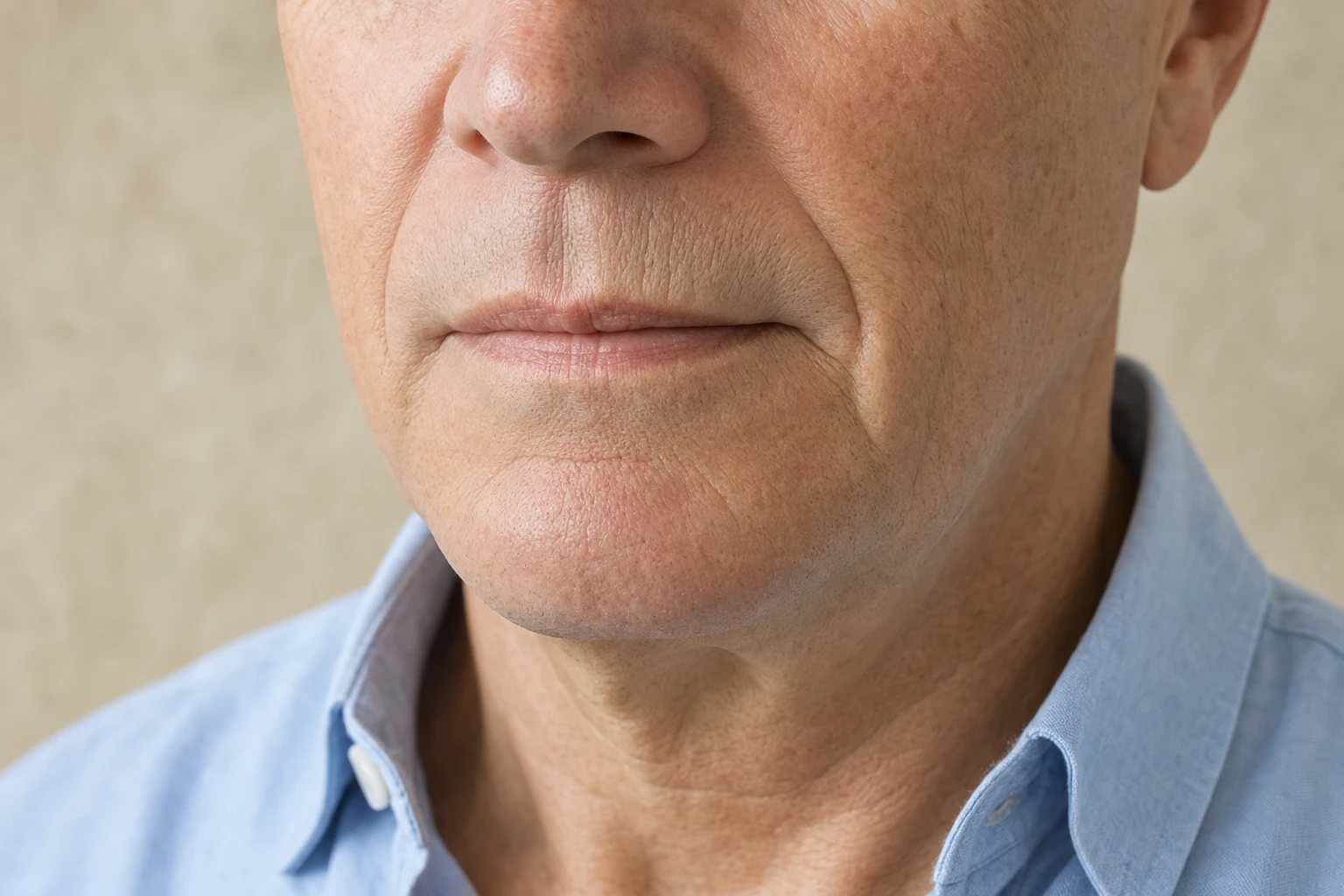
Wrinkles, Texture, Skin Tone, Pores or Volume: What Does Each Term Mean?
What you see in the mirror is rarely a single thing. A wrinkle is a fold in the skin: it can appear only when a muscle contracts, or remain visible at rest. Fine lines sometimes become less noticeable with a good moisturizer. Skin texture refers to how rough or uneven the skin is; skin tone is its colour, which can become dull or develop spots. Visible pores are part of texture: no treatment comes with a promise to close them. Volume depends on what lies beneath the skin. With age, the fat under the skin decreases and the collagen and elastin fibres that support the skin become scarcer. Gravity then contributes to the sagging of tissues.
These changes can occur together, but they are not interchangeable. A cream does not restore volume, and an injection that relaxes a muscle changes neither the texture nor the colour of the skin. Before choosing a treatment, identify the change that bothers you most.
What Ages a Face the Most?
No single factor explains it on its own. Natural aging affects all of the skin, even skin the sun has never reached: it becomes thinner and drier, and the face loses some of its fullness. Ultraviolet rays, smoking and pollution add to this aging. Sun exposure can result in rough skin, deeper wrinkles, a yellowish complexion and pigmented spots. Smoking speeds up aging, deepens wrinkles and dulls the complexion.
Facial expressions matter too. Each expression contracts muscles; repeated over many years, it can make a line permanent. This does not mean you should stop smiling or look for a culprit: not every wrinkle has an avoidable cause, and the contribution of each factor varies from person to person.
What Can Sun Protection and Daily Skin Care Do?
Sun protection helps slow sun-related aging. Outdoors during the day, a broad-spectrum, water-resistant sunscreen with an SPF of 30 or higher, reapplied every two hours, complements shade and clothing that covers the skin. These habits do not eliminate natural aging. On skin that already shows signs of aging, the assessment includes distinguishing the changes a treatment can make less noticeable from those that require a different approach.
A moisturizer holds water in the skin, makes fine lines less noticeable and brightens the complexion. It works on the surface, without changing the volume or contours of the face. Cosmetic skin care gives modest results, and a cream does not provide the results of a facelift. Facial treatments care for the skin; they are not a medical procedure and do not target the same changes.
Piling on products can irritate the skin and make the signs of aging stand out more. Start with a single product suited to your skin type, because no product is right for everyone. Stop using a cosmetic product that stings or burns. If it is a prescribed treatment, change how you use it only on the advice of the professional who manages it for you.
What Facial Rejuvenation Treatments Are Available?
The cosmetic injections offered by CARE MD do not all do the same job. Like other treatments, they are chosen based on the change being targeted:
- Relaxing a muscle: an injection reduces the wrinkles that movement deepens.
- Adding volume or hydrating: an injection addresses contours or skin quality.
- Prompting the skin to produce new collagen: injectable products, CO2 laser and microneedling use this mechanism, each in its own way.
- Renewing the surface: CO2 laser removes or heats tiny areas of skin, which then heal.
- Heating with light: intense pulsed light is absorbed by coloured targets in the skin.
- Firming below the surface: focused ultrasound heats small areas beneath the skin's surface.
None of these options addresses every change at once.
Injections That Relax a Muscle
Some wrinkles deepen when a muscle is active. An injection can lessen the muscle's ability to contract and reduce the wrinkle it causes. It acts on movement, not on volume: it is more appropriate for wrinkles that appear only when the muscle contracts than for deep furrows that have set in at rest.
A fold between the eyebrows is a frown line; lines at the corner of the eye are crow's feet. During the assessment, the doctor checks what causes them and which options may be appropriate.
This injection is performed by a physician, or by a nurse injector supervised by a physician. The effect can spread to other parts of the body: this risk is rare but serious, and it is mainly associated with non-cosmetic uses. Seek care right away: after the injection, difficulty swallowing, speaking or breathing requires immediate medical care. The injection can also interact with other cosmetic procedures, other injections or medications. Whether they are compatible is assessed before starting.
Injections That Add Volume or Hydrate the Skin
A hollow or a lack of fullness is related to volume, and a hyaluronic acid injection is used to fill it. The result depends on the tissues under the skin, the type of gel and the amount injected. Pain, bruising and swelling are common. They are usually temporary, but some reactions last several months and require additional treatment.
The most serious risk is accidental injection into a blood vessel. This complication is rare, but it can block blood flow, lead to tissue death (necrosis), affect vision severely enough to cause blindness, or result in a stroke. Seek care right away: during or shortly after the injection, unusual pain, a change in vision or skin that turns white, grey or blue near the injection site requires immediate medical care. The same applies to signs of stroke, such as sudden difficulty speaking or weakness in the face, an arm or a leg.
Inflamed or infected skin, a bleeding disorder, a severe allergy or a tendency to excessive scarring are reasons to postpone the treatment.
Other injections target the skin's hydration, firmness, texture and radiance rather than a hollow to be filled. This is the role of the skin booster, or injectable hydration: the product is placed in the skin to improve its quality, whereas a cosmetic moisturizer is applied to the surface. The effectiveness of this approach has yet to be confirmed by large trials.
Injections That Prompt the Skin to Produce New Collagen
Injectable collagen biostimulators prompt the skin to make its own collagen, gradually, rather than only aiming to fill a hollow immediately. Some materials achieve this through a controlled reaction of the body to a foreign substance. It cannot be said that one product works better than another, and no quantified effect can be promised.
With fillers that have this stimulating effect, pain, bruising and swelling can follow the injection. Nodules, which are small lumps in or under the skin, are also possible and may require treatment. These complications are different from temporary after-effects. The risk depends on the material chosen: what is true of one product cannot be extended to all products of the same type.
CO2 Laser: Fractional or Ablative Resurfacing
A laser emits light of a single wavelength. The CO2 laser's wavelength is in the infrared range. Its heat creates tiny zones of thermal damage that stimulate the production of new collagen and the replacement of surface cells. Ablative resurfacing mainly removes the superficial layers of the skin while also reaching the deeper ones. “Fractional” describes how the energy is distributed in microscopic zones, not a different power level: a treatment can be both ablative and fractional.
CARE MD offers fractional CO2 laser treatment and ablative CO2 laser resurfacing, performed by a physician, or by a nurse supervised by a physician. The choice is made during the assessment, based on the change you are looking for, your skin and the limitations of the treatment.
Laser treatment can cause pain, redness, bruising and swelling. Blisters, burns and infection are possible. The skin can become lighter or darker, rarely permanently. The effects and risks depend on the device, the settings, the training of the person using it and the colour of the skin. Before deciding, ask the professional whether the treatment is fractional and ablative, what recovery involves and what aftercare will be needed. The name of the treatment is not enough to determine what to expect afterwards.
Intense Pulsed Light
Intense pulsed light is not a laser: with each pulse, it emits many wavelengths instead of a single one. Coloured targets in the skin absorb this light, which turns into heat and damages the targeted area. An accurate diagnosis must come before treatment, and expectations must be clarified. The cells that give the skin its colour can be affected, leaving darker or lighter spots.
Choosing between pulsed light and facial laser treatment depends on the change you are looking for and the colour of your skin. An ablative laser removes layers of skin; the term “fractional” describes how its energy is distributed, not a pulsed light technique.
Focused Ultrasound
Focused ultrasound does not treat the surface the way a laser or a peel does. It targets tissues under the skin and creates small zones of thermal injury there, at predetermined depths, without aiming to damage the surrounding tissues. The goal is to firm skin with mild to moderate sagging. The effect has mainly been documented in women. Devices and their settings vary widely: a result obtained with one device does not apply to another.
The treatment is moderately painful and leaves temporary redness and swelling. It is performed by an esthetician or a nurse. The treatment area and what the treatment can achieve are confirmed during the assessment.
Microneedling
With facial microneedling, tiny needles puncture the skin. As it heals, the skin produces collagen, which can make wrinkles and scars less visible and the skin's texture and colour more even. The effect is gradual, and some people need a series of sessions.
The skin can feel sunburned, with discomfort, a burning sensation or swelling. Infection, scarring or a lasting change in skin colour are also possible. The risk is higher if the person performing the microneedling does not have the necessary medical training and knowledge of the skin. Aftercare instructions help reduce these risks.
Treatment is postponed until a tan, sunburn, infection or active breakouts have gone away. Also mention slow or difficult healing, thick raised scars or a weakened immune system: microneedling is not appropriate in these situations.
Looking Younger Without Surgery: How Far Can You Go?
Many people hope to look noticeably younger. A treatment can improve a specific change: a less pronounced fold, better-hydrated skin, a more even texture or a firmer contour. Its effect varies from person to person and over time. No treatment comes with a promise of a number of years taken off: such a promise says nothing about the change you actually want to achieve.
No treatment offered by CARE MD comes with a promise of the results of a facelift. When sagging contours are the main change, that change is related to volume and support, not to the surface of the skin. Volume loss and sagging should be discussed separately. Surgery should be discussed with a surgeon; CARE MD does not offer it.
Is There a Best Treatment, or a New Technique?
There is no best treatment for everyone: a treatment that is right for one person's skin is not right for another's. The fact that a technique is new does not prove that it meets your needs or that it suits you better. To compare options, keep six points in mind:
- What you want to change: a fold, a hollow, skin texture, colour and contours do not call for the same option.
- Your skin: its colour, its sensitivity and your medical history change the effects and risks of treatments that heat the skin.
- Limitations: what the option does not change.
- Risks: distinguish temporary reactions from complications that may require treatment, and ask which signs mean you need to seek care right away.
- What to expect afterwards: pain, redness, swelling and recovery time vary depending on the treatment. Before starting, ask what care will be needed after the session.
- Sessions: some options require a series of sessions; the number of sessions is determined during the assessment, based on your skin and the change being targeted.
How the Assessment Helps You Choose
At CARE MD, the aesthetic consultation, called the Global Aesthetic consultation, starts with what bothers you most. This priority guides the discussion. The doctor examines your skin and skin type, along with the skin care products and treatments you use, any reactions you have already had and past procedures. The doctor reviews your medical history: allergies, bleeding disorders, cold sores, cosmetic treatments you have already had or skin that is easily irritated. Bring a list of all your medications, including non-prescription ones, as well as your vitamins and supplements. Never change how you take a prescribed medication without the advice of the professional who manages it for you. Your expectations are discussed in light of what each option can actually change.
This information is used to decide whether to select an option, postpone it or rule it out. Another procedure may also be more appropriate. The approach is the same for men and women: its starting point is what you want to change, your skin and your medical history. To prepare for the assessment, write down the change that matters most to you, then the others. Also bring a list of your skin care products and treatments, past reactions and previous procedures.
Seek Care Right Away
Seek care right away
A spot or growth that is getting larger, bleeding or changing requires medical advice before any cosmetic treatment. After an injection, difficulty swallowing, speaking or breathing, unusual pain, a change in vision, white, grey or blue skin near the injection site or signs of stroke require immediate medical care.
Ask Us About Facial Rejuvenation
Frequently asked questions
What ages a face the most?
No single factor explains it on its own. Natural aging makes the skin thinner and drier and causes the face to lose some of its fullness, even where the sun has never reached. Ultraviolet rays, smoking and pollution add to this. Expressions repeated over many years can also make a line permanent. The contribution of each factor varies from person to person, and not every wrinkle has an avoidable cause.
Sources2 references
Are sun protection and moisturizing enough to rejuvenate the skin?
They help, but they have limitations. Daily sun protection, combining a broad-spectrum sunscreen with an SPF of 30 or higher, shade and clothing, slows sun-related aging. A moisturizer makes fine lines less noticeable and brightens the complexion. Neither one eliminates natural aging, restores volume or changes the contours of the face, and cosmetic skin care gives modest results.
Sources3 references
What is the best facial rejuvenation treatment?
There is no best treatment for everyone. The choice depends on the change you want to achieve, on your skin, and on each option's limitations, risks, after-effects and the number of sessions it requires. A newer technique is not more relevant for that reason alone. The options that fit your situation, including not having any treatment, are compared during the assessment.
Sources4 references
Can you look younger without having surgery?
A specific change can be improved: a less pronounced fold, better-hydrated skin, a more even texture. Neither a number of years taken off nor the results of a facelift can be promised, and the effect varies from person to person and over time. When sagging contours are the main change, surgery is an option to discuss with a surgeon; CARE MD does not offer it.
Sources5 references
Are there facial rejuvenation options that do not involve injections?
Yes. CARE MD offers fractional CO2 laser, ablative CO2 laser resurfacing, intense pulsed light and focused ultrasound, none of which involve injections. Other options include microneedling and cosmetic skin care. Each option addresses a different change and has its limitations: a moisturizer makes fine lines less noticeable without affecting volume, laser treatment heats the skin to renew it, and ultrasound mainly targets mild to moderate sagging. Which ones make sense for your skin is determined during the assessment.
Sources6 references
What happens during the assessment, and how can you prepare for it?
The assessment in the Global Aesthetic consultation starts with the change that bothers you most; the doctor then examines your skin and skin type. The doctor reviews your skin care products and treatments, past reactions, previous procedures, medical history, medications, vitamins and supplements, followed by your expectations. This information is used to decide whether to select an option, postpone it or rule it out. To prepare, write down the change that matters most to you, then the others, and bring a list of your skin care products and treatments.
Sources2 references
Is facial rejuvenation also suitable for men?
Yes. A man's face ages through the same mechanisms: thinning skin, sun exposure, smoking, repeated expressions and volume loss. The approach is the same as for a woman: its starting point is what you want to change, your skin and your medical history. However, the effect of ultrasound is better documented in women; this is taken into account during the assessment.
Sources5 references
Sources18 references+
- Skin ageing, DermNet (opens in a new tab)
- Facial lines and wrinkles, DermNet (opens in a new tab)
- 11 ways to reduce premature skin aging, American Academy of Dermatology (opens in a new tab)
- How to select anti-aging skin care products, American Academy of Dermatology (opens in a new tab)
- How to maximize results from anti-aging skin care products, American Academy of Dermatology (opens in a new tab)
- Applied anatomy for cosmetic injections, Current Otorhinolaryngology Reports (opens in a new tab)
- Carbon dioxide laser treatment, DermNet (opens in a new tab)
- Laser resurfacing, DermNet (opens in a new tab)
- Cosmetic laser treatments, Health Canada (opens in a new tab)
- Intense pulsed light therapy, DermNet (opens in a new tab)
- A Systematic Review of the Efficacy of Microfocused Ultrasound for Facial Skin Tightening, MDPI (opens in a new tab)
- Cosmetic injections, Health Canada (opens in a new tab)
- Dermal Fillers (Soft Tissue Fillers), FDA (opens in a new tab)
- The Effectiveness of Injectable Hyaluronic Acid in the Improvement of the Facial Skin Quality: A Systematic Review, PMC (opens in a new tab)
- Evaluation of the biostimulatory effects and the level of neocollagenesis of dermal fillers: a review, PubMed (opens in a new tab)
- Microneedling can fade scars, uneven skin tone, and more, American Academy of Dermatology (opens in a new tab)
- Fillers: Preparation, American Academy of Dermatology (opens in a new tab)
- Skin cancer: Symptoms, diagnosis, and causes, American Academy of Dermatology (opens in a new tab)
Before Any Rejuvenation Treatment: Limitations and Precautions
Your skin, your medical history and the limitations of each option are taken into account during the assessment before a treatment is selected.
Limitations and precautions
With a filler that stimulates collagen, small lumps in or under the skin may require treatment. The risk depends on the material; it does not apply to all products of the same type.
Mention your medical history, allergies, medications, vitamins and supplements, as well as your past treatments and procedures.
Skin colour changes the effects and risks of treatments that heat the skin: darker or lighter spots, blisters, burns and infection are possible.
Filler treatment is postponed in the case of inflamed or infected skin, a bleeding disorder or a tendency to excessive scarring.
Stop using a cosmetic product that stings or burns, but never change how you take a prescribed medication without the advice of the professional who manages it for you.
A spot or growth that is getting larger, bleeding or changing needs to be examined by a doctor before any cosmetic treatment.
After microneedling, infection, scarring or a lasting change in skin colour must not be mistaken for temporary discomfort. Before a session, wait until any tan, sunburn, infection or active breakouts have gone away.
After an injection, get medical help immediately if you have difficulty swallowing, speaking or breathing, if you have unusual pain, if your vision changes, if the skin near the injection turns white, grey or blue, or if signs of stroke appear.
No result, duration or number of years taken off is promised.
Cosmetic skin care has modest effects and changes neither the volume nor the contours of the face.
An injection that relaxes a muscle acts on wrinkles caused by movement and is less effective on furrows that have set in at rest.
The effect of injectable hydration has yet to be confirmed by large trials, and products that stimulate collagen have rarely been compared with one another.
Ultrasound has mainly been studied for mild to moderate sagging, with widely varying protocols.

Let's Talk About What Bothers You Before You Choose a Treatment
An assessment is an opportunity to identify the change that bothers you most and to see which option, if any, is appropriate for your skin. To prepare for this discussion with CARE MD, describe that change, ask your questions and note any medical history you would like to mention.