


Skin Booster: Injectable Skin Hydration
Your skin feels tight, it looks dull, and fine lines are forming. A skin booster is an injection of hyaluronic acid, a gel that holds water, into the dermis, the layer of skin beneath the surface. It is chosen for skin quality: its hydration, texture and radiance. A hyaluronic acid cream or serum is applied to the skin; a skin booster, by contrast, is injected into it.
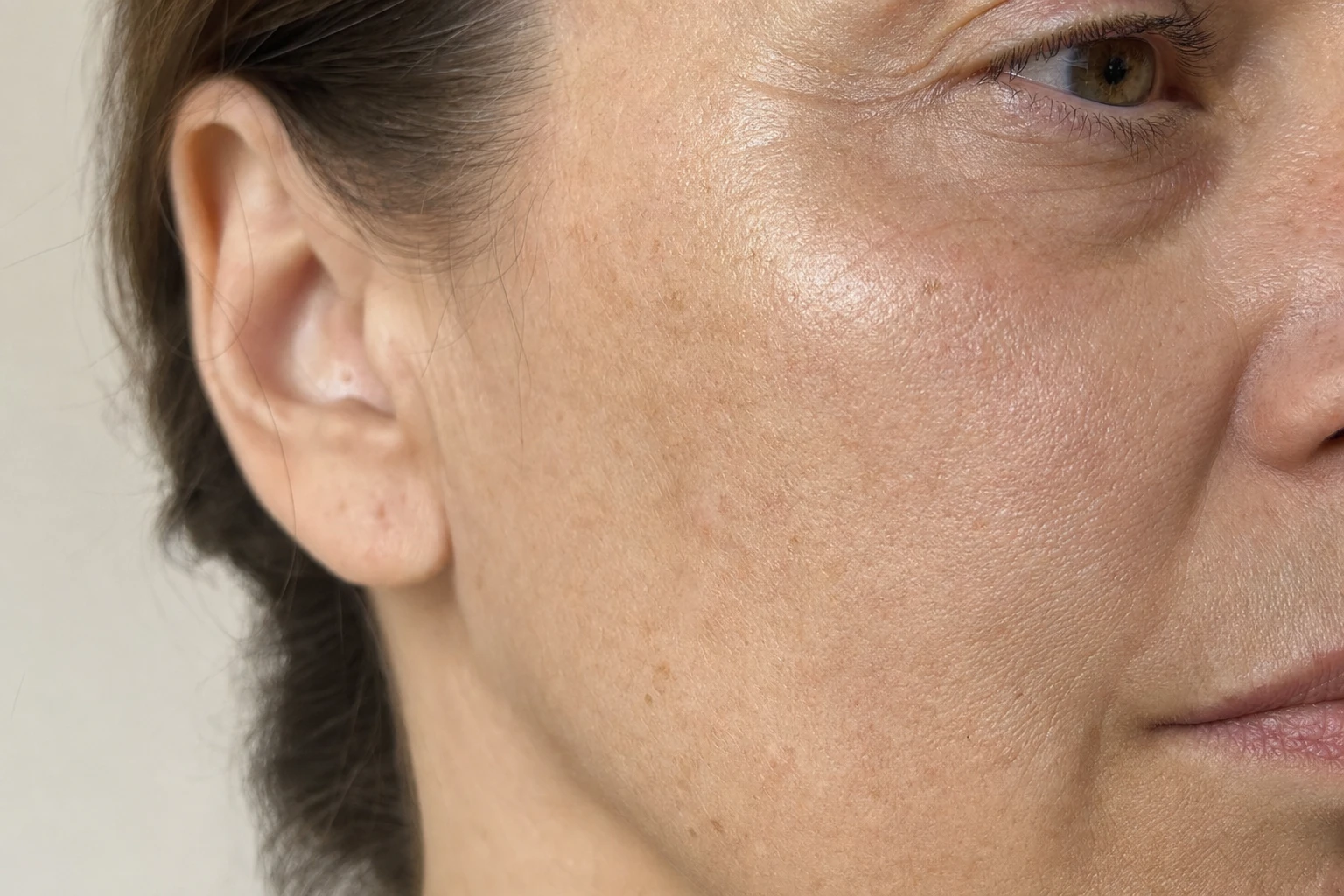
At a glance
Five things to know before deciding- What it is: a skin booster is a hyaluronic acid injection into the skin, aimed at its hydration, texture and radiance.
- What it does not do: it is not used to reshape a contour by adding volume. A deep wrinkle or sagging skin calls for an assessment to choose the appropriate approach.
- Sessions and duration: the number of sessions and the time between them are decided based on your skin and the chosen treatment; no immediate effect is guaranteed, and the duration of the effect has not been established.
- Risks: temporary bruising, swelling and tenderness are possible. Unusual pain, a vision problem, or white, grey or blue skin during or shortly after the injection require immediate medical help.
- Before any treatment: a medical assessment, which can lead to a different approach or to no treatment.
What Is a Skin Booster, and What Does the Gel Do in the Skin?
Hyaluronic acid forms a network that attracts water and holds it in the skin. The small particles used for this procedure hold water without adding the volume sought with a filler gel, which is placed deeper.
In the short term, improved hydration, radiance and firmness, and softer crow's feet and cheek wrinkles, are possible with the preparation that was evaluated. These changes are not assured for every person or for every product. Nor does a change measured shortly after the injections tell you how long the effect will last.
- What it targets
-
The hydration, texture and radiance of skin that is dull, dry or marked by fine lines.
- Where it works
-
In the dermis, beneath the surface.
- What it is not
-
A treatment applied to the skin, such as a cream or a serum.
What a Skin Booster Does Not Do
A skin booster is not used to reshape a contour by adding volume. A hyaluronic acid filler injection instead aims to fill a hollow or a fold with a gel placed deeper. Hydrating the skin and restoring volume address two different needs.
If a wrinkle remains deep or your skin is sagging, the first step is to clarify what bothers you. The assessment makes it possible to choose an approach; filler is not the answer to every kind of sagging. Nasolabial folds, the creases that run from the nose toward the mouth, involve a different question about filler than skin that feels tight does. Reshaping the outline of the lips with lip injections is also a volume goal, not hydration of the facial skin.
- Contour volume
-
That is the goal of filler, not of a skin booster.
- Fold or deep wrinkle
-
During the assessment, the doctor distinguishes a hollow to be filled from a change in skin quality.
- Sagging skin
-
The approach is chosen after an examination; hydrating the skin is not enough to define what needs to be treated.
- Skin quality
-
That is what a skin booster targets, with no guarantee of results.
How Many Sessions, and How Long Before You See a Result?
The number of sessions and the time between them are decided based on your skin, the chosen treatment and the change you are looking for. A series may be considered, but no single rule applies to everyone. Before you start, ask how many sessions would be proposed and when you would review where things stand.
No immediate effect is guaranteed. When a change can be judged depends on the chosen treatment; this becomes clearer during the assessment. The duration of the effect has not been established: you cannot be given a reliable timeline for how long the change will last. Also ask whether maintenance would be useful and how often, rather than planning regular injections from the outset.
- Sessions
-
The number and spacing are decided based on your skin and the chosen treatment.
- Immediate effect
-
None is guaranteed.
- Timing
-
Ask when to review the change you are looking for with the chosen treatment.
- Duration
-
No reliable duration of the effect can be given.
- Maintenance
-
Ask whether it would be useful in your case, and how often.
Around the Eyes and Other Areas
For a skin booster around the eyes, over the whole face or in another area, the doctor assesses whether an injection is suitable and which product could be chosen. The fact that an injection is possible elsewhere on the face is not enough to say that it is suitable around the eyes.
The Risks, and the Signs That Require Action
Bruising, swelling and skin tenderness are possible after the injections; these local effects are generally temporary, often lasting less than two weeks. Redness, pain, itching and a rash are also possible. Infection, allergic reaction and necrosis, the death of tissue, are also among the risks to be aware of. Some side effects of hyaluronic acid injections can last several months and require corrective treatment.
The most concerning complication is accidental injection into a blood vessel. It is rare, but it can cut off the blood supply to tissue and cause serious, sometimes permanent complications: necrosis, vision problems that can lead to blindness, or stroke. The safety of these injections during pregnancy and breastfeeding is unknown; let the doctor know if you are pregnant or breastfeeding before any procedure.
- Common local effects
-
Bruising, swelling, tenderness, generally temporary.
- Other risks
-
Infection, allergic reaction, necrosis; some effects can require corrective treatment.
- Rare but serious
-
Injection into a blood vessel, with complications that are sometimes permanent.
- Pregnancy and breastfeeding
-
Let the doctor know before any procedure, because safety is unknown.
Seek care right away
If, during or shortly after the injection, you experience unusual pain, a change in your vision, white, grey or blue skin near the injection site, or sudden difficulty speaking, or numbness or weakness in your face, an arm or a leg. These last signs can indicate a stroke and require immediate medical help.
Microneedling or Skin Booster, Skin Care, PRP and Laser: What Is Each One For?
If your skin mainly feels tight, topical hyaluronic acid treatments target hydration and the appearance of the skin without an injection. A skin booster also targets skin quality, but by injecting a gel into it. The method of application and the risks therefore differ: wanting to hydrate your skin does not automatically lead to choosing an injection.
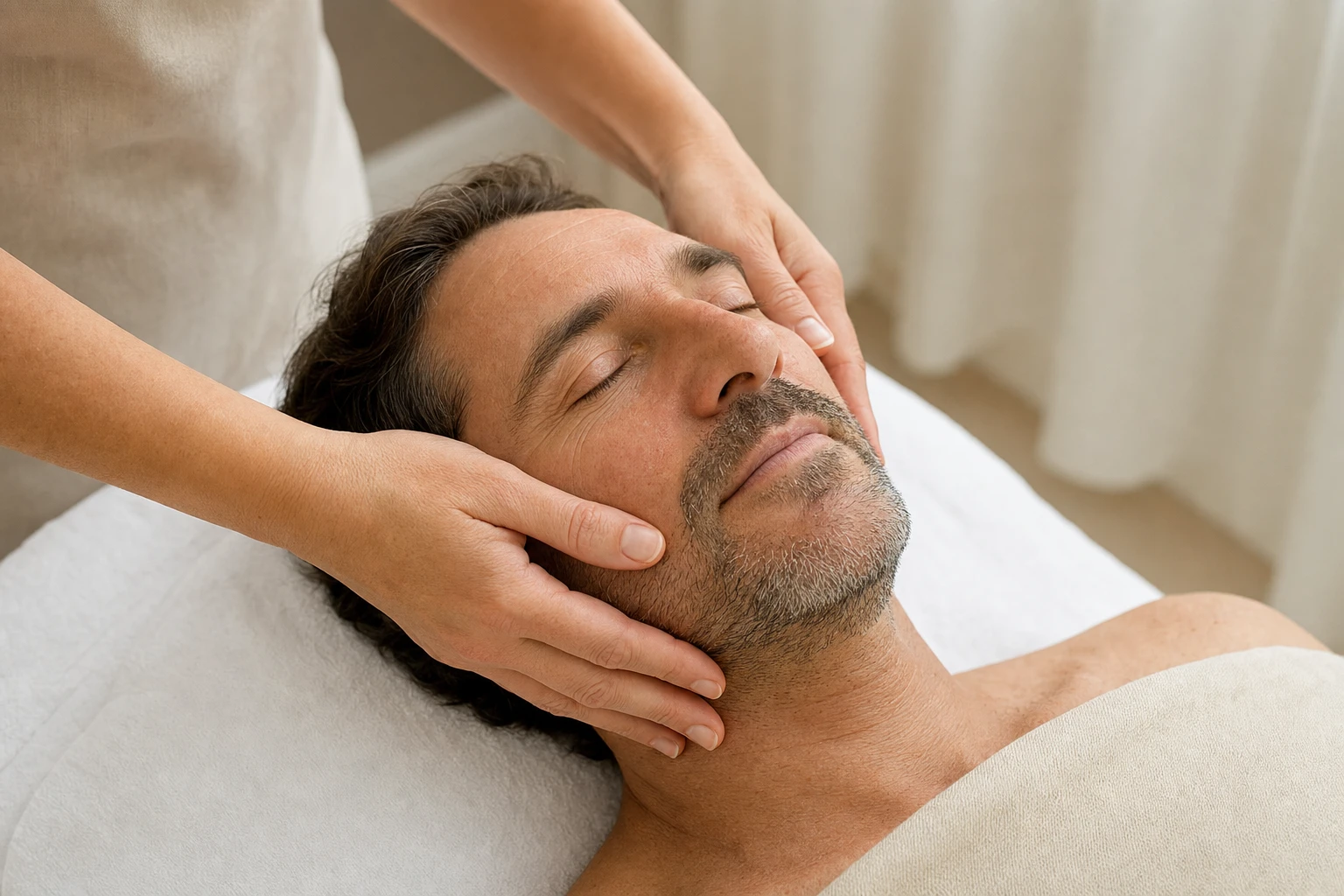
To choose between microneedling and a skin booster, specify whether you mainly want to address dryness, texture or a wrinkle. Microneedling is one of the options for facial rejuvenation; temporary redness and flaking are possible. Its effectiveness for a specific change should be discussed, rather than assuming it works better than a skin booster. Ask what change each treatment would aim for in your case and how it would be assessed.
PRP is platelet-rich plasma, not a hyaluronic acid gel. It is another option for facial rejuvenation, and its effectiveness has yet to be confirmed. If you are unsure whether to choose a skin booster or PRP, the difference in product is not enough to decide: ask what changes each treatment could bring to your skin and what its limits are. Neither can be declared better for your concern.
Laser resurfacing is also one of the options for skin rejuvenation, as are chemical peels and microdermabrasion. These are procedures other than injecting a gel. If your skin texture or a wrinkle bothers you, the doctor should specify, during the assessment, the change resurfacing would aim for, what it can or cannot improve and the possible complications; it is not interchangeable with an injection intended for hydration.
CARE MD offers skin care treatments, microneedling, PRP, hyaluronic acid injections and laser treatments. At CARE MD, ablative laser treatment is performed by a doctor or a supervised nurse. Peels and microdermabrasion are options to discuss, not treatments presented here as offered by CARE MD. Among cosmetic injections, hydrating the skin and filling a hollow remain two different goals; the assessment can also lead to choosing a treatment without an injection.
- At CARE MD Skin care
-
Hydration and appearance of the skin, without an injection.
- At CARE MD Microneedling
-
A facial rejuvenation option; the expected change is discussed, along with the possibility of temporary redness and flaking.
- At CARE MD PRP
-
Platelet-rich plasma, distinct from a gel; its effectiveness for facial rejuvenation has yet to be confirmed.
- At CARE MD Laser
-
Resurfacing is a rejuvenation option; at CARE MD, ablative laser treatment is performed by a doctor or a supervised nurse.
Why Have a Medical Assessment Before a Skin Booster?
The doctor examines your skin to determine whether the treatment can address what bothers you. The assessment can lead to a different approach or to no treatment. Skin inflammation or infection, such as cysts, pimples, a rash or hives, leads to postponing the injection until it has been treated.
Describe what has changed in your skin, since when, and the treatments you have already tried. Tell the doctor about your allergies, any blood clotting disorder, your cold sore outbreaks, any heart disease, your previous injections and other cosmetic treatments, as well as skin that gets irritated easily.
Also bring a list of your medications and supplements, even those you take without a prescription. In particular, mention warfarin, aspirin, ibuprofen, vitamin E, St. John's wort, and garlic and ginger supplements; do not change anything on your own. Ask what change the treatment is meant to achieve, what limits are expected and how the doctor will judge the benefits and side effects.
- What to bring
-
How your concern has developed, your allergies, your medical history, a list of your medications and supplements, and your previous treatments.
- What the doctor can conclude during the assessment
-
A skin booster, a different approach, or no treatment.
When the injection is postponed
Inflamed or infected skin.
Ask Us Your Questions About Your Skin
Frequently Asked Questions
What is a skin booster?
It is an injection of hyaluronic acid, a gel that holds water, into the dermis to target the hydration, texture and radiance of the skin. It is not a way of adding volume to reshape a contour. A deep wrinkle or sagging skin calls for an assessment to choose the appropriate approach.
Sources2 references
How many sessions are needed, and how long does the effect last?
The number of sessions and the time between them are decided based on your skin and the chosen treatment; a series may be considered, with no single rule that applies to everyone. The duration of the effect has not been established. Before you start, ask how many sessions would be proposed and whether maintenance would be useful in your case.
Sources1 reference
Does a skin booster have an immediate effect, and how long before you see the result?
No immediate effect is guaranteed. When a change can be judged depends on the chosen treatment; this becomes clearer during the assessment. A short-term measurement cannot tell you when you will see a result or how long it will last.
Sources2 references
Microneedling or skin booster: which should you choose?
A skin booster injects a gel that holds water to target skin quality. Microneedling is another facial rejuvenation option, with possible effects such as temporary redness or flaking. Specify whether what bothers you is dryness, texture or a wrinkle, then ask what change each treatment would aim for in your case. Neither is better for your skin by default.
Sources2 references
Skin booster or PRP?
A skin booster uses a hyaluronic acid gel to target skin quality; PRP is platelet-rich plasma. The effectiveness of PRP for facial rejuvenation has yet to be confirmed. CARE MD offers both: the choice should take into account the change you are looking for, the limits and the risks, not just the name of the product.
Sources2 references
Can a skin booster be used around the eyes?
The doctor assesses whether an injection is suitable around the eyes and which product could be chosen. The fact that an injection is possible in another area of the face is not enough to say that it is suitable around the eyes.
Sources1 reference
What are the risks of a skin booster?
Temporary bruising, swelling and tenderness are possible, as well as infection or an allergic reaction. Injection into a blood vessel is rare but can have serious and permanent consequences. Unusual pain, a vision problem, white, grey or blue skin, sudden difficulty speaking or weakness during or shortly after the injection require immediate medical help.
Sources2 references
How should you prepare for the assessment before a skin booster?
Describe what has changed in your skin, since when, and the treatments already tried. Bring a list of your medications and supplements; tell the doctor about your allergies, any blood clotting disorder, your cold sores, any history of heart disease and your previous injections or cosmetic treatments. Mention any skin inflammation or infection, and whether you are pregnant or breastfeeding. Do not change your treatments on your own. The doctor examines your skin to assess whether the treatment is suitable; the assessment can lead to a different approach, to postponing the injection or to no treatment.
Sources2 references
Sources7 references+
- The Effectiveness of Injectable Hyaluronic Acid in the Improvement of the Facial Skin Quality: A Systematic Review (Clin Cosmet Investig Dermatol, 2023) (opens in a new tab)
- The Effects of a Non-crossed-linked Hyaluronic Acid Gel on the Aging Signs of the Face versus Normal Saline: A Randomized, Double-blind, Placebo-controlled, Split-faced Study (J Clin Aesthet Dermatol, 2023) (opens in a new tab)
- FDA — Dermal Fillers (Soft Tissue Fillers) (opens in a new tab)
- Health Canada — Cosmetic injections (opens in a new tab)
- American Academy of Dermatology — Fillers: Preparation (opens in a new tab)
- Microneedling for Facial Rejuvenation: A Systematic Review (PubMed) (opens in a new tab)
- Systematic Review: Platelet-Rich Plasma Use in Facial Rejuvenation (PubMed) (opens in a new tab)
Skin Booster: What It Does Not Guarantee and What Calls for Caution
During the assessment, the doctor takes your skin, your expectations and your medical history into account before a treatment is proposed.
Limitations and precautions
Tell the doctor about your allergies, any blood clotting disorder, your cold sore outbreaks, your medical history, your medications and your supplements.
The injection is postponed as long as skin inflammation or infection has not been treated.
Pregnancy and breastfeeding are discussed before any procedure, because the safety of these injections is unknown.
Unusual pain, a change in vision, white, grey or blue skin near the injection site, sudden difficulty speaking, or numbness or weakness in the face or a limb requires immediate medical help.
No result is guaranteed: results vary from person to person.
No immediate effect is guaranteed.
A skin booster is not used to reshape a contour by adding volume; the approach to a deep wrinkle or sagging skin must be chosen after an examination.
The duration of the effect has not been established.
The doctor assesses whether an injection is suitable for the area, particularly around the eyes, and which product could be chosen.
