


Rosacea Causes: Symptoms, Types and Triggers
Your cheeks feel hot after a glass of wine or a walk in the bitter cold, and then the redness takes longer and longer to fade. You are looking into rosacea causes, or you have just learned that rosacea is what you have, and you want to understand before choosing anything.
No single cause has been established. Inflammation, immunity, nerves and the skin's blood vessels may play a part, while triggers set off flare-ups in someone who already has the condition. A red face can have another cause: at CARE MD, in Sainte-Thérèse, the diagnosis is confirmed through an examination.
In Brief
Five things to know before deciding- Cause: no single cause has been established. Inflammation, the immune system, nerves and the skin's blood vessels are being studied, and family background and environmental factors may play a part.
- Triggers: they set off a flare-up without explaining why rosacea exists. Heat, sun, alcohol, spicy food and stress come up most often, and the list differs from one person to the next.
- Types: redness with visible small blood vessels, pimples, thickening skin. They can overlap in the same person.
- Diagnosis: the doctor confirms it on examination. Acne, seborrheic dermatitis, lupus or a cortisone cream can cause a similar red face.
- Going further: the possible treatments, depending on whether you have redness, pimples or blood vessels, are compared in the rosacea treatment.
Possible Causes: Mechanisms Under Study
The exact cause of rosacea is not yet known. Several mechanisms may play a part:
- Immunity and inflammation: the immune system activates cells that keep the skin inflamed, and the natural defences of affected skin are more active than those of skin without rosacea.
- Nerves and blood vessels: the role of the nervous and circulatory systems is being studied.
- Family: several people in the same family can have rosacea, with no simple genetic link. Having an affected relative is not enough to predict it or to establish a diagnosis.
- Environment: genetic, immune and environmental factors may all play a part.
When you encounter a trigger, the blood vessels in your facial skin dilate. This causes episodes of redness and warmth, often among the first signs you notice.
Demodex: A Mite Found on Almost Everyone's Skin
Demodex mites are microscopic and invisible without a powerful microscope; they live on the skin of almost everyone. They are often found in greater numbers when a person has rosacea, and they may play a part. They are not enough to explain the condition. Their presence is not a reason to apply a product on your own: during the examination, the doctor determines what is appropriate for your skin.
Symptoms on the Face: Redness, Blood Vessels, Warmth
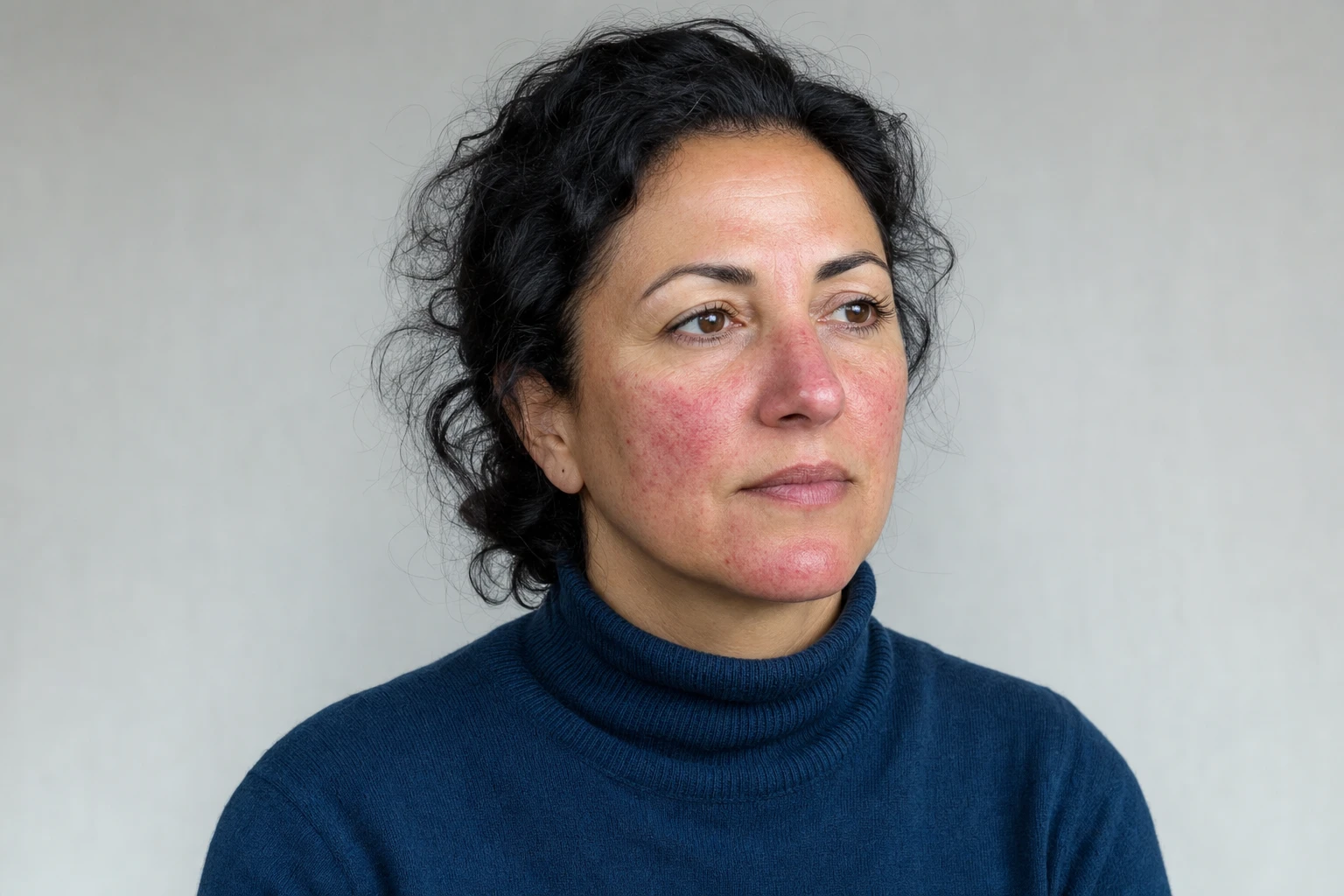
The first sign is often redness that comes and goes. Over time, it can become persistent and more visible, especially on the cheeks, nose, chin and forehead. Small dilated blood vessels sometimes trace a network of red lines on the surface of the skin, and small red bumps or pus-filled pimples can give the skin a rough, uneven look. The skin of the face is often sensitive, and the affected area can feel very hot or sting.
Severity ranges from mild to severe: your skin may stay calm for weeks, then the redness may return. The traditional names for the types describe the predominant signs, and several types can overlap: on examination, the doctor focuses on the signs actually present rather than on a single label.
Mild Rosacea: What You Notice First
At the start, mild rosacea often looks like redness that keeps coming back, with a feeling of warmth or tingling, without many pimples. Brief redness after exercise or a hot drink does not prove rosacea. Repeated episodes, redness that persists between flare-ups and skin that has become sensitive are, however, things to describe during the examination. To understand what is happening to you, the doctor compares what you feel with what they observe on your skin.
Erythematotelangiectatic Rosacea: Redness and Small Blood Vessels
The medical name describes the visible signs: redness (erythema) and small visible blood vessels (telangiectasias). It is also called vascular rosacea. When this redness and these vessels appear on their own, without pimples, people often think of couperose; on examination, the doctor clarifies whether it is in fact rosacea.
Recognizing the Signs on Darker Skin
On darker skin, early signs, such as flushing, can go unnoticed or be mistaken for another condition. Redness and small blood vessels are harder to see there, but other signs can alert you: dry, swollen skin, darker patches, pimples, a feeling of warmth that is present most of the time. Faint redness is therefore not enough to rule out rosacea, and an in-person examination remains the way to confirm it.
Papulopustular Rosacea: Rosacea Pimples
In this type, the skin has papules, small raised red bumps, and pustules, pimples that contain pus. They appear on the cheeks, nose, chin and forehead, often with redness, warmth or tingling. It is also called inflammatory rosacea or rosacea with pimples. These pimples look like those of acne, but without blackheads or whiteheads.
Pimples, redness and small blood vessels do not call for the same treatment: treatments often target one sign at a time. Treating pimples does not necessarily make small visible blood vessels disappear. Treatments for pimples are prescribed during a consultation and chosen according to your lesions. If these pimples keep coming back, an aesthetic consultation at CARE MD is an opportunity to have them examined.
Acne Rosacea or Acne?
“Acne rosacea” is a name that comes from the resemblance of the pimples to those of acne; the two conditions are different. Blackheads and whiteheads, known as comedones, point toward acne; rosacea pimples are described as having no comedones. Persistent redness or hot flushes in the centre of the face, along with pimples, point more toward rosacea. No single sign is enough to distinguish between the conditions: the doctor examines the redness and lesions as a whole rather than ruling out a cause based on one detail.
The distinction changes what you apply. Some acne products, harsh or exfoliating ones, can irritate skin prone to rosacea. An acne treatment prescribed by your doctor or dermatologist should still be followed exactly as prescribed: do not change how you use it without consulting your prescriber.
Seborrheic Dermatitis, Lupus and Other Causes of Redness
Seborrheic dermatitis causes greasy, yellowish scales on reddened skin in areas with more sebum: the scalp, ears, eyebrows and folds between the nose and mouth. Lupus can cause butterfly-shaped facial redness, rarely with pustules. On examination, the doctor can tell these conditions apart from rosacea. Redness that comes with other symptoms, or that occurs alongside an illness or a treatment already under way, should first be discussed with your regular doctor.
Steroid-Induced Rosacea: When a Cortisone Cream Is Involved
A cortisone cream, a corticosteroid obtained by prescription, applied to the face for a long time can bring on flare-ups and worsen symptoms. It can also cause a rash that looks like rosacea, called steroid-induced rosacea. Note the names of the creams you use or have used and how long you applied them, then bring them to the person who prescribed them: do not change how you use a treatment without consulting your prescriber.
Phymatous Rosacea and Rhinophyma
Phyma is thickened, swollen skin covered in bumps. When it affects the nose, it is called rhinophyma, the most common form of phyma. If your nose is thickening or its shape is changing, have it examined: the doctor confirms the cause of this change before discussing treatment. How it progresses varies from one person to the next.
Triggers: Food, Heat, Alcohol, Sun
A trigger is anything that makes your rosacea flare. It can bring on a flare-up without being the cause of the condition. Sun, heat, stress, alcohol and spicy food come up most often, along with hairspray. Exercise, extreme temperatures, hot drinks, wind, very dry or very humid air and warmth in heated rooms are also triggers. Triggers differ from one person to the next: your own list is often shorter than this one.
Bananas and Rosacea: Do You Need to Change What You Eat?
No food, bananas included, has to be avoided by everyone. Some patients cite bananas among possible triggers, along with citrus fruits, tomatoes, red plums, raisins and figs, with no established frequency or cause-and-effect link. You do not have to avoid them unless one of them triggers a flare-up in you. If a food seems to come before your redness, also look at the context: a very hot drink, a spicy dish, a warm room or a glass of alcohol can add up.
The Gut and Probiotics
The idea that a bacterium on the skin or in the gut causes rosacea has not been demonstrated. Even for a stomach infection, findings conflict and research is ongoing. The evidence on probiotics concerns their use alongside a treatment, not a universal solution to start on your own. It does not support recommending just any probiotic to reduce redness. Do not take probiotics or an antibiotic on your own to reduce your redness. Persistent digestive symptoms warrant a separate assessment by your doctor.
Your Flare-Up Diary
To find your triggers, a diary is better than a list of things to avoid. For at least two weeks, note each day what you eat and drink, the products you apply to your skin, your exposure to cold, heat, sun, exercise or stress, then describe your symptoms, their intensity and how long the redness lasts. Then compare these notes with your flare-ups: you are looking for what comes up before your redness, not what happened only once.
When to See a Doctor
See a doctor if the redness comes back often or does not go away, if pimples persist, if the skin of the nose thickens, if the situation gets worse, or if you are unsure whether it is rosacea, acne or another cause. The diagnosis is most often made through a clinical examination; a photo or an online questionnaire cannot establish it. An aesthetic treatment comes afterward: it is not chosen before you know what is making your face red.
Dryness, redness or pain in the eye, or blurred vision, warrants medical advice, and you can also turn to Experience CARE.
Daily Skin Care: What Helps and What Irritates
- Cleanse: a gentle cleanser, without rubbing the skin.
- Moisturize: keep the skin well moisturized, especially in the cold season, when the air is dry.
- Protect: a sunscreen with an SPF of 30 or higher, every day.
- Avoid: anything that irritates the skin can make rosacea flare.
These steps support your skin; they do not come with a promise of a cure. The rosacea treatment depends on what bothers you: pimples, redness or visible small blood vessels. Treatments prescribed during a consultation often target only one of these signs; there is no promise that they will make the condition go away.
When Facial Redness Affects Your Mood
Redness and flare-ups can cause emotional discomfort, lower self-esteem and confidence, anxiety, and sometimes depression. If the redness is weighing on you, mention it during the consultation, as you would mention burning or tingling. This emotional discomfort varies from person to person and matters as much as the signs visible on your skin.
Preparing for Your Consultation
Bring your diary and the list of products you use on your face, along with your current treatments, including any cortisone cream and how long you have used it. Say what bothers you most: the redness, the pimples, the blood vessels or the warmth. To show how things have changed, you can also take photos, keeping the same light, angle and distance as much as possible. They help you prepare for the consultation but do not establish the diagnosis.
Ask Us About the Causes and Signs
A question about your redness, its causes or its triggers? Write to us: your message is not an appointment request and it does not replace the examination.
Frequently Asked Questions
What triggers a flare-up?
A trigger can bring on a flare-up in someone who already has rosacea, without being the cause of the condition. Sun, heat, stress, alcohol and spicy food come up most often, along with exercise, hot drinks, wind and extreme temperatures. Triggers differ from one person to the next. A diary kept for at least two weeks, in which you note meals, drinks, products, exposures and symptoms, helps you spot yours without cutting out foods at random.
Sources3 references
What is the exact cause?
It remains uncertain. Inflammation, the immune system, nerves and the skin's blood vessels are being studied, and genetic and environmental factors may play a part. Several people in the same family can have rosacea, with no simple genetic link. Having an affected relative is not enough to predict the condition or to establish the diagnosis in your case. A single cause cannot be assigned to a person.
Sources2 references
Are Demodex mites responsible?
These microscopic mites live on the skin of almost everyone. They are often found in greater numbers on skin affected by rosacea, and they may play a part, but they are not enough to explain the condition. Their presence is not a reason to apply a product on your own.
Sources1 reference
How can you tell a rosacea pimple from an acne pimple?
Rosacea pimples look like those of acne, but without blackheads or whiteheads. Persistent redness or hot flushes in the centre of the face, with pimples, point more toward rosacea. No single sign is enough to settle the question: on examination, the doctor distinguishes between the two conditions, and some acne products can irritate skin prone to rosacea.
Sources3 references
Should you avoid bananas?
Not for everyone. Bananas, citrus fruits, tomatoes, red plums, raisins and figs can come before a flare-up in some people, with no established cause-and-effect link. You only need to avoid them if one of them triggers a flare-up in you; a hot drink, a spicy dish or alcohol consumed at the same time can matter as much as the food.
Sources1 reference
Is the redness always visible on darker skin?
No. On darker skin, redness and small blood vessels are harder to see, and early signs, such as flushing, can go unnoticed or be mistaken for another condition. Dry, swollen skin, darker patches, pimples or a feeling of warmth that is present most of the time are also relevant signs. Faint redness does not rule out rosacea.
Sources2 references
Can a cortisone cream cause a similar rash?
Yes. A cortisone cream obtained by prescription, applied to the face for a long time, can bring on flare-ups, worsen symptoms or cause a rash that looks like rosacea, called steroid-induced rosacea. Bring the prescriber the names of your creams and how long you used them, and do not change how you use a treatment without consulting them.
Sources2 references
Sources10 references+
- Rosacea: Causes, American Academy of Dermatology (opens in a new tab)
- Rosacea, DermNet (opens in a new tab)
- Rosacea, British Association of Dermatologists (opens in a new tab)
- Rosacea, Canadian Dermatology Association (opens in a new tab)
- People with darker skin tones can get rosacea, American Academy of Dermatology (opens in a new tab)
- Differential diagnosis, NICE Clinical Knowledge Summaries (opens in a new tab)
- Triggers could be causing your rosacea flare-ups, American Academy of Dermatology (opens in a new tab)
- Factors That May Trigger Rosacea Flare-Ups, National Rosacea Society (opens in a new tab)
- Probiotics and rosacea: randomized trial, mSystems (2024) (opens in a new tab)
- 7 rosacea skin care tips dermatologists recommend, American Academy of Dermatology (opens in a new tab)
Facial Redness: What Is Confirmed on Examination, and Its Limits
What you see in the mirror is not enough to name the cause of your redness: the diagnosis is confirmed through an examination.
Limitations and precautions
Do not change how you use a treatment, particularly a cortisone cream, without consulting your prescriber.
Some acne products can irritate skin prone to rosacea: do not apply any on your own.
Do not buy or take a probiotic or an antibiotic on your own to reduce redness.
Persistent digestive symptoms should be assessed separately by your doctor.
The causes of rosacea are still being studied; no mechanism or trigger can be assumed to apply to a given person.
Rosacea is a long-term condition and its severity ranges from mild to severe; no treatment comes with a promise that it will go away.
A photo or an online questionnaire does not confirm the diagnosis.
Treatment goals are not the same for pimples, redness and small blood vessels.

Have Your Redness Examined Before Choosing a Treatment
If your redness keeps coming back or does not go away, a Global Aesthetic consultation at CARE MD, in Sainte-Thérèse, is an opportunity to confirm what you have before treatment is discussed.