


At a glance
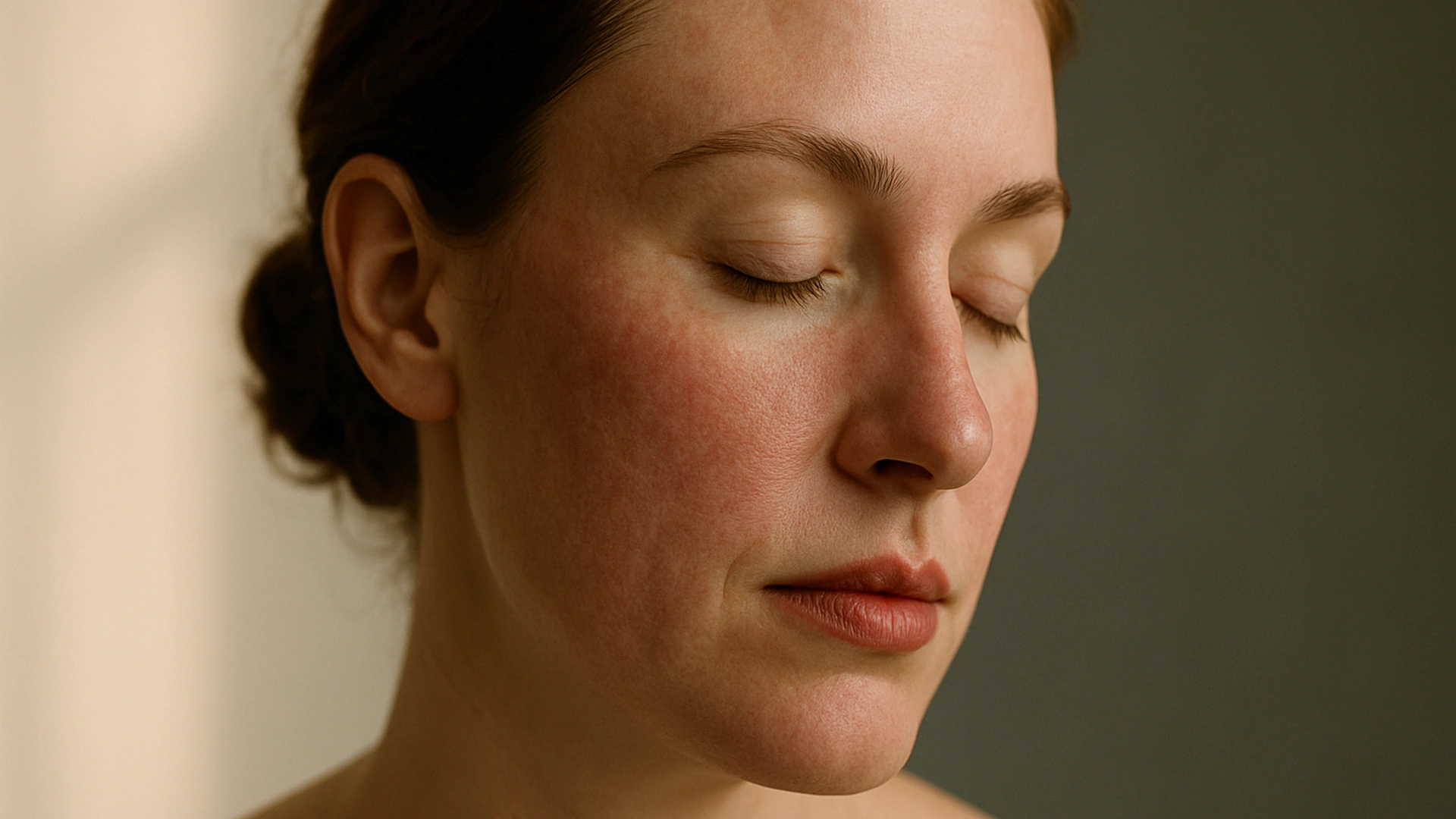
Things to know before decidingSmall red vessels that remain visible on the face, particularly around the nose and on the cheeks, are often called broken capillaries. These telangiectasias can accompany rosacea, but the terms do not mean exactly the same thing: rosacea can also cause flushing, bumps or eye symptoms.
Gentle skin care and sun protection can help reactive skin tolerate everyday conditions. They do not erase vessels that are already visible. Intense pulsed light, or IPL, can reduce the appearance of some superficial vessels; suitability depends on their appearance, the skin and the cause of redness. No treatment guarantees that rosacea will disappear permanently.
Visible vessels and rosacea: what is the difference?
A network of fine red lines describes the appearance of vessels. Redness after a hot drink is more likely to describe temporary flushing. Rosacea can combine these signs with persistent redness, burning, papules or pustules, and sometimes eye problems. Describing what remains visible between flares helps distinguish the goals of treatment.
Visible small facial vessels alone do not establish rosacea: sun exposure, certain medicines and other conditions can also be associated with telangiectasias. The rosacea guide explains other signs and the goals of managing them.
Vessels on the nose and cheeks: why their appearance matters
A telangiectasia is a small vessel visible at the surface. “Broken capillary” is a common expression, but the red appearance can reflect a dilated vessel rather than bleeding into the skin. Fine lines, a larger vessel beside the nose and diffuse redness do not necessarily call for the same approach.
Colour, diameter, apparent depth and the size of the affected area help guide treatment choice. A blue or deeper vessel is harder to treat with some light devices than a fine, superficial red vessel. Photographs can help track changes, but do not replace an assessment before treatment.
What causes visible vessels and flushing?
Rosacea is one possible context, as are the accumulated effects of sunlight on the skin. Prolonged use of corticosteroids on the face can also contribute to visible vessels: if the product is prescribed, ask about its role rather than changing its use yourself.
Heat, sunlight, wind, cold, hot drinks, spicy food or alcohol can trigger a flare in some people. A trigger is not a single explanation for visible vessels, and visible vessels do not prove alcohol use. Identifying repeated associations in your own daily life is more useful than avoiding all foods or activities at once.
How does intense pulsed light act on blood vessels?
IPL delivers several wavelengths of light, filtered for the target. Haemoglobin in the blood absorbs part of this energy, which becomes heat: treatment aims to coagulate selected small vessels to reduce their visibility. The surrounding skin needs protection during this process, including suitable settings and cooling.
IPL is pulsed light, not a laser. A vascular laser uses a specific wavelength, so these approaches do not have exactly the same properties. A small randomized trial comparing IPL and pulsed dye laser for rosacea found improvement with both, without demonstrating that either was superior. The “best treatment” therefore depends on the target, skin and constraints, rather than a ranking that applies to everyone.
Treating vessels has a different goal from treating inflammatory bumps or skin discomfort. Reducing visible vessels alone does not remove all signs of rosacea; daily skin care or other treatments may still be useful.
How many sessions and what results can you expect?
A series of spaced sessions may be needed. Two rosacea trials used three sessions about a month apart, with different populations and devices. These are research examples, not a required number for every person or an individual treatment package.
Assessing results means distinguishing vessel visibility, redness and skin sensations. Some vessels may become less visible after treatment, while new vessels can appear later. Response and follow-up needs vary; rosacea is not permanently cured simply because redness improves.
Before and after a session: what changes the risk
Before treatment, mention your medicines, sensitivity to light, history of herpes, recent skin care, and any sun exposure or tanning. Skin melanin also absorbs some light: skin type and tanning affect the choice of settings and the risk of burns or pigmentation changes. Darker skin should not be assessed on the basis of a blanket promise of safety for every skin type.
Heat or stinging can occur during a session, and the eyes need protection. Temporary redness or swelling can occur afterwards. Burns, blisters, pigmentation changes and scarring are possible complications; they should not be presented as expected steps towards a good result.
Follow the instructions you receive for the treated area and protect it from sunlight. Significant pain, blisters or concerning worsening warrant promptly contacting the responsible professional, rather than applying new products to hide the reaction.
What can skin care and home remedies do?
A short routine can include a gentle cleanser, a well-tolerated moisturizer and a broad-spectrum sunscreen with SPF 30 or higher. Avoid rubbing or exfoliating skin that already burns. “Natural” does not guarantee tolerability: fragrance and irritating ingredients can increase discomfort.
This routine supports skin comfort and protection; it is not a way to remove telangiectasias. The rosacea guide explains how daily skin care and treatments applied to the skin fit alongside other approaches to managing redness and bumps.
What about redness on the neck or chest?
Vascular redness on the neck can have a different context from redness in the centre of the face; sun damage can, for example, combine visible vessels and pigmentation. Diagnosis, the area and treatment settings need separate assessment. An approach chosen for the face does not automatically constitute a protocol for the neck or chest.
A question about this topic?
Frequently asked questions
Can a cream make visible facial vessels disappear?
A moisturizer can improve the comfort of reactive skin, but does not erase visible vessels. Treatments for bumps or temporary redness do not have the same goal as an approach targeting telangiectasias. Distinguishing these needs helps avoid changing creams without knowing what you want to treat.
Sources4 references
Is intense pulsed light a laser for broken capillaries?
No. IPL combines several filtered wavelengths, while a laser uses a specific wavelength. Both can be studied for vascular signs, but the choice depends partly on vessel appearance and the skin. IPL should not be described as a vascular laser.
Sources2 references
Is swelling normal after a session?
Temporary swelling or redness can occur. Its intensity and progression matter: significant pain, blisters or a worrying reaction warrant contacting the responsible professional. These signs do not prove that treatment is working better.
Sources3 references
Can visible vessels return after treatment?
Some vessels may become less visible, but new vessels can form. Managing triggers and sun protection remain useful; an aesthetic result is not a permanent cure for rosacea.
Sources1 reference
Is treatment covered by RAMQ?
RAMQ does not cover a service provided solely for aesthetic reasons. Having rosacea therefore does not guarantee coverage for treatment aimed at the appearance of vessels. Clarify the nature of the service and its fees before deciding; any private insurance coverage must be checked in your own contract.
Sources1 reference
Sources9 references+
- Rosacée — describes signs, triggers and skin care, and the distinction from acne bumps. (opens in a new tab)
- Telangiectasia — explains visible vessels, their contexts and other causes to distinguish. (opens in a new tab)
- Intense pulsed light therapy — explains the mechanism, procedure and general risks of IPL. (opens in a new tab)
- Facial red vein and vascular birthmark treatments — explains why vessel size, colour and depth affect the choice of approach. (opens in a new tab)
- Lasers and lights: How well do they treat rosacea? — distinguishes treatment goals, after-effects and limitations for vessels and redness. (opens in a new tab)
- Comparative efficacy of nonpurpuragenic pulsed dye laser and intense pulsed light for erythematotelangiectatic rosacea, 2009 — randomized trial of three monthly sessions; does not establish universal superiority of IPL or laser. (opens in a new tab)
- Improved telangiectasia and reduced recurrence rate of rosacea after treatment with 540 nm-wavelength intense pulsed light: A prospective randomized controlled trial with a 2-year follow-up, 2020 — trial of three sessions four weeks apart in a selected population, including follow-up and adverse reactions. (opens in a new tab)
- 7 rosacea skin care tips — supports gentle cleansing, hydration and sun protection. (opens in a new tab)
- Services médicaux — explains that services provided solely for aesthetic reasons are not covered. (opens in a new tab)
When to seek assessment for facial redness
New or persistent redness, or redness associated with a changing lesion, warrants assessment before being treated as simple visible capillaries. Describe how long it has been present, the affected areas, sensations and products used: these observations help identify the cause and choose a realistic goal.
If an eye becomes painful or vision becomes blurred, seek medical advice promptly. Treating facial vessels does not replace assessment of eye symptoms.
CARE MD offers an aesthetic consultation in Sainte-Thérèse, on the North Shore. Prepare a list of skin care products and medicines, recent exposures and what bothers you most: visible vessels, redness or discomfort. During the assessment, the doctor first determines whether a vascular approach is suitable for your situation.
