


Hair
Vitamins, Deficiencies and Natural Remedies for Hair Loss in Women: What Really Matters
Start With the Cause
Looking for a natural treatment for hair loss in women often leads to vitamins or oils. Yet their suitability depends on the problem to be solved: correcting an identified dietary deficiency, taking a supplement when you have no deficiency and applying a product to your hair are three different approaches. The word “natural” proves neither effectiveness nor safety.
Can a Deficiency Explain Hair Loss?
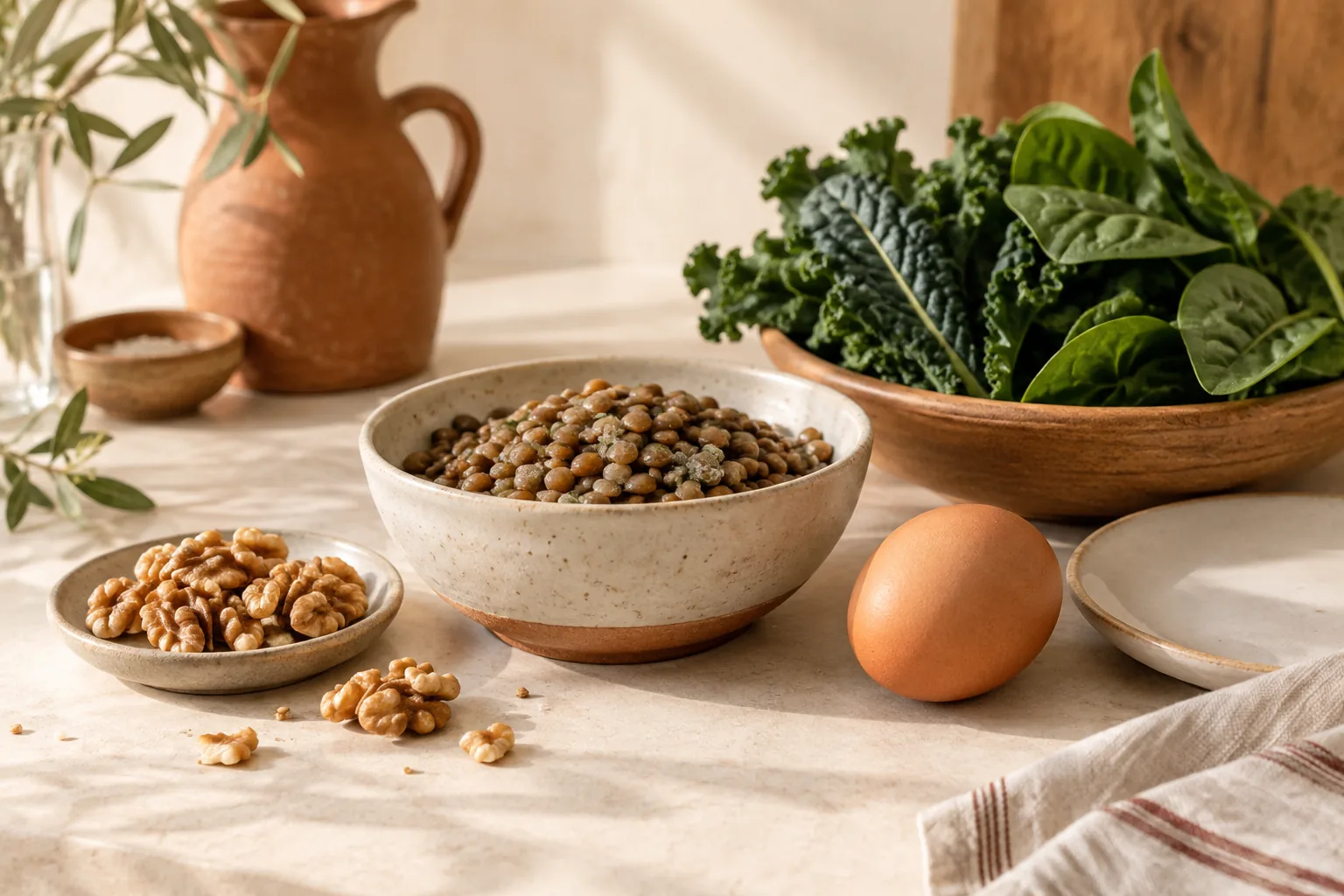
Insufficient iron or protein intake, or a diet too low in calories, can contribute to hair loss. This does not mean that every episode of shedding reveals a deficiency. If a deficiency is identified, the approach is to restore the necessary intake and understand why it was insufficient. This addresses a specific nutritional need; it does not promise to treat every cause of shedding, and several causes can also occur together.
Are Vitamins and Supplements Useful Without a Deficiency?
Taking a vitamin when no deficiency has been demonstrated does not address the problem in the same way as correcting a deficiency. Biotin illustrates this: a deficiency can affect the hair, but it is rare. The evidence often cited for supplements relies in particular on individual cases and small studies. It does not support promising improved hair to a woman who is not deficient in biotin. The role of a vitamin in the body is therefore not enough to demonstrate the benefit of a supplement.
Do You Need Tests Before Taking a Dietary Supplement?
Your eating habits, any recent dietary restriction and the way the shedding began provide clues. The examination helps determine whether targeted tests would be useful: a blood test is not automatic for every case of hair loss. Before taking a supplement, the practical questions are: which deficiency is it meant to correct, what is that conclusion based on, and how will it be monitored?
Castor Oil and Rosemary: Is the Effect on Hair Appearance or Regrowth?
An oil applied to the lengths of the hair first targets the hair that is already there; a promise of regrowth concerns growth from the follicle, in the skin. These are two outcomes to keep separate. A review of 22 articles on hair oils included data on coconut oil for brittle hair, but limited evidence on its effect on growth. For castor oil, the evidence of improved shine was weak, and no solid evidence of regrowth had been established.
Rosemary oil has also been studied in a trial on androgenetic alopecia. This trial does not support presenting a homemade rosemary mixture as a proven solution for all hair loss in women. The cause studied, the preparation applied and the outcome measured all matter; the findings of this trial cannot be applied to postpartum hair loss or to a deficiency. An oil on the scalp is no substitute for correcting a nutritional deficiency.
An essential oil is not interchangeable with every preparation that bears the name of the same plant. Some uses may carry risks, and Health Canada neither recommends nor approves do-it-yourself preparations. Nor can the results of a trial conducted with a specific preparation be extrapolated to a homemade mixture.
Avoid Excess Amounts and Mention What You Take
Excess amounts of certain nutrients, including selenium and vitamins A or E, have been associated with hair loss. Supplements containing biotin can also interfere with some laboratory test results. Information about the supplements you take is therefore useful to share during a consultation.
Preparing for a Careful Decision
To choose the next step, start with the result you are looking for. An identified deficiency calls for an appropriate way to correct it. When no deficiency has been demonstrated, a promise of regrowth is not enough to justify taking a vitamin. For an oil or a home remedy, distinguish the expected effect on the appearance of the hair from a demonstrated effect on its growth. Neither shinier hair nor a product presented as natural proves that the cause of the shedding is being treated.
To prepare for a useful discussion, note how long your hair has been falling out more than usual, whether its density is gradually changing, any recent dietary restrictions and the products you have already used. Bring their labels: the ingredients, amounts and combined intake will be more useful than the claims they make about “hair” alone. The goal is to connect what you have observed to a possible cause, then to an action whose suitability the doctor can assess.
When a product in a pharmacy is presented as a natural treatment for hair loss, check the specific indicated use and the warnings. For a natural health product, the eight-digit NPN lets you check its authorization in Health Canada's database. This number is not enough to establish that the product addresses the cause of your hair loss. A pharmacist can help you understand this information.
Precautions With Supplements
Interactions with medications are possible; many supplements have not been studied during pregnancy or breastfeeding. Discussing them with a professional is preferable to accumulating products chosen solely for their claims.
Sources11 references+
- Using Dietary Supplements Wisely — precautions, interactions and limitations of supplements (opens in a new tab)
- Hair loss: Tips for managing — daily care to limit breakage (opens in a new tab)
- Hair loss: Diagnosis and treatment — targeted assessment and choice of treatment according to the cause (opens in a new tab)
- Biotin for Hair Loss: Teasing Out the Evidence — quality of the evidence on biotin and hair (opens in a new tab)
- Biotin Interference with Troponin Lab Tests - Assays Subject to Biotin Interference — biotin interference with certain laboratory tests (opens in a new tab)
- Biotin — Fact Sheet for Health Professionals — rarity of biotin deficiency and limitations of supplements (opens in a new tab)
- Coconut, Castor, and Argan Oil for Hair in Skin of Color Patients: A Systematic Review — separate evidence on the hair shaft and on hair growth with oils (opens in a new tab)
- Randomized comparative trial of rosemary oil in androgenetic alopecia — trial of a rosemary preparation, which does not validate a homemade mixture (opens in a new tab)
- Essential oils and botanical extracts — risks of essential oils and homemade preparations (opens in a new tab)
- Stay safe when buying health products online — checking whether health products are authorized (opens in a new tab)
- Guidance document: Labelling of natural health products — labelling and authorization numbers of natural health products (opens in a new tab)
